Shopping at Jonker Street

A trip to Melaka will not be short of taking a walk along its famed Jonker Street. Be prepared to splash out on keepsakes, freshly baked traditional pastries, dried goods and delicious food as you spend your day there.

Jonker Street offers the definitive local shopping experience, with shops selling a variety of goods including the traditional sarong kebaya to dried goods.

Orangutan House

59 Lorong Hang Jebat, 75200 Melaka
Tel +60 6282 6872
Opening hours: 10am to 6pm (Daily)

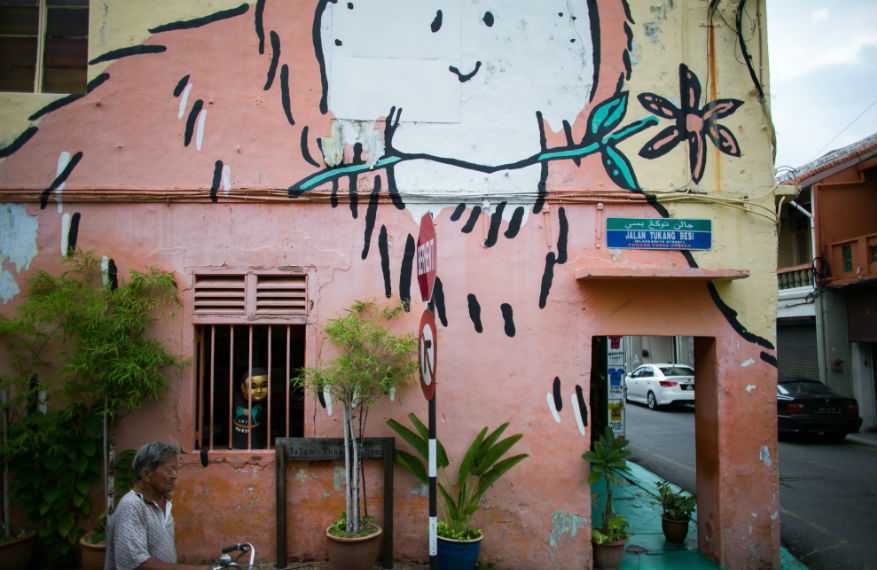
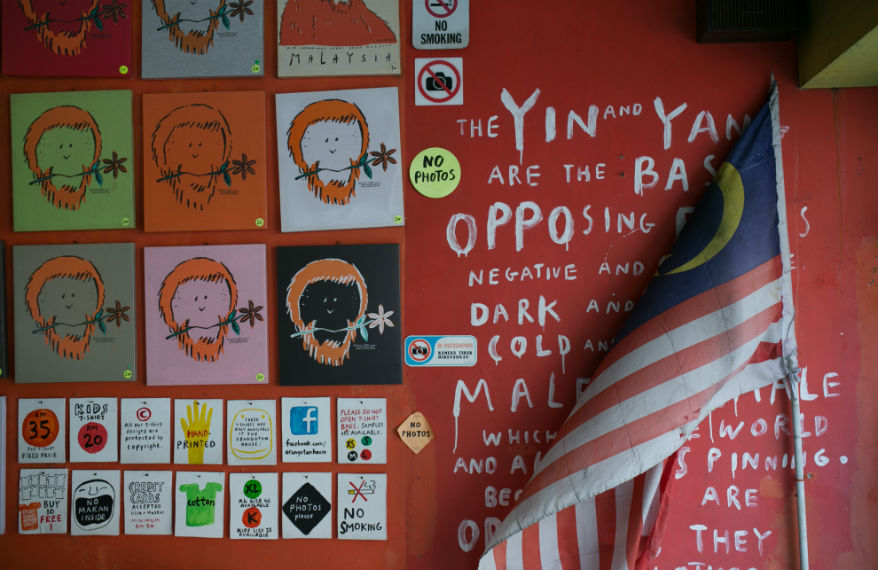
The Orangutan House is a studio gallery established in 1992 by local artist Charles Cham. It is instantly recognisable with its brightly painted exterior – a sunshine yellow building with a huge orangutan painted on the outside. You can buy contemporary paintings of Charles as well as T-shirts, a very popular souvenir bought by visitors.


Chua Soon Hup Grocery

70, Jalan Tokong, 75200 Melaka
Tel +60 6281 7194
Opening hours: 7am to 5pm (Sun to Mon); 7am to 10.30pm (Fri & Sat)

Established more than 50 years ago, Chua Soon Hup grocery shop sells an array of dried goods, with their specialty being the dried soya bean noodles and meesua, a type of Chinese noodles made from wheat flour.


San Shu Gong

33, Jalan Hang Jebat,75200 Melaka
Tel +606 286 8262
Opening hours: 9am to 6pm (Daily)

Image Credit: Tripadvisor

Located right at the start of Jonker Street, this shop stocks up on a multitude of foodstuff including delicious pastries and sweets great as gifts for family and friends. Pick out the Gai Zai Beng (鸡仔饼)- a sweet & savoury biscuit with five-spice powder or its Nyonya curry paste so you can whip up a chicken curry dish in your kitchen that tastes professionally prepared.

Image Credit: San Shu Gong | Website

ColourBeads Nyonya Beaded Shoes Specialist

84 Jalan Tun Tan Cheng Lock, 75200 Melaka
www.colourbeads.com

Jonker Street ColourbeadsColourbeads.com Nyonya Beaded Shoes & Accessories Shop started its business in Malacca in the ’80s. Mr. and Mrs. Lim, the shop owners, have been in hand-crafting shoes business with over 30 years of experience. This delicate art was passed on from their parents and has been their core business for many years. Their expertise are in Nyonya beaded shoes and various items like ladies’ sandals, clogs, bound feet shoes, beaded bags and on special requests-dancing shoes.

Located on the next street along Jonker Walk, be sure to pop by if you keen to bring home traditional Nyonya beaded shoes or a Nyonya sarong kebaya for that special occasion wear.

Shah Alam: New Sights in Old Villages

Malaysia’s first planned city, Shah Alam is more than the epitome of Malay ideals. A speedy network of highways lead to hidden cultural gems in unassuming ethnic enclaves.

Named after Sultan Alam Shah, the state capital of Selangor is Malaysia’s first planned city spanning 293km2. Located within the districts of Petaling and a portion of Klang, housing areas occupy most of the city (55.2 km2) while commercial centres dot 56 different ‘Seksyens’ (Malay for sections). Generally divided into the north, central and south, tree lined highways connect the business metropolis seamlessly to other major cities in the Klang Valley, plus the Kuala Lumpur International airport.

Envisioned by the first mayor Dato’ Haji Abu Sujak Haji Mahmuda as a modern city with a unique identity, Bandaraya Melayu (“Malay City”), Shah Alam aims to showcase achievements of Malays across all sectors. In line with this identity, Shah Alam was declared the first city in the world with no entertainment outlets as a means of vice prevention.

The result? Commercial and residential districts flourish in abundant greenery, government administrative buildings thrive at the heart of the city, and fashionable malls have come to stay. Also a media hub and university town, Shah Alam is abuzz with ideas, innovation and energy. Much of which can be felt at the Shah Alam Stadium, a multi-purpose football stadium equipped with athletic facilities, the home of world-class sporting events. Designed by renowned Malaysian architect, Hijaz Kasturi, it also features the world’s longest free-standing arc.

Like all the best cities, Shah Alam is gateway to surprising possibilities.

Yet, the Sultan Salahuddin Abdul Aziz Mosque is undoubtedly the city’s pride. Measuring 51.2m (167 ft), the Blue Mosque is the largest religious dome in the world. Given the right room, guests of Concorde Hotel Shah Alam enjoy spectacular views of Selangor’s state mosque. The four minarets, each reaching 142.3m (460 ft), overlook the Garden of Islamic Arts, a park inspired by the Quranic Garden of Paradise. Inside this 14 hectare spiritual sanctuary, nine galleries exhibit a rich array of Islamic arts.

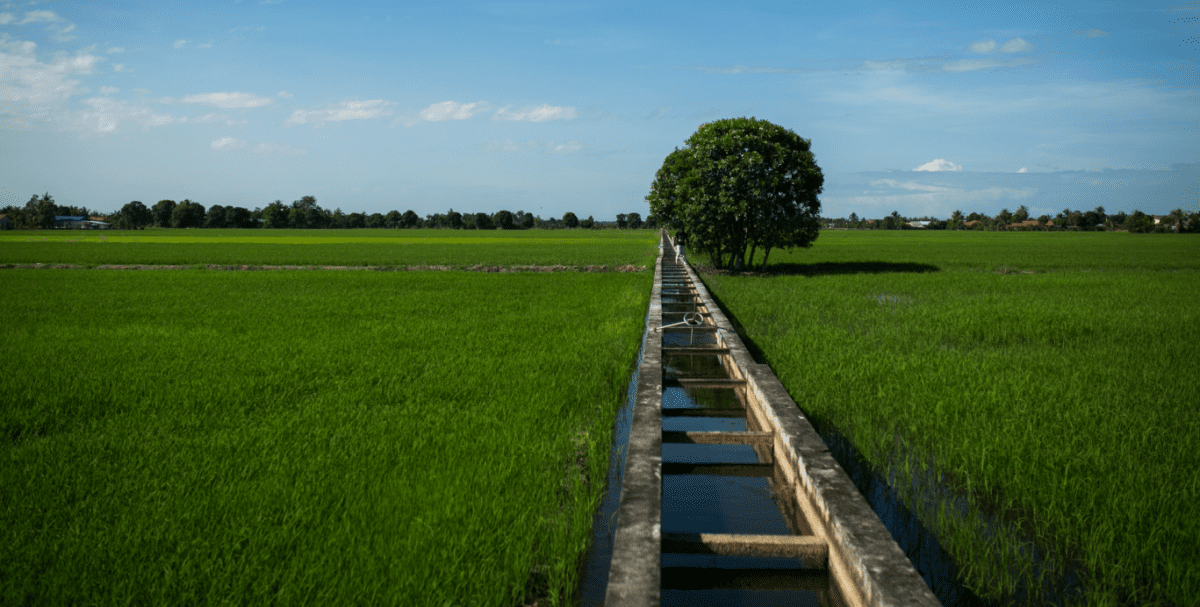
Kg630x420 Padi Shah AlamLike all the best cities, Shah Alam is gateway to surprising possibilities. Lunch in luxuriant paddy fields. A walk on a mirror in the sea. A wishing tree by the beach. Fragrant flavours of a vanishing trade. Lessons with the state’s master potter. Infinite new experiences are just an hour’s drive by car. All you need? 36 hours in Shah Alam

Hybrid Creativity

The Peranakan culture harks back to the time when Chinese immigrants intermarried local women and adapted their material culture, while remaining quintessentially Chinese in belief and philosophy.

The late 19th and early 20th centuries saw Penang at its height—with the flourishing of the Chinese business community in tin-mining and trading (opium, among many commodities). The immigrant southern Chinese were completely at home with a foothold in a few worlds: on this tropical island in southeast Asia they’ve planted themselves in, in China (through wives in many cases), and they were in pace with the British government system and order of life in the Straits Settlements.

Penang’s rich Peranakans (the Malay word itself means a “localised community”) commissioned houses, furniture, china, clothes and jewellery at the height of their renaissance to show off that they’re the citizens of the world.

It was a community that felt it was very cosmopolitan and prosperous, so what did they do? They expressed their cultural hybridity and cosmopolitan tastes through how they lived, what they wore and ate. While an exploration of George Town’s architecture will give you a glimpse of its glory years, it’s the restoration of buildings like the privately-owned Pinang Peranakan Mansion, which is also a museum, and its extensive collection of Peranakan treasures that will truly impress on one the jaw-dropping wealth of the state’s Chinese more than a century ago.

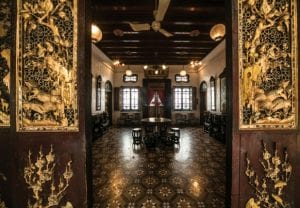
The bungalow that used to belong to a high ranking leader in Penang, built in 1894, is the very epitome of wealth gone wild—with gilded doorways and intricately carved doors, and the best of the best from the whole world they could get their hands on. It’s a virtual builder’s paradise—ironworks from Glasgow, floor tiles from Britain, Italian marble, and stained glass from Venice—fitted into a classic Chinese courtyard mansion replete with fengshui details.

The high ranking leader, or Kapitan Cina (Chinese captain), was Chung Keng Kwee, and though he wasn’t a baba—a Peranakan male—he lived like one. The bungalow had fallen into disrepair by the middle of the 20th century, but it was bought and given a stunning makeover in the early 2000s by an avid—almost fanatic—antique collector, Peter Soon. As a result though, the public lucked out as the house is a fabulous representation of the Peranakan culture at its absolute gaudiest and best.

The babas saw themselves as the Queen’s Chinese and they were anglophiles,” explains Lillian Tong, the museum’s curator and really, its best ambassador.

Hybrid Creativity Main1She’s the go-to expert at the museum, so if you see an elegant lady garbed in a figure-hugging nyonya kebaya outfit, try to stick close to her and listen in on her guiding, with permission, of course. The Peranakan renaissance in Penang was really the baroque period, she describes, because it was the meeting of the Chinese Qing and Victorian eras. The Qing were less scholarly than the Ming and a lot showier, while the Victorian era was the belle epoque period—so is it a wonder that what resulted was flowery and fancy?

Hybrid Creativity Main2Anyhow, all this is to say that the Pinang Peranakan Mansion is a must-visit in your Penang itinerary especially as the owner has recently rented the neighbouring house and turned that into an amazing showcase for Peranakan jewellery. After all the bling, do take note of the small collection of stylish mourning clothes at the end. Also, while there, don’t miss out on the family ancestral hall. It has been maintained pretty much in its original condition—and it’s here that the austere grey granite and pared down functional design is at its most philosophically and aesthetically Chinese.

The Pinang Peranakan Mansion is the finest example of revived Peranakan glory, and no one can build bungalows like these anymore, but thankfully, there are other artists and artisans in town who continue to draw inspiration from this incredibly creative era.

At Jonathan Yun’s workshop, where the jewellery is carefully made by hand.

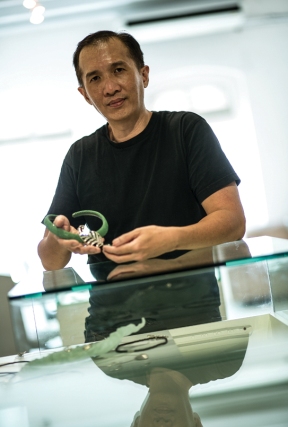
The jeweller and one of his designs

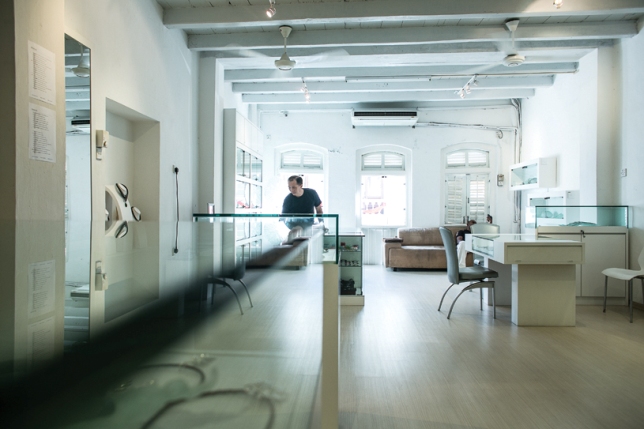
Jonathan Yun’s studio and showroom.

Jewellery designer Jonathan Yun is a modern-day artisan who’s found new ways to interpret Peranakan jewellery since two years back. One striking series is his recreation of the paisley-shaped ibu kerongsang (mother brooch) as a pendant, hanging from stingray skin-covered neck cuff. He’s also created miniature versions to popularise the design. “Note how the point is curved to the left, and this is supposed to be pointing to the mother’s heart for her children,” he explains.

Since returning from Singapore where he had first worked with a design company, Mr Yun has been blazing a bold trail in handmade, designer jewellery in silver and gold—drawing on cultural as well as nature-based inspirations.

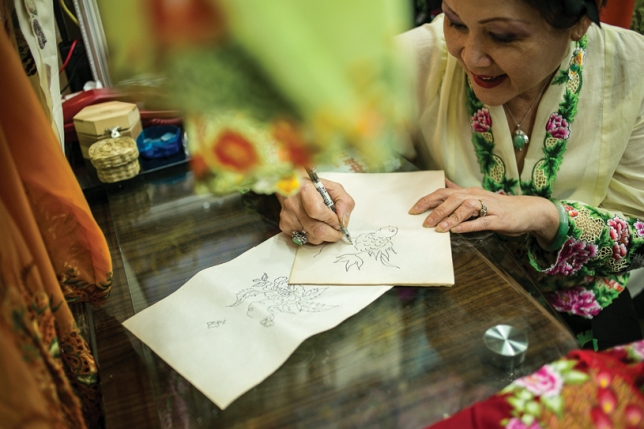
Hybrid Creativity Kebaya 1Cecilia Lim is another modern day artist, but fabric is her material of choice instead of precious metal. Ms Lim had always loved to draw, she shares, even as a young girl. So when you have aunts who specialised in making nyonya kebaya, the Malay-inspired floral embroidered top that Peranakan ladies wear, you start to draw the flowers and birds that get embroidered onto the Indian cotton voile or chiffon.

Hybrid Creativity Kebaya 3The peacock is her signature design and it’s a motif that she thought up while on holiday eight years ago. Other popular classic motifs are the dragon and phoenix. She also does the goldfish and koi, but of course, flowers are standard. She draws the designs which are then expertly embroidered on the front and triangular ends of the kebaya top. “I also pay a lot of attention to the colours to make sure they match,” she adds. “And I ask customers to bring their sarongs with them, the one they plan to wear with the kebaya, to make sure we get the right colour combinations. Or I can choose the batik for them.”

The embroidery and stitching is another artform in itself, as the tailors have to manipulate the machine in a certain way for the embroidery. What are the popular colours among ladies? Red and pink for the brides, or pearl, and then for the mothers of the brides, darker colours like maroon or deep purple.

To complete the nyonya trousseau, ladies then would have to head to Hong Kong Shoe Store, which makes hand-beaded shoes to order. This is, incidentally, the shoe store that renowned shoe designer Jimmy Choo apprenticed at as a young man. Owner Wong Heng Mun’s father was the one who taught Choo the rudimentary skills of cobbling before he went to study design in England, and made a name for himself there as shoemaker to the famous and rich.

But back to beaded shoes. One would have to order these shoes about six months in advance, and these days, most designs and customised shoes cost above rm500. Mr Wong says that they have been providing the service since the 1950s and that beaded shoes continue to be popular. Women often come in with their own design, or pick one from Mr Wong’s catalogue. Flowers are the most popular design while birds come a close second.

By the looks of it, it’s still possible to get togged up in Peranakan finery today and even give it your own customised twist. This would set you back by a couple of thousand Malaysian Ringgit at least, but what price craftsmanship—especially when it’s getting rarer than rare in our modern world.

At Jonathan Yun’s workshop, where the jewellery is carefully made by hand.

The jeweller and one of his designs

Jonathan Yun’s studio and showroom.

H DIRECTORY

Pinang Peranakan Mansion
29 Church Street, 10200 Penang
Tel + 604 264 2929
Opening hours: 9.30 am to 5pm (daily)

Jonathan Yun Sculptural Jewelry
88 Armenian Street, 10200 Penang
Tel +604 261 1917
Opening hours: 10am to 6pm, (Mon to Sat)

Country Fair Boutique
Level 2 Lot 33.2.36 Prangin Mall
33 Jalan Dr Lim Chwee Leong, 1000 Penang
Tel +604 262 1593
Opening hours: 12pm to 7pm, daily

Hong Kong Shoe Store
20 Kimberley Street, 10100 Penang
Tel +6012 505 6905
Opening hours: 9am to 7pm, (Mon to Sat)

Trades of Tradition

Like other cities, Penang is losing more and more of the old ways. Artisanal businesses show us how some things are best done the traditional way.

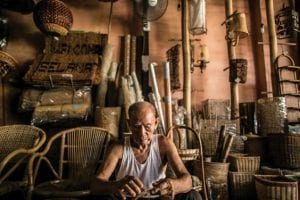
For an 86 year old, Mr Sim Buck Teik has aged well—he carries himself upright and still maintains quite a wiry, muscular frame. All those lines etched onto his face give him a distinguished gravitas. He’s sitting in a rattan armchair outside his shop when we walk in, watching the cars whizz by on Beach Street and checking out his neighbours’ activities. His wife sits nearby in quiet companionship. This seems to be a regular afternoon habit for them.

Trades Of Tradition -RattanBut when he gets up to demonstrate the rudiments of weaving a round basket, this strong, silent man—clad in a classic sleeveless thin white shirt, the Pagoda type from China—transforms into a dancer. Stepping on the circle of thick and stiff rattan rods sticking out like spokes of a bicycle wheel, Mr Sim moves his agile feet over the rattan to flatten them. He bends down to weave a flattened rattan rope in and out of the rods. And this, is how the “tua lang” (in Hokkien dialect for big basket) takes shape.
In the mid 1950s, these baskets were popular among the Chinese who would send goods to China to help relatives tide over the Great Famine.

Trades of Tradition-Rattan 4Mr Sim is believed to be one of the last remaining rattan weavers in town with the know-how to make these baskets. The owner of Seang Hin Leong rattan shop on Beach Street had learnt his trade from his father. But only at a later age, in his 20s onwards, because he was sent back to get schooled in China.

“I was born in Penang, but my father had sent me back to China,”says the octogenarian of Teochew stock. His grandfather had started the business in 1925, and one of the reasons why Seang Hin Leong still exists is because they own the shophouse themselves.

Mr Sim is retired now, but luckily, his son, Chew Poh, in his 50s, is carrying on the trade. Most of the goods in the shop today aren’t woven by the Sims but they still do a few themselves and would still take commissioned work. Craftsmen like Mr Sim have been recognised since the mid-2000s, with the establishment of the Living Heritage award by the non-governmental organisation Penang Heritage Trust. Penang is fortunate to still have a few artisans around town, especially now where there is a revived appreciation for the traditional and handmade.

Mr Murugesan pulling out the long gold strip made from a single nugget—after it went through three presses.

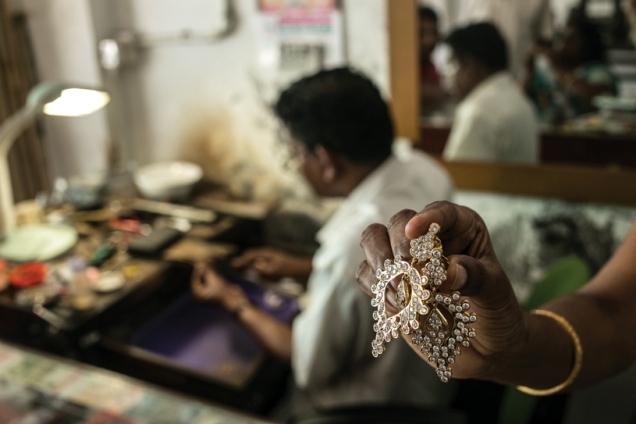
A pair of bridal earrings made from crystals and gold.

Melting gold into liquid form.

A few streets away, Indian goldsmith Mr Raju Murugesan, in his 50s, still produces jewellery the traditional way at Thana’s Goldsmith’s shop. Mr Murugesan sits wedged against the wall between his wooden worktable, where he works, and a glass cabinet, where he consults with customers.

It’s fascinating to see your commission —if you order a chain, for instance—being made in front of you. Mr Murugesan melts a gold nugget in a small ceramic bowl with a handheld torch, and then the liquid gold is poured into a mould, picked up with tongs and cooled in a bowl of sulphuric acid. Then, the goldsmith patiently runs the nugget to and fro a mechanised press, like sugarcane. “This machine is from India, yes,” says the laconic man. The nugget slowly gets flattened into one long and flat gold strip—and using this, Mr Murugesan will punch holes or add carvings and gold beads to make a necklace. His wife, Ms M Thana, says there’s still quite a consistent demand for traditional and customised jewellery and common pieces are the thali chain, pendants, toe rings, and crosses. “We charge rm115 per gram for the workmanship, and then whatever the price of gold is,” she explains.

Trades of Tradition-Songkok1Just down the road towards Chulia Street, at the side of a shrine dedicated to a holy Muslim teacher from India, Haja Mohideen hardly ever looks up from his sewing machine even though different friends drop by to chat while he’s sewing.

He was 12 years old when he first learnt to make a songkok—the oval-shaped headgear worn by Muslim males. Now 66, he had started learning the trade from his father who also worked at the same premises. He also makes the Turkish-originated tarbus, a taller round cap with a black tassel, and the round kopiah used by Haj pilgrims.

The headgear is made from simple cardboard and cloth, but putting it together takes some precise science. Creating the circular band is the first step—where magazine papers and newspapers cut to size are layered with cloth and run through the sewing machine several times for a diamond-like pattern.

Trades of Tradition-Songkok2Then the oval crown is created, also made from layers of paper and cloth, and then the two pieces are lined with velvet cloth before they are fitted and sewn together. “I get orders from all over, and whether I sell you one or a lot, it’s the same wholesale price,” he says affably.

Trades of Tradition-Songkok3

You can find Haja Mohideen sewing and cutting away at his little shop from 11am to 9pm almost every day, breaking only for a late lunch—with the aide of his nephew who does the prep work for him and also handles the packaging and sales.
There is hope yet for some traditional wares and food, especially when businessmen are quick to pick up on opportunities. “My father made me do it,” says M. Kumaresan Mariadas matter-of-factly, when asked how he came into the business. Mr Kumaresan’s story is that of succession. His father already had a bakery, but when he heard Ismaliia was selling the bakery and the business in 2006, he bought it and put his business administration-trained son to the task of managing it. The bakery was then renamed Maliia.

Mr Adam has worked at Maliia for over 40 years.

Preparing giant dough balls to be divided.

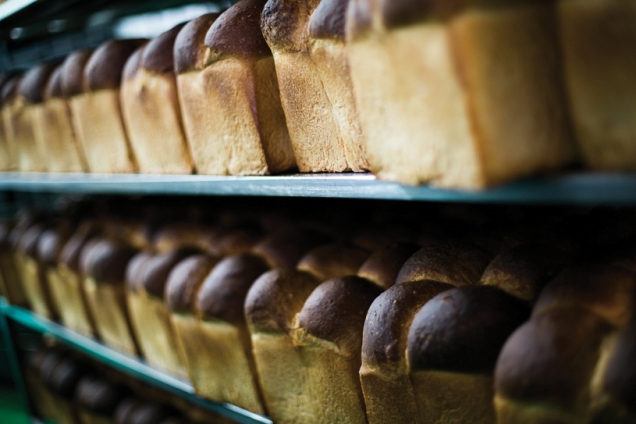
Evenly baked loaves in a row.

Maliia is best known for its traditional hard-crusted Roti Benggali (bread), with a recipe dating back to 1926. The bread itself is quite basic—flour, yeast, water—but it’s the proportions that yield that chewy white inside with a smoky and crispy crust. Most of the workers opted to stay on, like Adam bin Mohd Ibrahim, who had worked there for more than 40 years. Mr Adam is the oven guy, as he keeps a trained eye on the two room-sized ovens to check on the done-ness of the bread.

To produce some 1,000 loaves a day, the bakery runs on a twelve-hour baking cycle. First, the flour is mixed in machines, and then the workers pull out the dough and knead them into 3kg dough balls. They are then put through an automated bun divider. The divided dough then gets placed into the baking cases—eight in a case—where they rest for another hour or so, before they get put into the oven. One oven takes 120 cases.
Baking takes an hour, and then Mr Adam yanks them out of the rotisserie-like oven and the hard-crust loaves are tumbled out of their cases. “Because we don’t use any preservatives, it’s best to eat the bread in three days,” advises Mr Kumaresan. “The bread is then distributed through agents who pass them to the individual bread sellers, but we also make to order, like for Penaga Hotel across the road,” he explains.

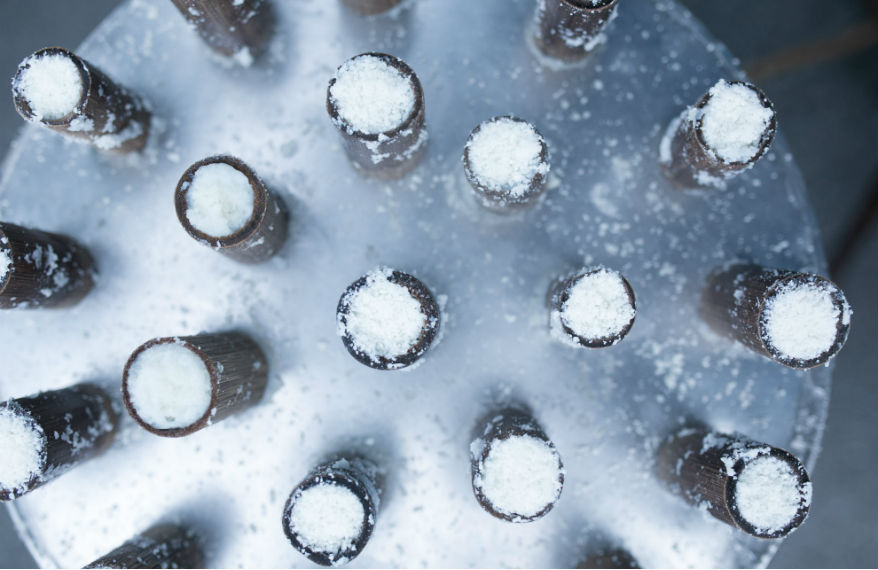
Trades of Tradition-JoyStick1Time is running out though for some artisans like joss-stick maker Mr Lee Beng Chuan. In his 80s, Mr Lee makes these joss sticks—either in six or ten-inch sticks—most mornings outside his little shophouse, behind the famous Kuan Yin (Goddess of Mercy) Chinese temple on Jalan Masjid Kapitan Keling. He used to run a shop selling prayer paraphernalia but started making the joss sticks more than a decade ago. Shaping his joss stick paste—made from Australian sandalwood powder, water and gum—with his fingers, he looks like he’s playing with chocolate plasticine.

Trades of Tradition-JoyStick2But his pinches of the paste are precise, before he evens out the paste along the bamboo stick. There’s a strong scent of sandalwood in the air, and he wears the oversized glasses so that the powder doesn’t affect his eyes.

The joss sticks are then dried, smoothened, and dried again for two days. Sometimes, he’ll even inscribe onto the joss sticks—words like longevity and good health. “I’ll change the thickness or the length after a while, because when you’re doing handicraft, you must change your style.”

Editor’s Note: Mr Lee Beng Chuan passed away in Dec 2020; his joss stick making legacy continues to live on as his youngest son, Mr Lee Chin Poh has taken over the reins.

H DIRECTORY

Seang Hin Leong (祥兴隆) Rattan & Bamboo Crafts [Temporarily Closed]
393 Lembuh Pantai, 10300, Penang
Tel + 604 261 3748/ 6012 450 6534
Opening hours: 9 am to 6pm (Mon to Sat)

M Thana’s Goldsmith [Closed]
38 Queen Street, 10200 Penang
Tel +604 263 3541
Opening hours: 11am to 8pm, daily

Kedai Songkok Osm Mohd Shariff
157 Lebuh King, 10200 Penang
Tel +604 263 1290

Maliia Bakery
114 Transfer Road, 10050 Penang
Tel +604 227 1106
Website

Joss-stick Maker
1 Lorong Muda, (off Stewart Lane)
10200, Penang
Website

Where to Go With One Night in Kuala Lumpur

If you’re in Kuala Lumpur for a whirlwind trip and have got 1 night to spare, why not head to The Roof @ 1 Avenue.

Located next door to One Utama – one of the Klang Valley’s most popular malls, wind down the night at an altitude, but not before you check out their five concept venues all 4,645sqm of space.

Statosphere Rooftop Bar

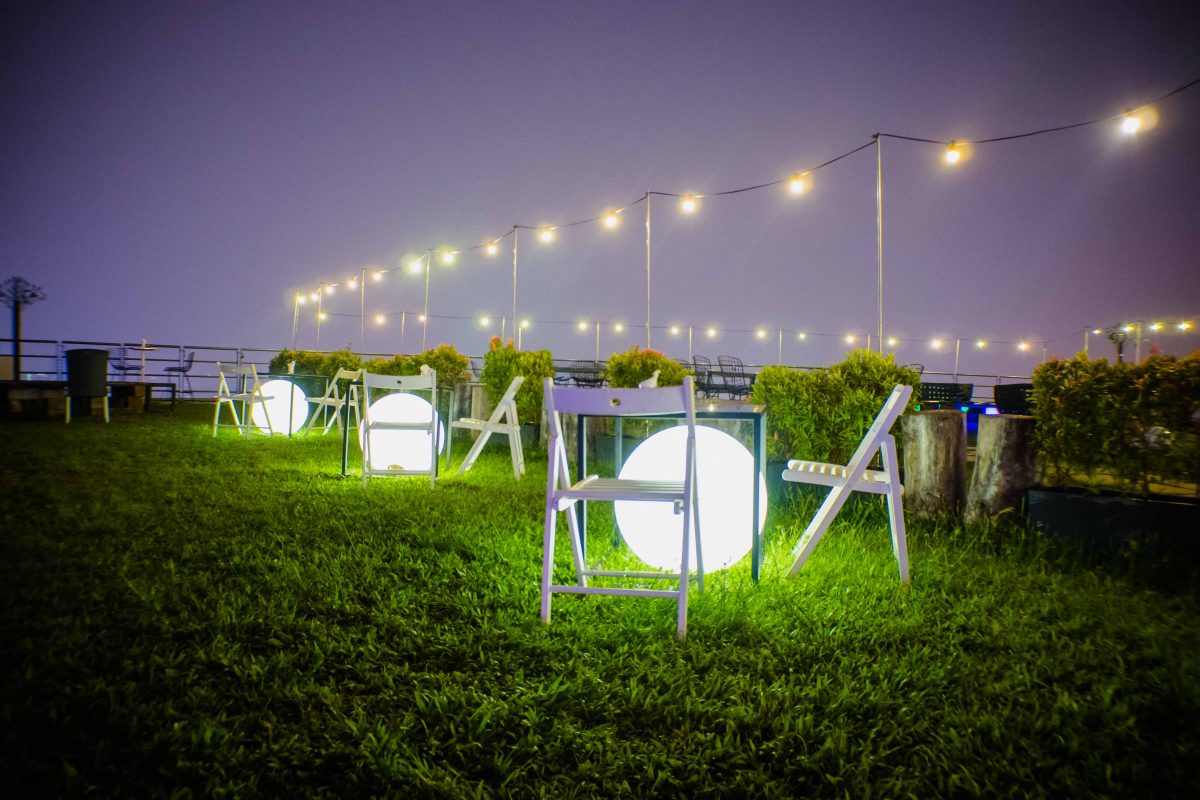
Stratosphere KLTheir one of a kind rooftop champagne bar set on what is hailed as Asia’s first grassy helipad, you can be sure to take in panoramic views of Petaling Jaya. Be amidst expats, trendsetters and local celebrities as their well-dressed clientele mingle, and DJs spin to a mix of hip-hop and electric dance music the entire night.

Bandar Utama, 47800 Petaling Jaya, Selangor, Malaysia
6pm to 2am (Daily)

Signature by The Hill

Signature_Dining KLA trendy and premium gastrolounge, you get sweeping views of the city, while tucking in to an Asian and international fusion-inspired menu. Signatures include their Wagyu Burger – think Wagyu patty drizzled with a generous amount of truffle oil, topped with foie gras and cheddar on a toasted charcoal bun.

Sky Level, 1, First Avenue, Bandar Utama, 47800 Petaling Jaya, Selangor, Malaysia
4pm to 12midnight (Daily)

Score Bar

Score Bar KLThis is the bar for sports enthusiasts. A contemporary and invigorating all-round sports bar fitted with a huge projector screen that screens live matches such as the English Premier League, Rugby World Series etc. Have a pint of beer with finger food here, or take part in a game of pool or darts.

5pm to 2am (Daily)

Play Club

[Permanantly Closed]

Play Club KLA premium dance club, this is a must experience super club. The place to see and be seen, the club boasts a stream of renowned international acts that take the turntables for the most exciting all-night party you can experience.


Malt and Leaf Lounge

Malt and Leaf Lounge KLAn exclusive cigar and whiskey lounge, this place serves up a selection of more than 150 types of single malts. It also boasts an extensive collection of premium and hand-rolled cigars for the cigar “connoisseur” in you.

6pm to 1am (Daily)

Sky Level, 1 First Avenue, Bandar Utama, 47800 Petaling Jaya
www.theroof.com.my

Picture credits: www.theroof.com.my

Heli Lounge Bar

Heli Lounge BarIf you are not keen to travel out of the city centre, head to the Heli Lounge Bar right in the middle of the city at Jalan Sultan Ismail.

The helipad which is still in use during the day, transforms into a rooftop bar with a portable drink station at nightfall. Soak in the views at sunset, and as the night progresses, head down to the lounge as an ultra-cool clubbing experience awaits behind the nondescript main entrance.

34th Floor Menara KH,
Bukit Bintang, Jalan Sultan Ismail, 50250 Kuala Lumpur
Tel +603 2110 5034
5pm to 12am (Mon to Wed)
5pm to 1am (Thurs)
5pm to 2am (Fri to Sat)
www.facebook.com/Heliloungebar

Eat Like a Local in Langkawi

The Malaysian holiday island of Langkawi has no shortage of restaurants. In fact, you can find an array of local and international food from Japanese to Mexican.

However, authentic local fare can sometimes be a little different because menus have been tweaked for the foreign palette – think less spicy and less heavy. Being an archipelago, Langkawi has access to plenty of seafood. You should give Ikan Bakar (barbecue fish) a try – barbecue is of the more popular methods of cooking here, over the traditional charcoal grill.

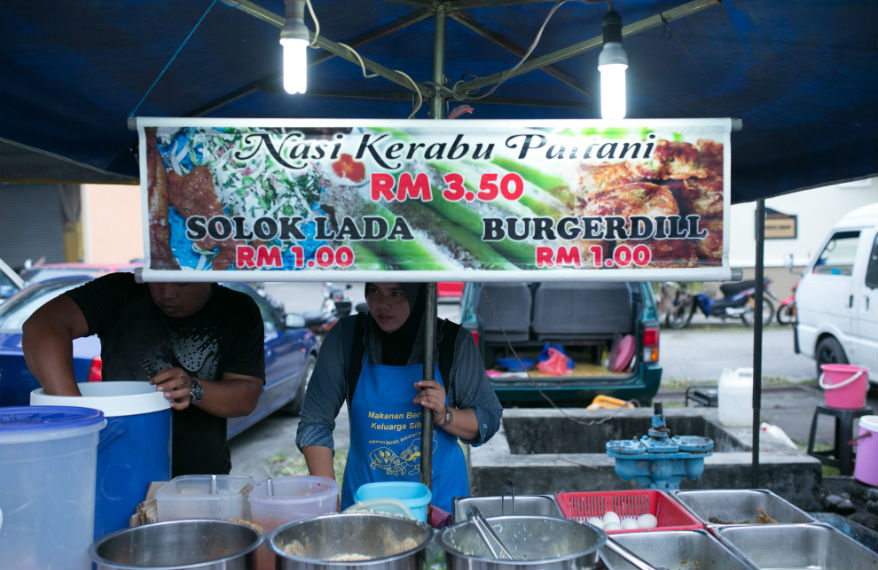
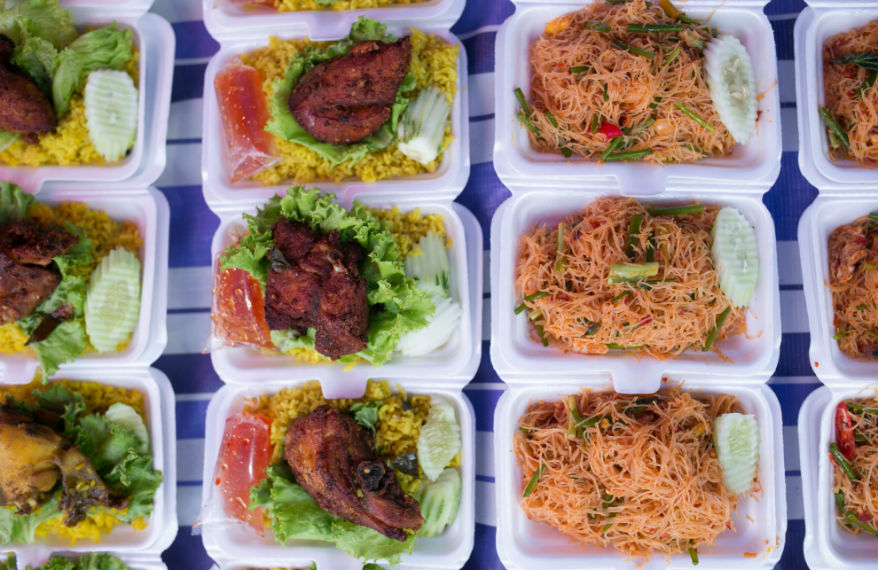
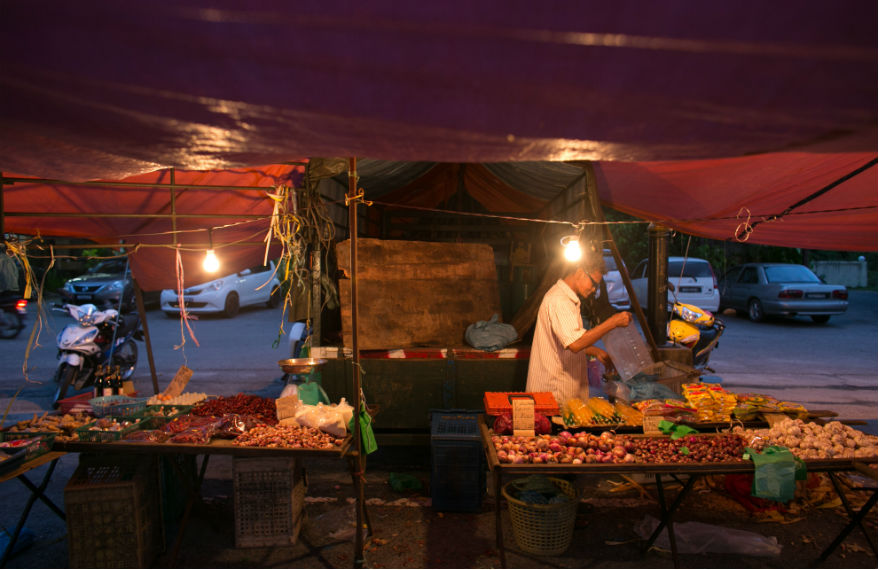
Take a walk at Langkawi’s night markets and you’ll be sure to sample many delectable local dishes. Just be warned that there might not be designated dining areas so be prepared to pack your food and have a picnic under the stars.

Jom! Ikan Bakar

Jom Ikan Bakar, a stall selling nasi campur (rice with various meat and vegetable side dishes), is popular among locals especially during lunch. The main draw here is the ikan bakar, or grilled fish and seafood over a charcoal fire.

The store is famour for its grilled fish, which is topped with spicy sauce made from a combination of dried chilli, chilli paste, garlic and onion.The eatery gets a fresh supply of fish, such as the white snapper, catfish and seabass, from local fishermen every day, according to the eatery’s owner Mazlina Bt. Radzi, who has been running the business for about a decade.

Jalan Airport Mukim Padang Masirat, Langkawi
10am to 5pm (daily)


Fish Farm Restaurant

This restaurant located at Pantai Penarak, at Pantai Penarak, a sheltered bay with a nice view of the sea dotted with islets that bears a resemblance to Vietnam’s famous Halong Bay. Seafood is naturally a specialty here, although prices are on the steep side. From the variety of live seafood available, we chose to have the crab and grouper cooked Hong Kong style and the mantis prawn with spicy salt.

Lot 1986, Jalan Pantai Penarak, Mukim Kuah, Langkawi
1pm to 11pm (daily)


Kuah Town Night Market

Trigger your senses with a mix of culture, food, colonial history and its architectural influence in Langkawi. See the various religions living in harmony and hear the island’s legends. The tour includes visit to the roadside stalls and the night market, to sample the local eats and savour the home-cooked Indian banana leaf dinner.

Jalan Pandak Mayah 6, Kuah, Langkawi
4pm to 10pm (Wed & Sat)


On the Trail of Nostalgia, Kuala Lumpur (Part 2)

Follow us on a nostalgia trail as we discover the rich memories central Kuala Lumpur holds beyond its glitz and glamour.

PUDU PERFECTION – Pudu Market

15 minutes by taxi from Concorde Hotel Kuala Lumpur

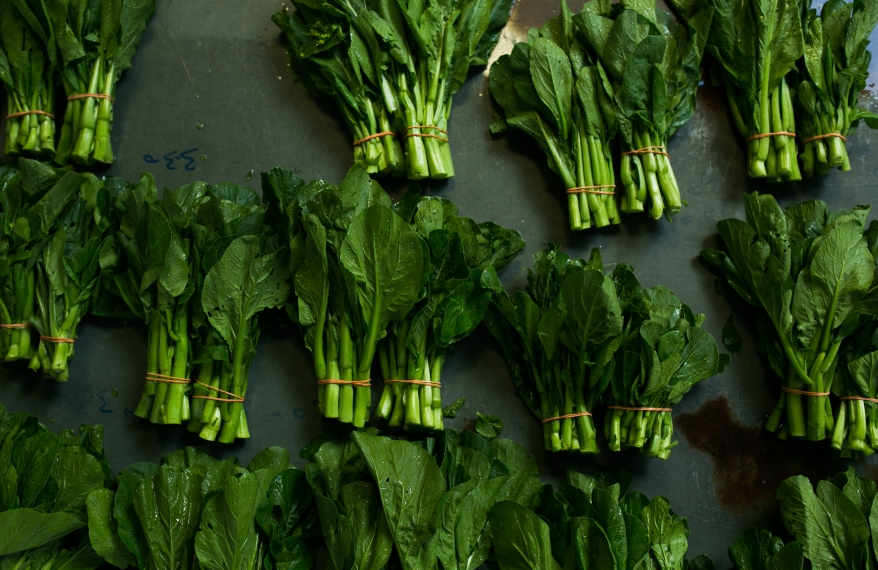
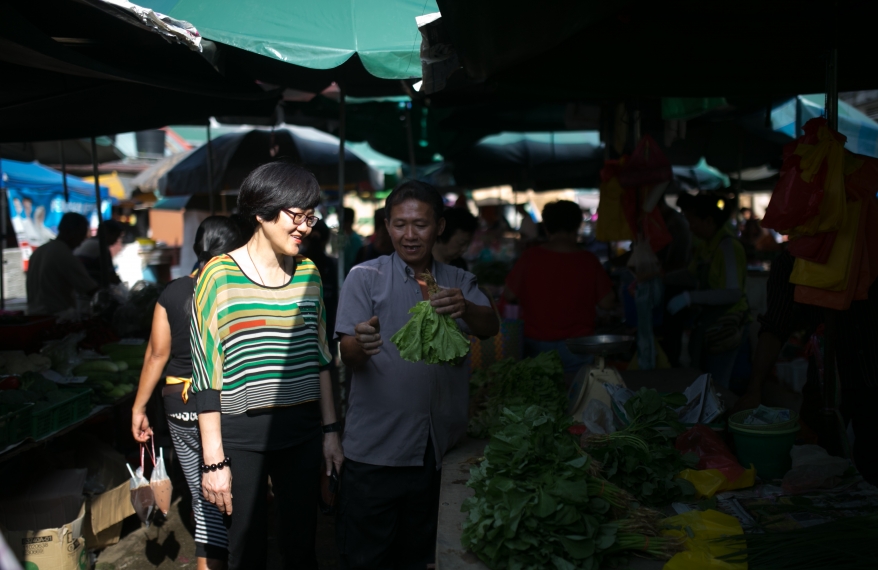
Established more than 50 years ago, Pudu Market is as real as it gets. Kuala Lumpur’s largest wet market is best experienced in its entire morning frenzy, with elderly people relentlessly haggling with grouchy shopkeepers. Here, one can buy any possible kind of vegetable, fruit and meats from live frogs to pig lungs. Makeshift stalls arranged in a haphazard way might confuse some, but do find your way towards the small outlets selling a range of local breakfast from dough fritters to Indian kueh, putu mayam and assam laksa.

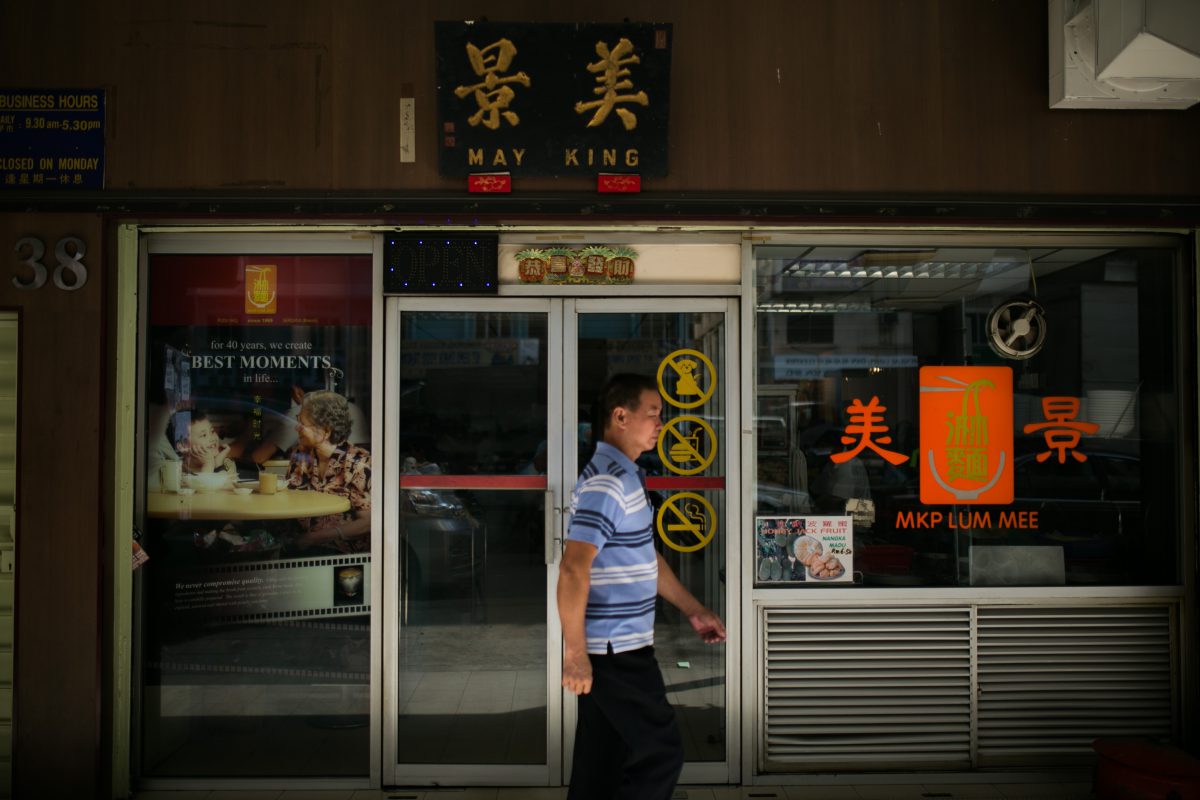
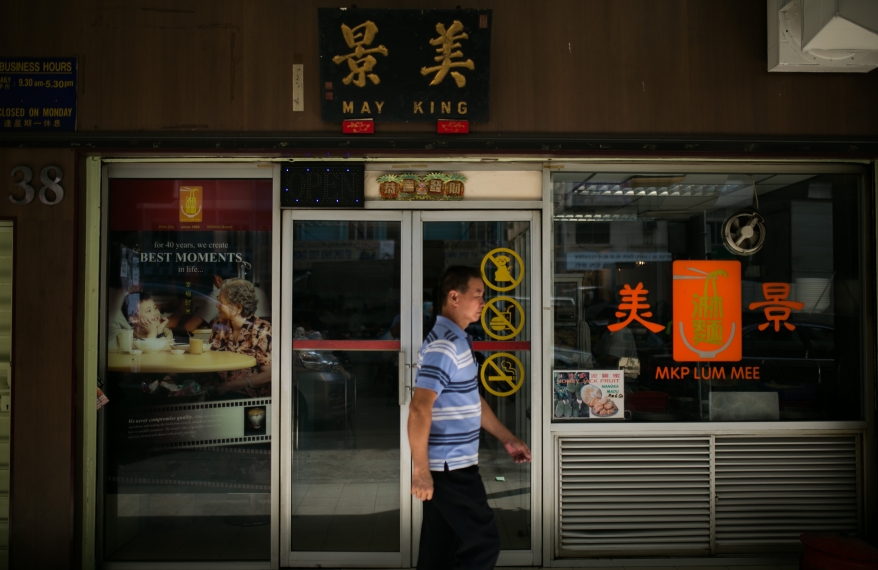
If you’re up for a bowl of noodles, May King Lum Mee has been highly popular with locals for their noodles in thick broth and curry noodles since 1969. It’s next door to Chop Tow Yeat, a wholesale supplier carrying more than 1,000 kinds of eclectic household items like traditional Chinese chicken bowls, wedding teacups and dining sets.

FIELD OF HISTORY

20 minutes by taxi from Concorde Hotel Kuala Lumpur

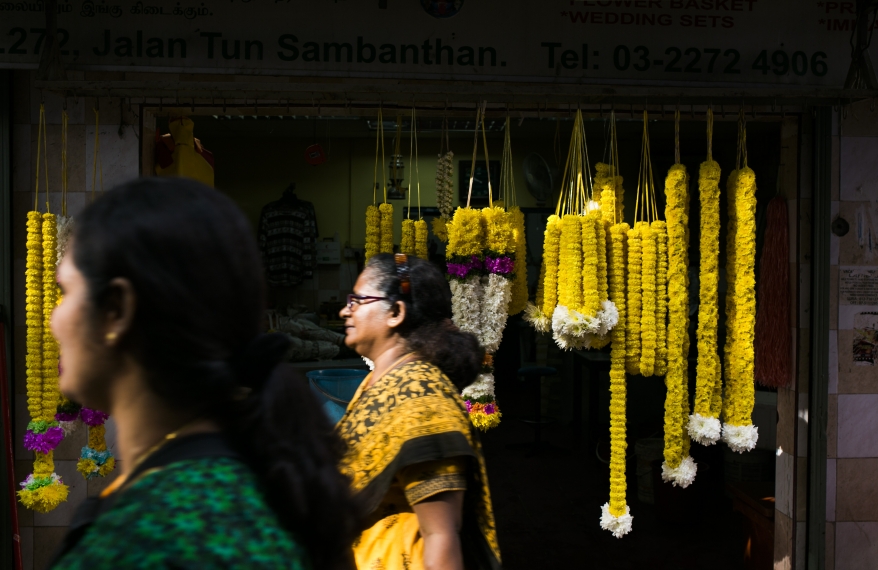
Kuala Lumpur’s version of Little India is a riot of colours and flavours. Strolling down its main road, Jalan Tun Sambanthan, we can hardly walk in a straight path without being distracted by anything and everything from sprightly assortment of garlands and freshly deep-fried samosas to a music shop blasting the latest Bollywood music mix and heavily-discounted clothes. Located minutes away from the KL Sentral station, where the KLIA Ekspress ferries commuters from the airport, Brickfields is popular with backpackers and tourists looking for bargains and banter.

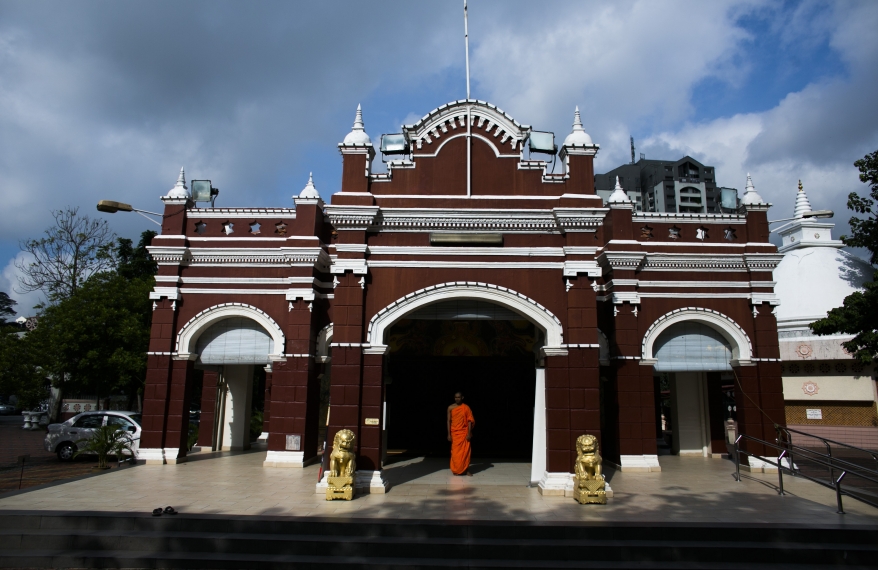
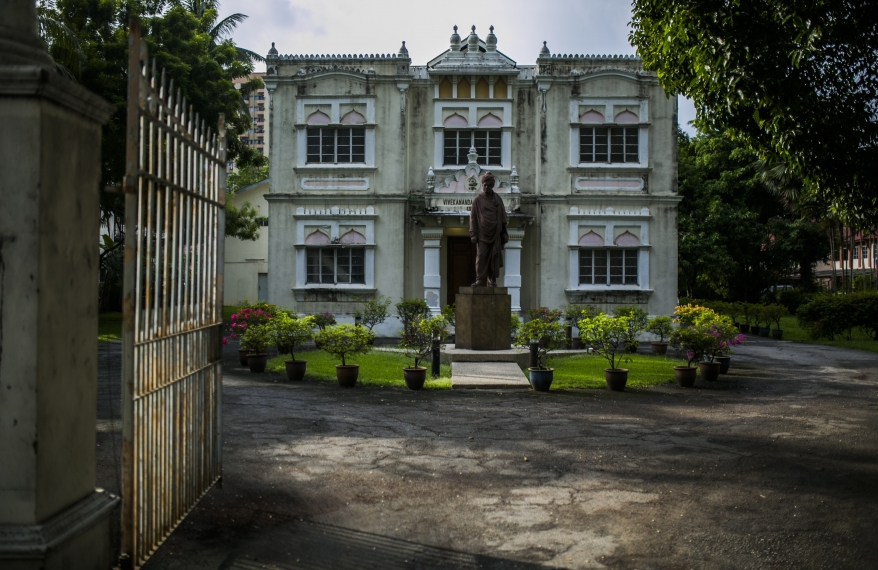
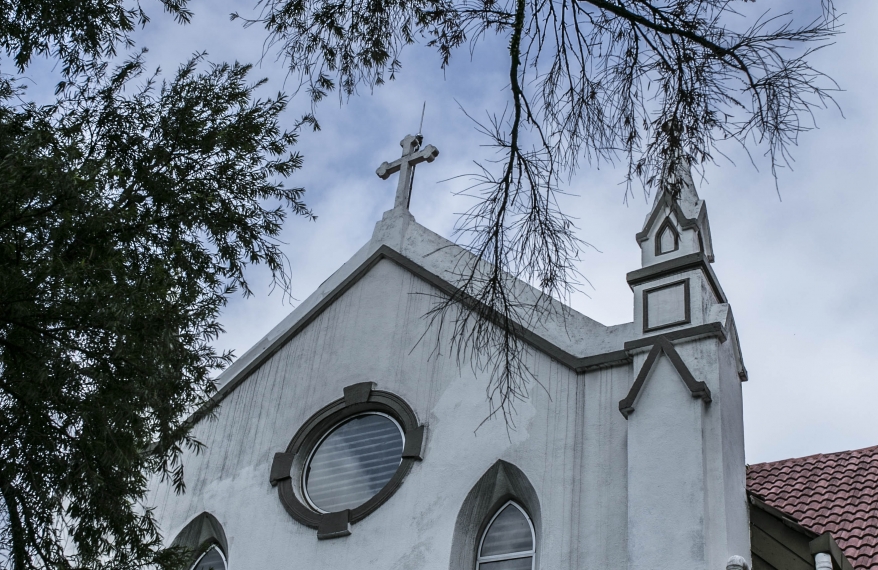
As one of the oldest settlements in the city, the area is peppered with historical colonial structures and earned its name as the de-facto location for quality brick-making in the early 1900s. It is also home to a number of religious associations that have been peacefully co-existing for centuries, including the Buddhist Maha Vihara temple, Zion Lutheran Church and Sri Kandaswamy Temple.

TREASURES OF PETALING

15 minutes by taxi from Concorde Hotel Kuala Lumpur

Home to a generation of rugged, determined pioneers way back in the early 20th century, Kuala Lumpur was the aspiration of many from China, mainly Hakkas and Cantonese who were drawn to the city’s tin trade and built a future from working as coolies in the mines. Kapitan Yap Ah Loy, the most famous headman, who led KL to victory during the civil war from 1870 to 1873, opened a tapioca mill here as a way of creating new avenues of work for the Chinese workers. This is why Petaling Street is fondly known as “Chee Cheong Kai”, or “Starch Factory Street” in Cantonese.

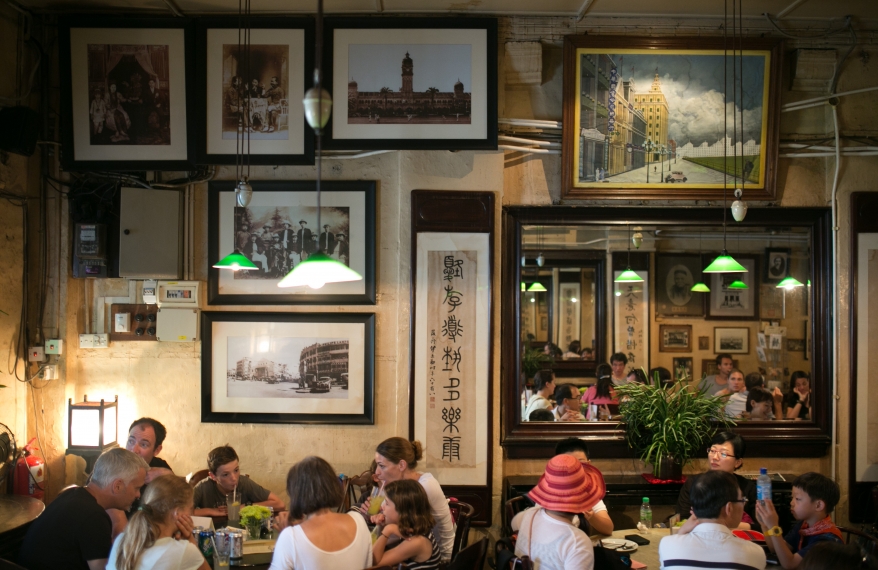
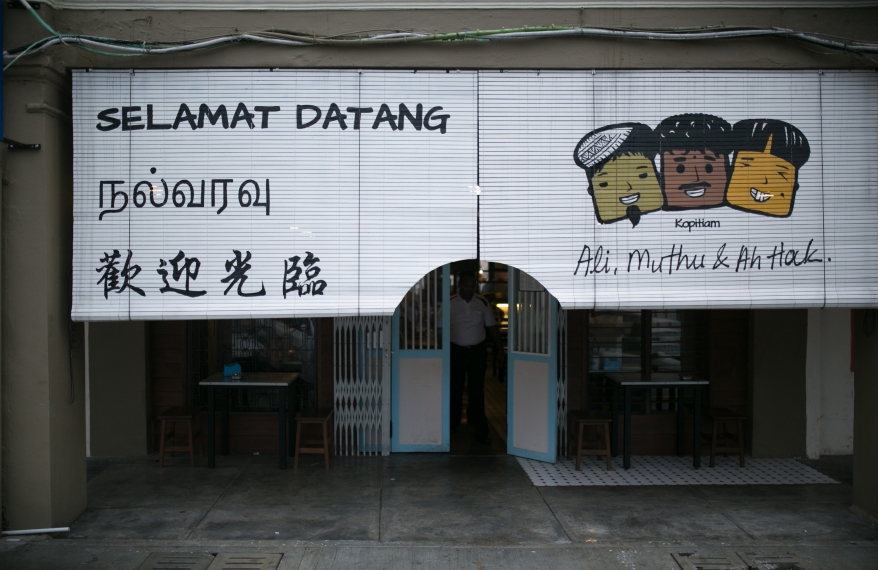
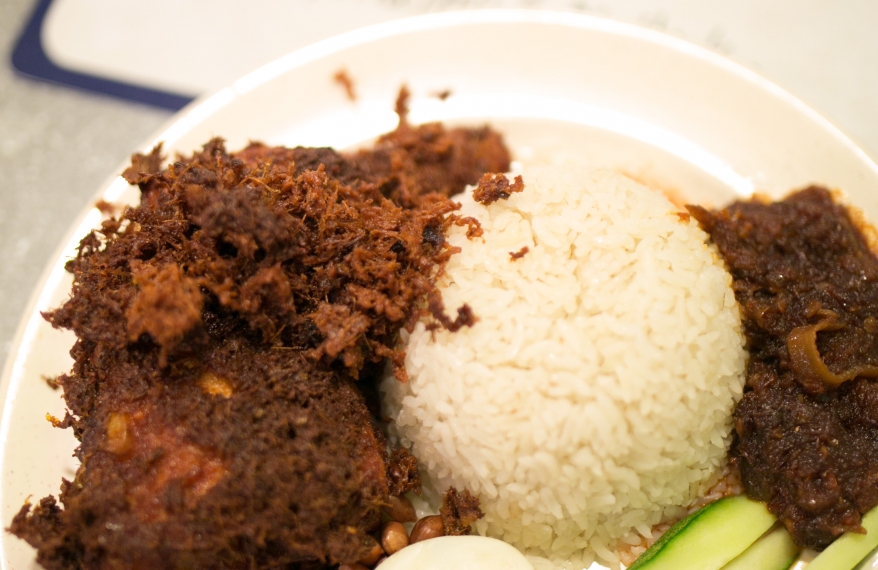
Gems in this area are scattered around Jalan Tun H.S. Lee, or High Street. They include the Old China Cafe, one of the oldest restaurants in KL that features spicy classics like nasi lemak, as well as Ali, Muthu & Ah Hock, a modern coffee shop that serves a mean ayam penyet.

A hop away is the Junk Bookstore. What started 23 years ago as a hobby for owner Adeline Tan slowly grew into a three-storey second-hand bookstore housing anything but junk. A treasure trove of about 13 million magazines, books, journals, which includes many out-of-print editions and some of which you can’t find anywhere else, the bookstore is probably “the biggest library in Malaysia,” said manager Jeffrey Koh, 62, who helps to run the store. This includes a rare 1949 edition of National Geographic magazine which goes for RM100 and many editions of the now-defunct Life magazine that date back to the 1980s.

Although dealing in second-hand books is a ‘cold trade’, Koh says he is more interested in meeting fellow book lovers. “The most important thing is we must know history, especially our own country’s history,” he said. “By reading you gain a wealth of knowledge, which is important for human beings. We need to know where we come from.”

A large selection of fresh local produce can be found at Pudu Market.
Miss Tee Chai Wai, who has been working at Concorde Hotel Kuala Lumpur for more than 30 years, shares with us her memories of Pudu Market.
May King Lum Mee has been in business since 1969 and is highly popular for its noodles in thick broth.
The Buddhist Maha Vihara temple is one of Brickfields' historical religious monuments.
Brickfields is a photographer's paradise with its colourful sights and colonial structures.
The Zion Lutheran Church is one of the handful of churches located in the Brickfields area.
Old China Cafe is one of KL's oldest restaurants serving classics like mee siam in an atmospheric setting.
Ali, Muthu & Ah Hock is a modern kopitiam popular with a young crowd. Its popular dishes include ayam penyet and nasi lemak

LOST IN TIME ON JALAN TAR

10 minutes by taxi from Concorde Hotel Kuala Lumpur

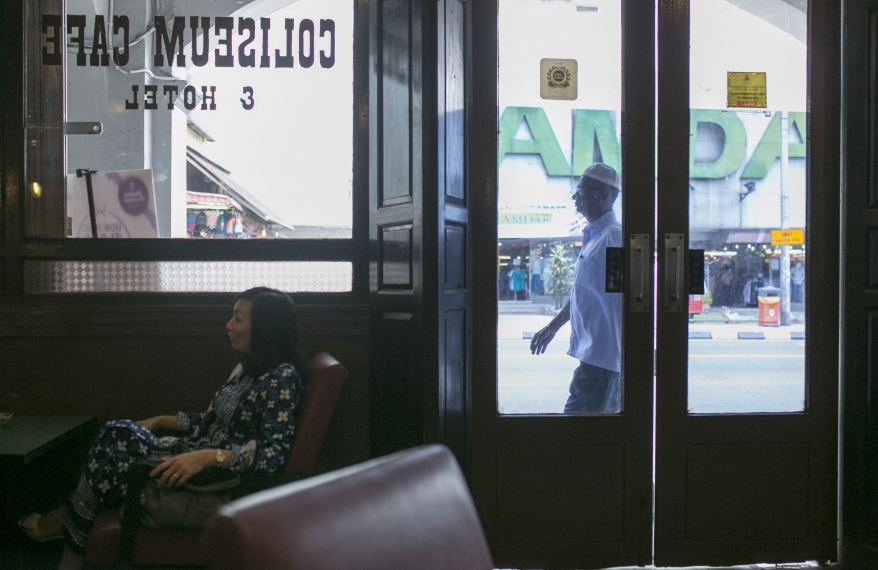
Stepping into Coliseum Cafe, one can be forgiven for mistaking it for a movie set. Having been in business since 1921 at the same address on Jalan Tuanku Abdul Rahman (TAR), the cafe has been a steward of quality Western Hainanese cuisine loved by generations of fans including British government servants, army personnel and tin-miners from the days of colonial rule.

Its popular classic menu includes a sizzling steak served on a hot plate heated to 180°C, baked crab and Hainanese noodles concocted by old Hainanese master chefs who picked up these traditional dishes from their western bosses. “People have affiliation for the food and nostalgia,” said manager Peter Heng, who is in his 50s and started work at the cafe as a kitchen helper peeling onions and potatoes in 1978.

“The place is like a second home for me. Many of our customers return faithfully and always have stories to tell their children and grandchildren.”

In 2014, the cafe entered Malaysia’s Book of Records for the “Longest Operating Western Colonial-Themed Restaurant”. It now has three outlets, with its owners planning to open some 10 to 15 outlets over the next five years. “Many places are very modern but there are some who cherish old places,” said Mr Heng. “It is a comforting feeling.”

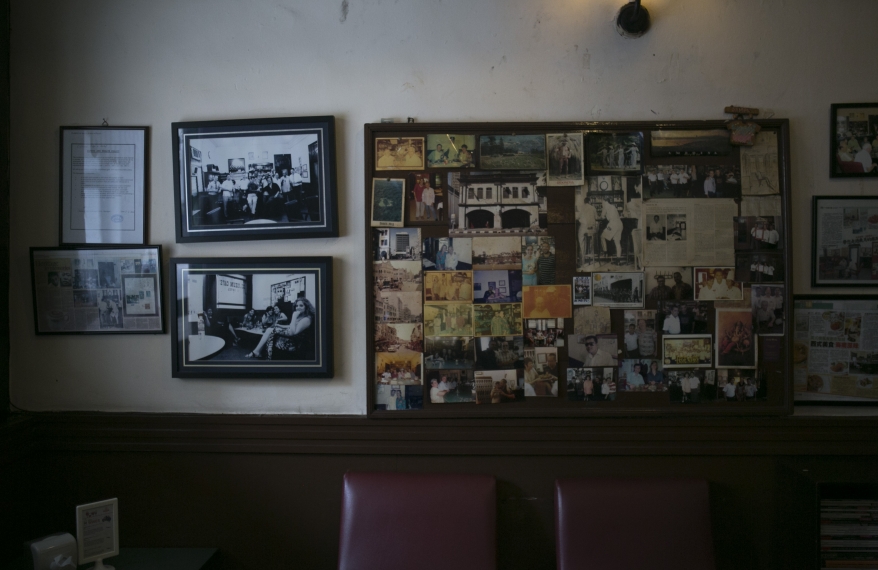
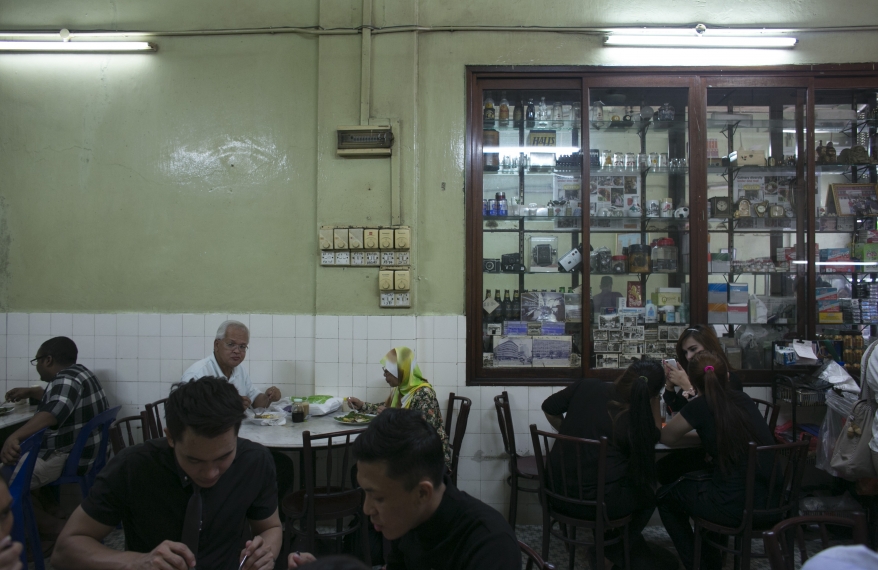
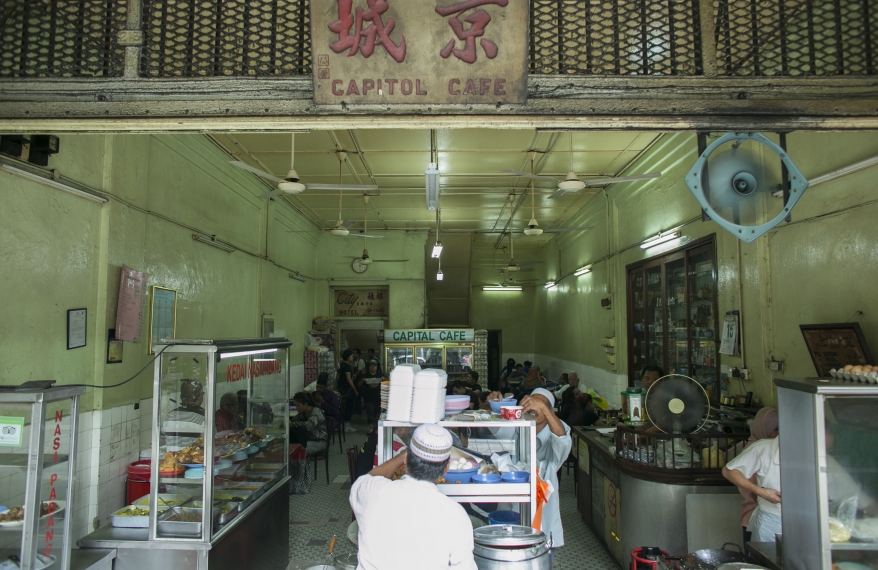
Just next door, the grand Coliseum Theatre, one of a few pre-war cinemas that still play films today, is also worth a visit. Built in 1920 by a prominent local family, the Deco-style building is capable of seating 900 people. Today, it screens mostly Indian movies. If you’re in the mood to discover KL by foot, a 20-minute walk down Jalan TAR towards SOGO mall will bring you to Capitol Cafe, an unpretentious institution of cultural diversity. At any time of the day, the humble coffee shop run by the Lin family is packed with a close-knit community of Malaysians from all races and age groups chomping down a range of authentic delicacies such as nasi padang, mee hailam, rojak and satay.

Old menus from 1956 hang proudly on the wall, while eclectic tiles with seahorse motifs and big, gold characters of the cafe’s name don the pillars at its entrance. Mr K.Y. Lin, 56, who manages the eatery with his siblings to honour his father, muses: “It’s a twilight zone. The tables and chairs which were around 50 years ago are still here today.”

Although the cafe has garnered a loyal stream of supporters for its history, taste of home and affordable prices, he is still unsure about its future. “It’s in my blood but it’s not in my children’s blood,” he laughed. “I’ll take it one day at a time.”

NEW OLD SPIRIT

10 minutes by taxi from Concorde Hotel Kuala Lumpur

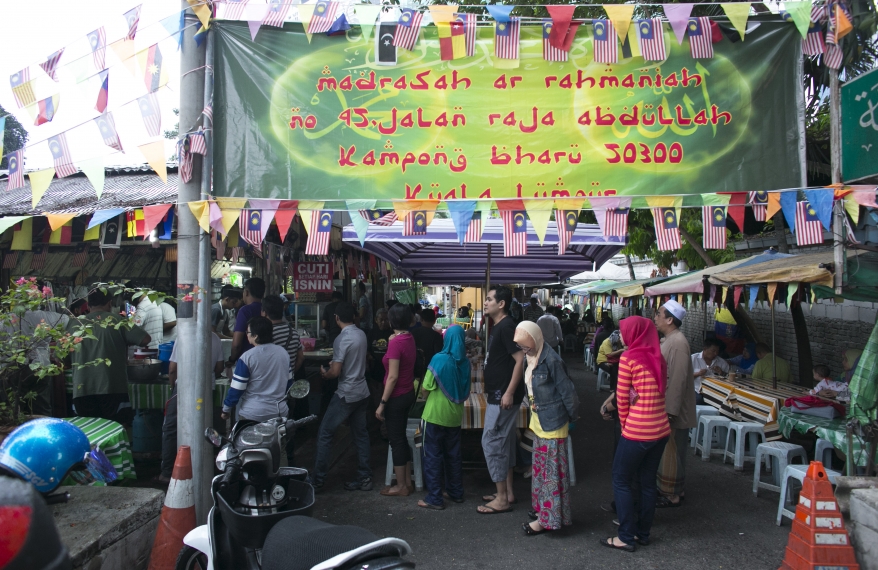
It is seven in the morning on a sleepy, rainy Saturday and most of bustling Kuala Lumpur seem asleep. But in a humble alleyway tucked in Kampung Baru, or “new village,” a queue of hungry early birds has arrived for Pak Hassan’s nasi lemak.

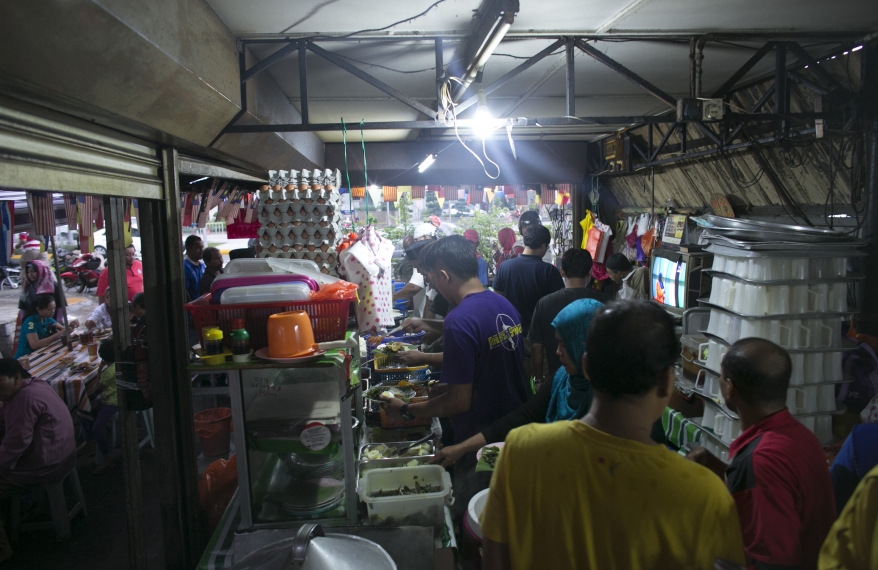
In between stirring huge pots of coconut rice and fussing over woks of chicken feet curry, Pak Hassan, 68, smiles and greets the customers busy picking their choice of curries. “Eat first, pay later,” he says, guiding people along the line.

Having set up shop here since 1993, his recipes have attracted a loyal fanbase who love the fluffy, delicious roti canai. An estimated 40kg of rice and up to 130kg of chicken feet curry are sold every weekend. We heard that queues during the festive seasons can go round the block.

Kampong Baru, an odd, charming amalgamation of seven villages, is an enclave in the city hotly eyed by property developers, which have so far been unsuccessful in winning over village elders who want to preserve the ethnic Malay lifestyle. Designated as a Malay Agricultural Settlement in 1900 by the colonial British administration, the area has grown into a symbol of heritage against modern-city development. Historically, it has also been the venue of anti-colonial protests, racial clashes and early meetings of the United Malays National Organisaion (UMNO).

Today, the area is on the radar of enthusiastic foodies and heritage buffs. A breath of fresh air from the crowded skyscrapers in the background, the village paints a picture of timelessness with its stilt houses, frangipani trees and coconut palms. Mom-and-pop shops like Lee Sing Tailoring Material Supplier are living examples of its kampung spirit.

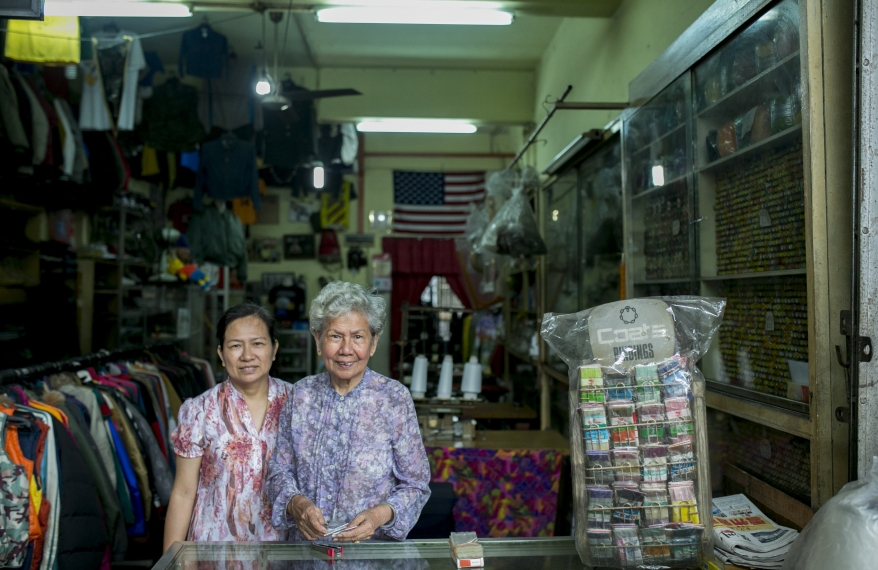
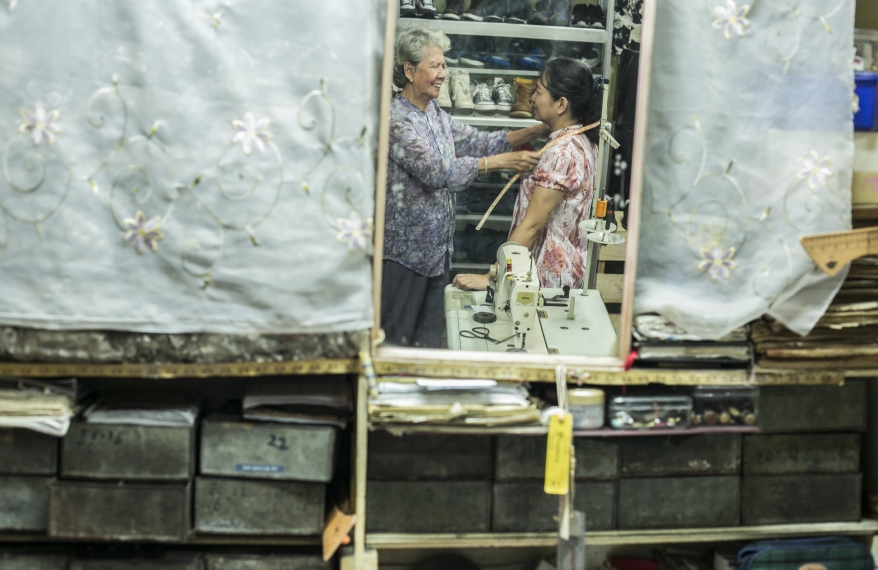
Madam Rena Siow, 54, who grew up in this shop and learnt the ropes from her parents, says she cherishes the place, as it is her family’s way of life. “If I didn’t take up sewing, nobody would inherit these skills,” she says. “We must cherish what our parents built for us because it is part of who we are.”

Coliseum Cafe is Malaysia's longest operating Western colonial-themed restaurant, having been in business since 1921.
The cafe is a steward of quality Western Hainanese cuisine loved by generations of fans.
Capitol Cafe is an unpretentious eatery packed with customers who love its authentic local delicacies.
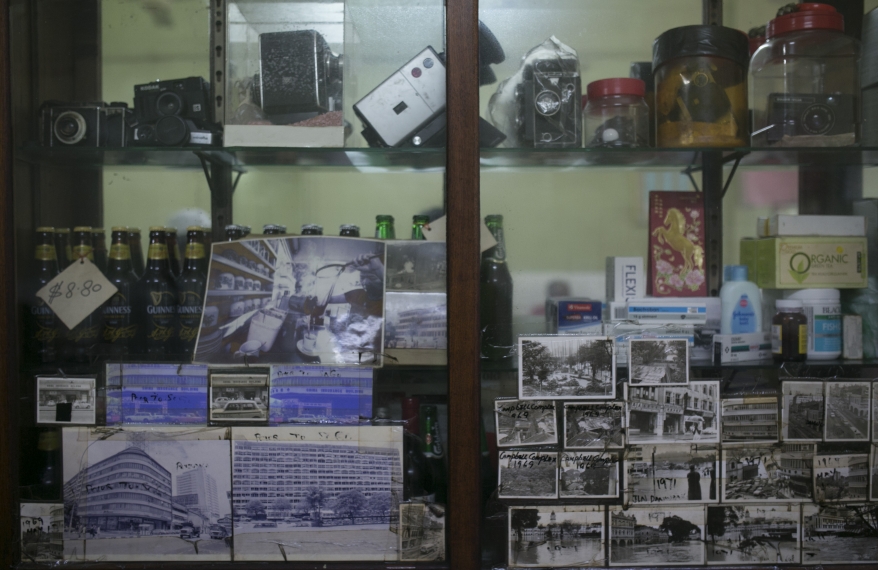
Run by the Lin Family since 1956, the cafe is a living museum housing images and the family's personal collection of memorabilia.
Warung Nasi Lemak Pak Hassan is a popular eatery in Kampong Baru which draws the crowds for its nasi lemak and roti canai.
Lee Sing Tailoring Material Supplier is a small business in Kampong Baru run by Madam Rena Siow and her mother.
Step into Madam Siow's shop and go back in time to experience her dedication to the craft of tailoring.

H Directory

Pudu Wet Market

Jalan Pudu, Kuala Lumpur
Opening hours: 6am to 1pm, daily

Chop Tow Yeat

36 Jalan Yew, off Jalan Pudu

May King Lum Mee

38 Jalan Yew, off Jalan Pudu
Opening hours: 9.30am to 5pm, daily. Closed on Mondays

Old China Cafe

11 Jalan Balai Polis
Opening hours: 11am to 11pm, daily

Ali, Muthu & Ah Hock

13 Jalan Balai Polis
Opening hours: 8am to 4.30pm, daily

Junk Bookstore

76 Jalan Tun H.S. Lee
Opening hours:
Mon to Fri: 8.30am to 3pm
Sat: 8.30am to 2pm
Closed on Sundays and PH

Coliseum Cafe

98-100 & 102 Jalan Tuanku Abdul Rahman
Opening hours: 10am to 10pm, daily

Capitol Cafe

213 Jalan Tuanku Abdul Rahman (Opposite SOGO)
Opening hours:: 10.30am to 7.30pm, daily. Closed on Sundays

Warung Nasi Lemak Pak Hassan

45 Jalan Raja Abdullah, Khatib Koyan, Kampung Baru
Opening hours: 7am to 1pm, daily
Closed on Mondays

Syarikat Lee Sing (Lee Sing Tailoring Material Supplier)

48 Jalan Raja Bot Chow Kit
Call +603 2920 069 for an appointment

On the Trail of Nostalgia, Kuala Lumpur (Part 1)

Nostalgia is tricky business. In megacities like Kuala Lumpur where development is king and the purpose of land is largely determined by dollars and cents, old buildings are rapidly torn down in place of the shiny and new.

The city’s history began in the middle of the 19th century with a thriving tin-mining industry. Chinese headmen were appointed by the British as Kapitans (or captains) to ensure law and order. The third, Yap Ah Loy, oversaw the golden rise of Kuala Lumpur from a quiet town to Selangor’s most advanced city. As it survived the course of history, Kuala Lumpur has flourished organically, most of it without any central planning, resulting in a charming mix of architecture reflecting both its European colonial and Chinese influences.

While old buildings carry memories and scars of yesteryear, mindfulness and care in restoration and preservation work is integral to protect the soul of a place. Concorde Hotel Kuala Lumpur for example, manages to balance its modern façade with a touch of history. Previously known as the Merlin Hotel from 1957 till 1990, the hotel is an icon in central Kuala Lumpur where generations have dined in its ‘Dragon Court’ Chinese Restaurant (now known as XIN Cuisine).

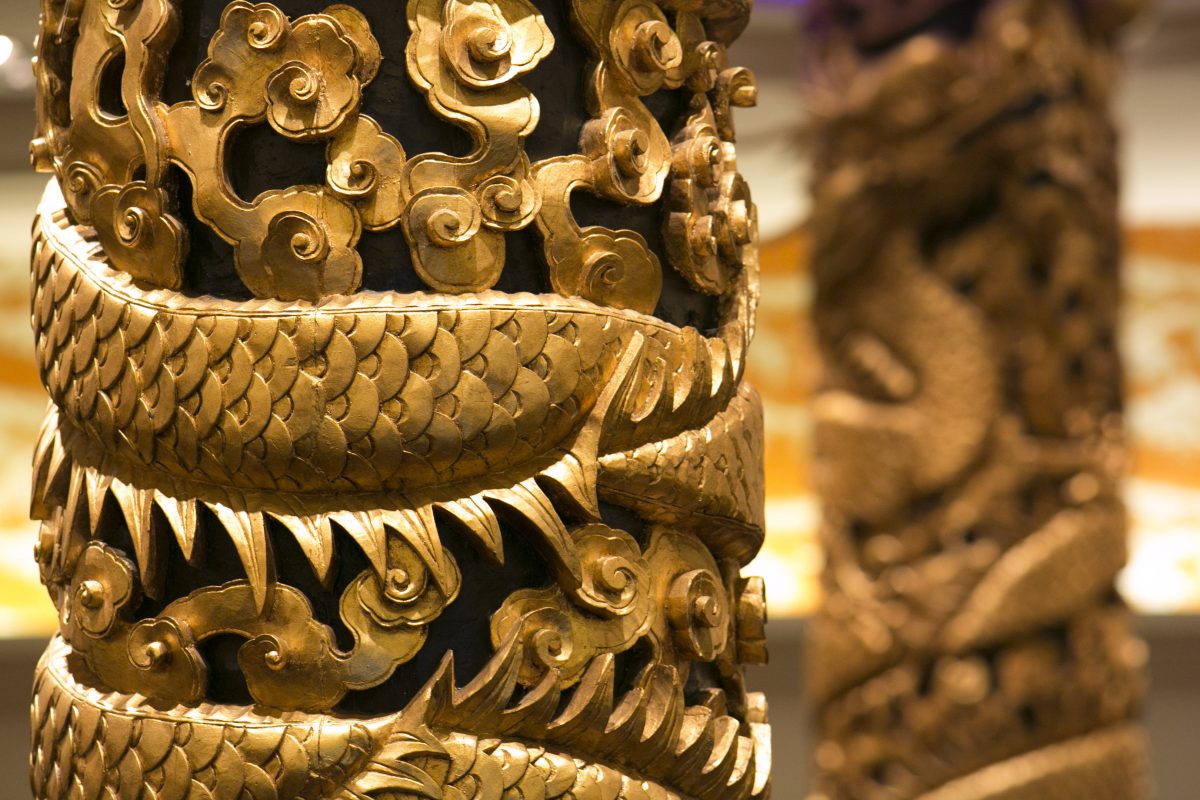
In celebration of its heritage, Concorde Hotel Kuala Lumpur has preserved a magnificent pair of dragon pillars located in XIN Cuisine, original tiles on the 8th floor, which were manufactured in 1957, and a classic brick walkway with the Merlin Hotel initials (MH) in front of the swimming pool.

For Miss Tee Chai Wai, who manages housekeeping at Concorde Hotel Kuala Lumpur, coming to work every day is like taking a walk down memory lane. She first started working at Merlin Hotel more than 30 years ago and progressed from chambermaid to a supervisor who oversees more than 100 staff.
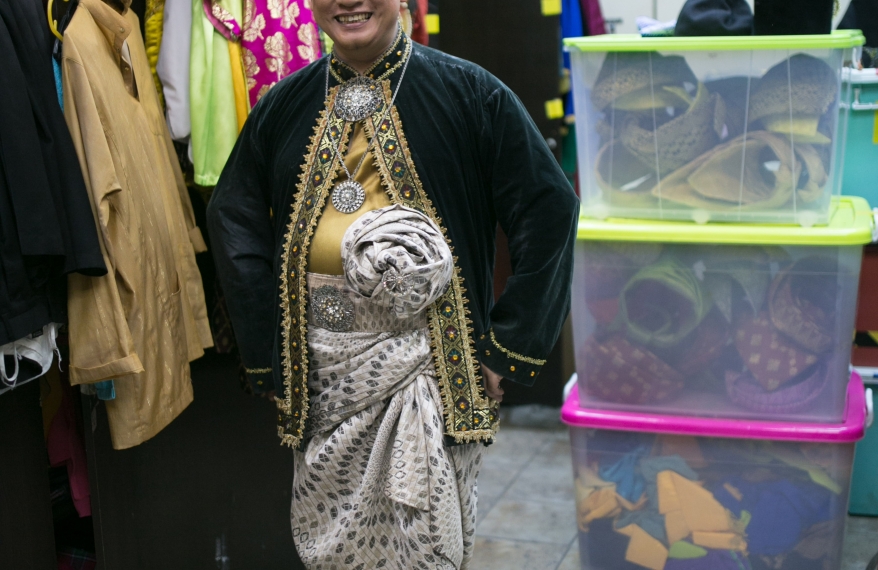
“I love it here because we are like family,” she says. “There is a strong sense of belonging because everyone puts their heart into their work and over so many years we become more than just colleagues.”

Ms Chow Jie Jing, remembers following her parents to work in the Chinese restaurant kitchen, where they were dim sum chefs. Today, while her sister works at XIN cuisine, Jie Jing is a marketing communications executive at Concorde Hotel Kuala Lumpur. “Memories make a place significant for me,” she says. “Especially when it bonds my family together.”

Continued in Part 2, we bring you on a nostalgia trail to discover the rich memories central Kuala Lumpur holds beyond its glitz and glamour

Two delicately-crafted golden dragon pillars take centre stage at Concorde Hotel Kuala Lumpur's Chinese restaurant, XIN Cuisine
Although Concorde Hotel Kuala Lumpur has a modern facade, much has been done to preserve pieces of its history, including this classic walkway with the Merlin Hotel initials
A troupe leader at Saloma theatre wears a traditional costume.

H Directory

XIN Cuisine

Concorde Hotel Kuala Lumpur
2 Jalan Sultan Ismail


No Shortcut to Making Bak Chang

Pearly Kee is a food ambassador for Penang, and a culinary rebel. The Nonya (a Straits Chinese lady) turns her back on mortars and pestles for blenders, uses a dehydrator instead of relying on the sun, and buys, rather than cooks, her own bak chang.

But the cookbook author remembers very well how to make a mean glutinous rice dumpling. Squatting down to scrub bamboo leaves clean for a good six hours isn’t something one forgets easily—even if it has been 25 years since.

Growing up in a Straits Chinese household, which, more likely than not, made the best bak chang in town, Pearly had a good supply of dumplings through the year. Sometimes she ate four at a go. She was a kitchen assistant to the matriarchs at home but honed her skills only at the classes with a local Baba (a Straits Chinese man) and master chef, Datuk Lim Bian Yam.

Before she started giving cooking lessons from her home in 2006, Pearly took dumpling orders from family and friends to supplement her income. It went on for more than 10 years until she decided it was more sensible to pay and let others labour instead.

Bak chang, according to legend, derived from rice stuffed in bamboo that was fed to the river fish, so that they would leave the remains of the loyal Chinese court official Qu Yuan alone. Although elaborate and challenging to make, it has become symbolic to eat bak chang on Duanwu.

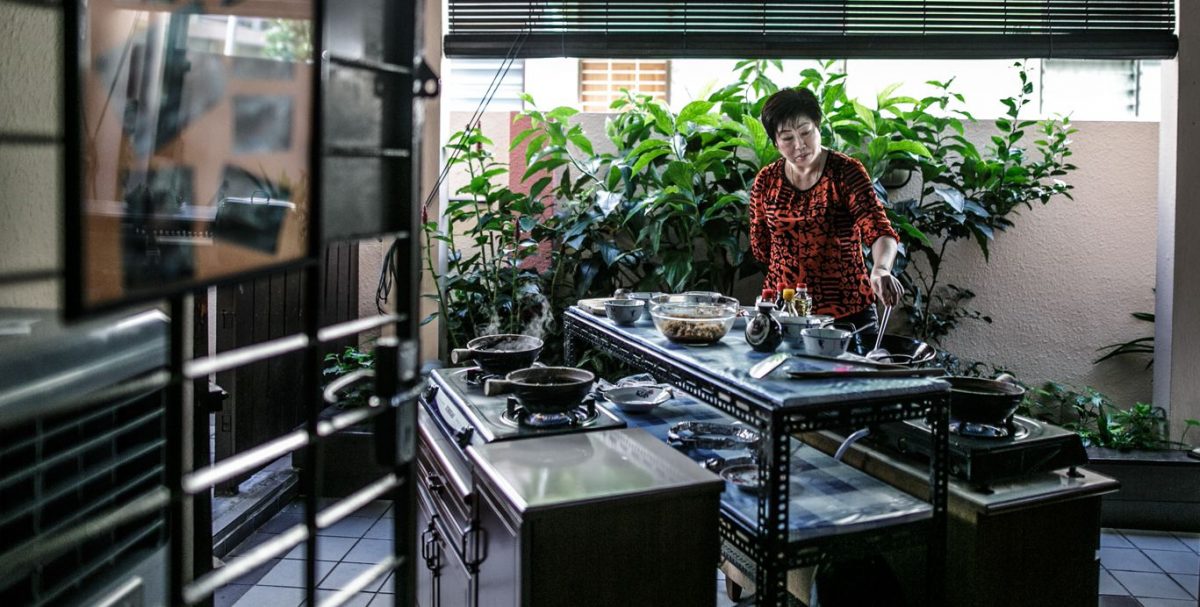
We visit Pearly at the semi-detach house she shares with her husband, to bring her out of her retirement from making bak chang, and to teach us the recipe. Even when juggling four burners that are processing different ingredients, the gregarious lady does not forget to dish out cooking tips: “Add more seasonings because they will be diluted in the boiling water. You fry the yolks to firm them up, so they don’t fall apart inside the bak chang. Add split green beans to take away the saltiness of the yolk.”

Then, she slips in a code of conduct for cooks: “We don’t criticise other people’s food. We impress upon people to cook.” She has forsaken traditional methods for more efficient solutions so that cooking would still be relevant to modern lifestyles. Until Pearly or someone else discovers a more efficient way of making bak chang, there is at least her recipe that will keep this traditional dish alive.

Pearly stocks more spices than a household would need for the class she conducts.
Packing a dumpling according to one's own preferences.
Pearly took classes for three years before becoming a cooking instructor herself.

Have Your Convenience And Eat It

If time or the hot weather forbids sweating out in the kitchen, there are old establishments in Georgetown selling bak chang that are worth your entire daily calorie allotment. For regional varieties, go to the 78-year-old Cintra Food Corner. Besides the most common kiam chang, from Fujian province, there are pyramid-shaped Cantonese dumplings seasoned with salt and lard, and a Hakka variety where the black eye beans, chestnuts and pork belly combine to demonstrate the true elegance of simplicity.

Feng Yi’s dumplings have textures that witness the culinary prowess of their producers. They are moist and soft but the grains distinguishable and still firm to the bite—a balancing act even seasoned cooks cannot achieve. The wholesaler that started business in 1975 opened their first retail store last year, an effort of the second generation to promote their mother’s (affectionately known as Aunt Feng) brand. They have been very selective about their ingredients, even specifying to their supplier the number of days their duck eggs should be salted. No wonder the yolks melt in our mouths.

A pyramid-shaped Cantonese dumpling (right) and a Hokkien variety (left) from Cintra Food Corner.
Ms Chan and her sister now run the business that their mother, Feng Yi, started in 1975.

H Directory

Pearly’s Penang Home Cooking School

85 Taman Berjaya, 10350 Pulau Tikus, Penang
Tel +016 437 4380
penanghomecookingschool.com

Cintra Food Corner

40 Lebuh Cintra, 10100 Penang
Tel +012 480 3308
Opening hours: 9am to 6pm, daily.

Feng Yi Dumplings

Wisma KGN, 123-G-04, Taman Harbour View,
Pengkalan Weld, 10300 Pulau Pinang
Tel +604 262 2506
Opening hours: 10am to 10pm, daily. Closed on Wed.
www.fengyi-dumplings.com

The Sedap Food Trail

In search for Malaysia’s best unearthed food expedition…

Countless accolades have been showered on Malaysia for its culinary legends. We aim not to repeat names familiar with foodies, but to shine the spotlight on the underrated and undiscovered gems of small towns along the route.

Use this guide as a loose reference point for you to plan your own adventures and learn about Malaysia while enjoying some of the best offerings it has. We hope these stories also remind you of the beauty of serendipity. Venture off the road with an open mind and appetite, you never know what surprise awaits you.

Butterworth

Butterworth is a major transportation hub for bus routes and railway lines that do not serve Penang Island. Linked to the island via the Penang Bridge, it serves some of the freshest and cheapest seafood in Penang. We had our share of sedap (Malay for delicious) food. Read on to discover these gems.

Ipoh

Malaysia’s third largest city on the peninsula’s west coast was a town built on the vast fortunes during the booming tin-mining industry in the 19th century. Here, you can find a delectable selection of food from hearty breakfast fare, simple desserts to biscuits as take home gifts. There’s more to the jewel of Perak here.

Batang Kali

A town in the Hulu Selangor district, Batang Kali is often used as a transit point to Genting Highlands, a hill resort in Malaysia famous for its casino and theme parks. Whilst a sleepy town, we picked up famed sesame candy and had an enjoyable meal en route. Find out more on where we stopped.