Alternative Shopping in Kuala Lumpur

When shopping in Kuala Lumpur, one will think of heading to the megamalls like Mid Valley and Pavilion for some high fashion or luxury good therapy. 

For the shopper in you who much prefer seeking out unique finds, these are 3 alternative shopping experiences for you when you visit Kuala Lumpur.

ChubbyFingersPlay

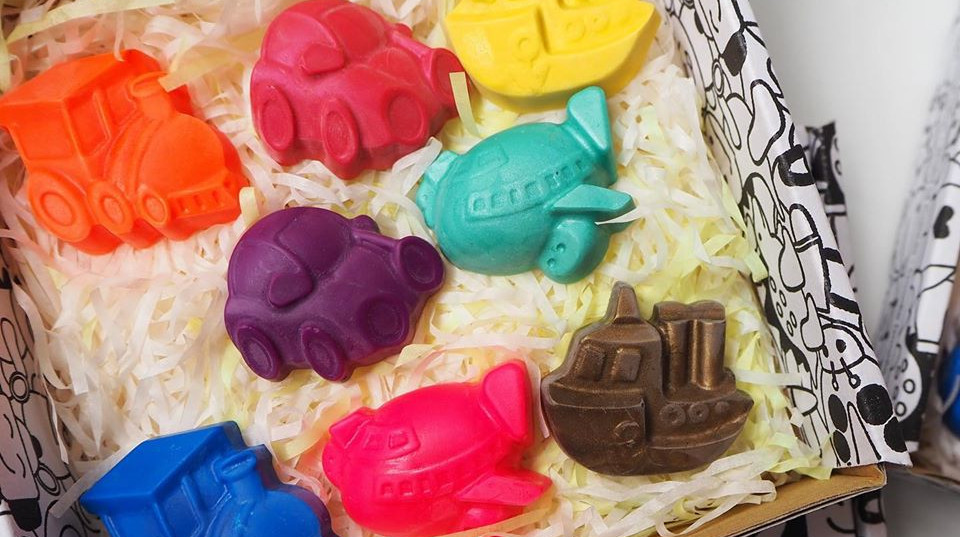
ChubbyFingersPlay is a first-of-its-kind handmade novelty kids store in Malaysia. They design and create crayons made of natural beeswax and non-toxic colouring which are safe for children. These crayons are suitable for little hands to adults who love to doodle, tell stories and colour to their wildest imaginations.

These novelty crayons are extremely pretty, fun, vibrant, attractive and most importantly they help to develop fine motor skills, coordination, grip and strength which are so crucial as part of every children’s growing and development stage.

All crayons are handmade with love, with themes ranging from Dinosaur,
Wheelies, Animal Safaris, Starter sets, Robots, Rainbow sticks, Alphabets,
as well as customised names and gift packs!

Image credit: Facebook of ChubbyFingersPlay

Oh Happy Gift

Oh Happy Gift (OHG) is a gift store that offers a range of items, from a variation of homeware, travel essentials, stationery, to gifts for the little ones.

There are 3 ways to start the gifting experience. Firstly, you can choose to curate your own gift by mixing and matching from our collection. Better yet, simply just pick from their everyday series, gifts that are already made for you. Still lost? Speak to them to curate your gift, be it for any occasion or event.

C-5-6 Parklane Commercial Hub
Jalan SS 7/26, 47601 47301 Petaling Jaya, Selangor
+6012 615 0487
By appointment only

Image credit: Oh Happy Gift

KitaKita-Fine Malaysia Crafts

Image credit: Kitakita Malaysia

Situated in the heart of Bukit Damansara, KitaKita is the place to go for a comprehensive Malaysian experience. Meaning “us” in Bahasa Malaysia, KitaKita brings together the best of local art, craft and cuisine under one roof – even being included in the world-renowned LUXE guide in its Kuala Lumpur edition, which described KitaKita as a “standout store” and ultimate shopping haven for Malaysian items from a host of carefully selected artisans.

The Republik, M05 Mezzanine Floor,
1 Jalan Medan Setia 1, Bukit Damansara, 50490
Kuala Lumpur, Malaysia
11am to 5pm (Mon to Sat)

Cafes and Restaurants to Try in Shah Alam

Being the state capital of Selangor, Shah Alam retains its suburban-esque vibe with its lush landscapes. It remains a choice weekend getaway for many there is no lack of cafés and restaurants to choose from in this city. If you are in the area, do check these places out, let us know what you think!

KOPIMEO

Kopimeo is part of the rising wave of cafés that have opened. Inspired by the Melbourne café scene, Kopimeo serves up traditional café grub but adds in a local twist to some of their dishes like Lempeng Opah (a local response to crepes) served with sambal bilis and Spaghetti Gulai Lemak Udang (Spaghetti in spicy cream sauce with shrimps).


Picture: @kopimeo (Instagram)

You can’t come to Kopimeo without having your Kopi, and they serve up decent coffees. For those looking for caffeine-free options can go for their cold-pressed juices according to available fruits and vegetables available that day.

Address: 29, Jalan Tengku Ampuan Zabedah B 9/B, Seksyen 9, 40100 Shah Alam, Selangor
Tel: +603 5886 2643
Closed on Thurdays  

WOP (Wood-fired Oven Pizza)

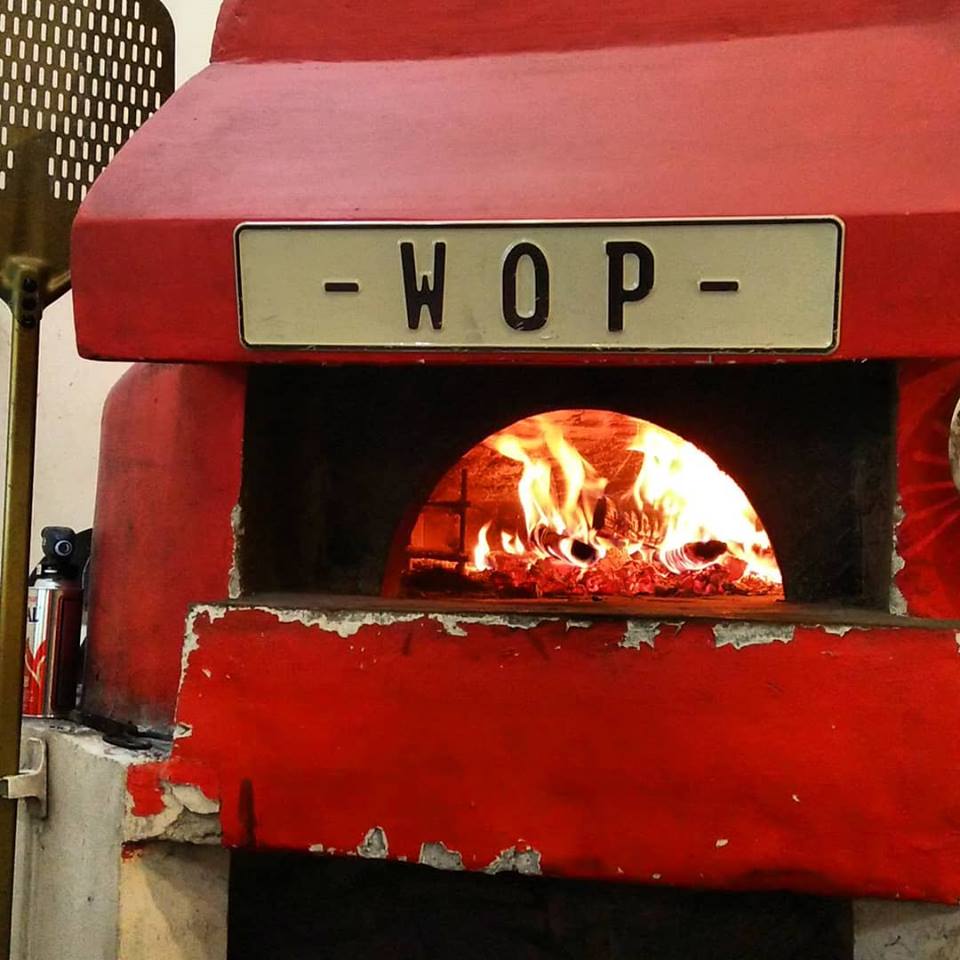
WOP (Wood-fired Oven Pizza) in Shah Alam, Selangor was founded in 2015 from owner Ikmals’ passion for pizza and entrepreneurship. Inspired by Jamie Oliver’s food revolution, the team aims to serve everything fresh, including the mozzarella on top of their pizzas. Like their restaurant’s name, their pizzas are made of hand-stretched dough and baked in a specially handcrafted wood fire oven.


Picture: @woodfiredovenpizza

[UPDATE: They have moved from Shah Alam to Kuala Lumpur]

Address:H-0-8, Plaza Damas No 60, Jalan Sri Hartamas 1
Sri Hartamas, 50480 Kuala Lumpur, Malaysia
Tel: +603-6419 7530
Operating Hours:
Mon to Sun: 11am to 9/10pm

Al-Rawsha Restaurant

For Middle Eastern cuisine lovers, Al-Rawsha Restaurant, located at Section 7 of Shah Alam is a restaurant that you should make a trip to. Try their signature Chicken Kebab sandwich, and you definitely don’t want to miss out on their Mansaf Al-Rawsha which is a traditional Lebanon dish of lamb cooked with a variety of spices. Also, remember to go in a group because their portions are huge. This way, you’ll be able to order more and have a taste of different items on their menu.


Picture: @iyc_msu (Instagram)

Address: 2, Jalan Platinum G 7/G, Seksyen 7, 40000 Shah Alam, Selangor
Tel: +603 5524 3584

Pak Li Kopitiam

Pak Li Kopitiam has been in business for more than 30 years and they have become so popular that this is only one of the several outlets in the area. If you’re craving some local homestyle fare, you should give Pak Li a visit and try among their best sellers – Nasi Ayam Lemon, Nasi Lemak Pak Li Special, Katong Laksa, Hainanese Chicken Chop and Golden Fried Rice.

Address: 42, Jalan Kristal K7/7 Seksyen 7, 40000 Shah Alam
Tel: +603 5511 3608

Sips & Bites Café

Sips & Bites Café is a family-run business. The blue interior and simplistic design filled with wooden tables give a cosy at-home feel. This non-halal café offers all-day breakfasts, pasta, sandwiches and local fare like Nasi Lemak. If you’re here for tea, try their waffles paired with a variety of hot and cold drinks including fresh smoothies.


Picture: Roll with Carol (Blog)

Address:38-G, Jln Sungai Burung AA32/AA, Bukit Rimau, 40460 Shah Alam, Selangor, Malaysia
Tel: +6019 271 1309

Panggang BBQ

Panggang which means grilled in Malay is what this restaurant does best. They serve up freshly grilled meats of your choice from chicken, lamb to seafood skewers. This is their speciality and a must-order for first-timers. If you’re not so much into grilled meats, Panggang also has a Thai-fusion menu of western and local dishes.


Picture: @panggangbbq (Instagram)

Address: Lot 2-G, Jalan Kristal 7Ar/Ar, Seksyen 7
Tel: + 6018 372 3317

Nyonya Seafood Laksa Recipe

35 min preparation time | serves 1 | 5 min cooking time

This delicious flavour-drenched dish is commonly found in Malaysia and Singapore, originating from the Peranakan community—the descendants of Chinese traders marrying local Malays. Nyonya Seafood Laksa was born from the fusion of traditional Chinese food and Southeast Asian flavours like coconut milk and spices, and is a must try when visiting this part of the world.

The soul of a good bowl of Nyonya Laksa is the gravy, which is spicy and rich with just a hint of sweetness from the infusion of thick coconut milk. Fresh ingredients, especially the spices, are the most important components in making the thick and flavourful gravy, with the addition of seafood giving it an extra kick.

The secret to this dish is patience, as simmering is key to bringing out the delightful flavours of the spices. Chili, garlic, lemongrass and a long list of other ingredients blend flawlessly for a complex taste, while lime adds a touch of zing to the dish.

This dish can be easily prepared at home as a family meal, comfort food for a rainy day, or for simple family celebrations.

Go on, give it a try and we hope you enjoy preparing it as much you eat it.

Heritage Walk
A delicious bowl of Nyonya Seafood Laksa.
Heritage Walk
Ingredients for spice past that makes the gravy.
Heritage Walk
Ingredients for Laksa.
Heritage Walk
 
Heritage Walk
Chef William Teo, Executive Chef of Casa del Rio Melaka explaining to us the tips and tricks to making a good bowl of Nyonya Laksa.

Ingredients for gravy

To make the Laksa Spice paste:

  • 10g of Fresh red chillies
  • 10g of Dried chillies
  • 10g of Lemongrass
  • 10g of Galangal
  • 5g of Turmeric
  • 10g of Shallot
  • 5g of Garlic
  • 5g of Toasted shrimp paste (Belachan)
  • 5g of Curry powder
  • 10g of Polygonum leaves (Daun Kesum)
  • 10g of Ginger flower (Bunga Kantan)
  • 100ml of Coconut milk
  • 50ml of Evaporated milk
  • 100ml of Chicken stock
  • 30ml of Cooking oil
  • Pinch of Salt
  • Pinch of Sugar

Ingredients

  • 150g of Yellow noodles (can be substituted with thin vermicelli)
  • 50g of Bean sprouts
  • 150g of Large prawns
  • 60g of Sliced fish fillet
  • 50g of Squid
  • 20g of Scallops (Optional)
  • 1 Hard-boiled egg
  • 2 pieces of Dried bean curd
  • 20g of Shredded cucumber
  • A handful of Coriander leaves

Method

  1. Blend all the ingredients for Laksa spiced paste.
  2. Heat cooking oil in a pot and sauté the spice paste, add Polygonum leaves and ginger flower, cook till the mixture becomes aromatic.
  3. Add chicken stock and simmer for 20 minutes, followed by adding the coconut milk and evaporated milk slowly while stirring.
  4. Add the seafood and bring the gravy to boil. Season with salt and sugar.
  5. In a separate pot, blanch the yellow noodles and bean sprouts.
  6. Place the noodles and bean sprouts into a bowl, top it off with Laksa gravy and seafood.

Garnish

Garnish with boiled egg slices, shredded cucumber and coriander leaves.

The Ins and Outs of Malay Cuisine Decoded

We learn the art of Malay cuisine at Casa del Mar Langkawi’s popular cooking class, taught by ‘skinny’ Chef Khairul Ghazali.

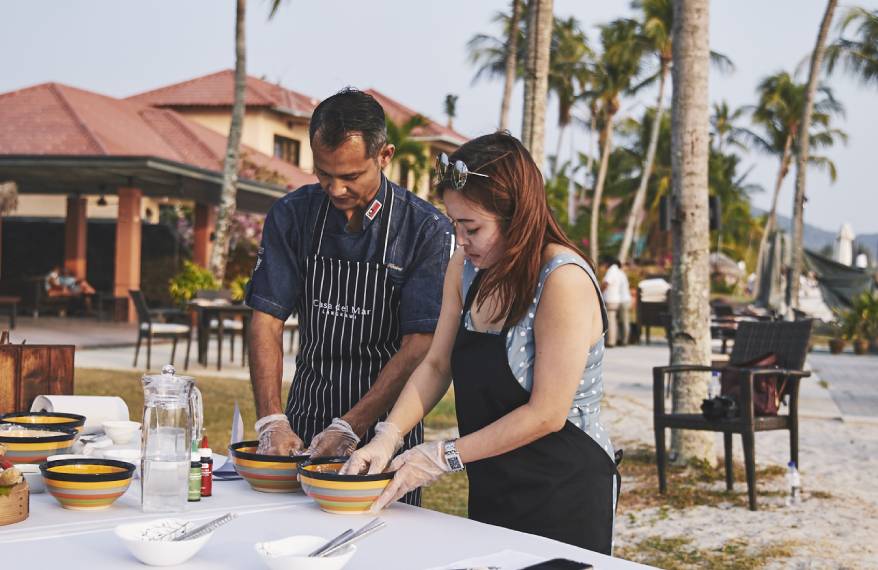
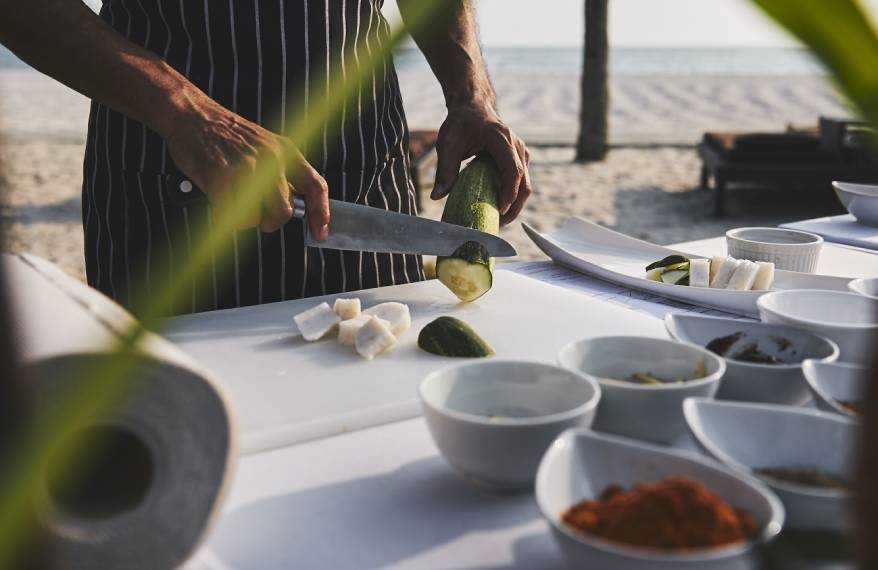
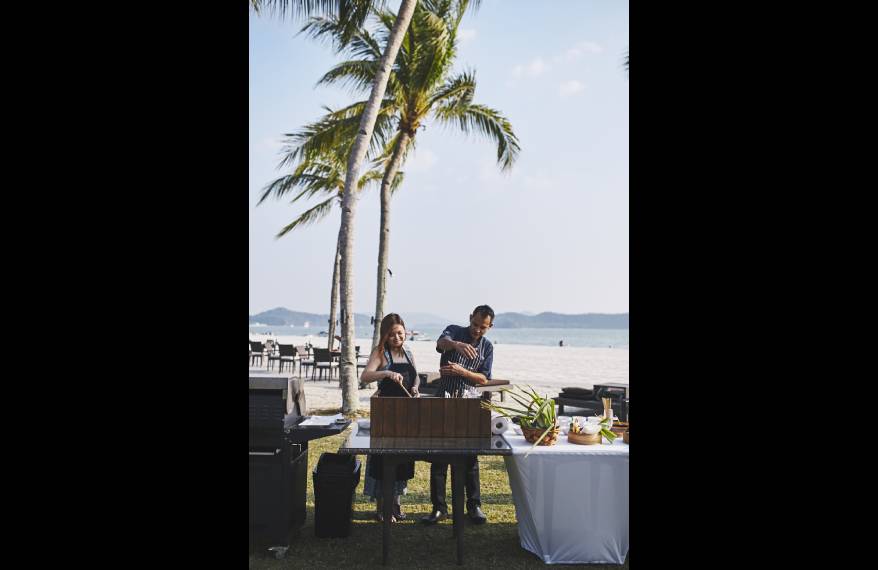
We are standing as a light breeze ruffles our poolside wear, all comfortable and ready to get our hands dirty. The grill is set up facing the pearly sands of Langkawi’s Cenang Beach, and next to it are two tables jammed from end to end with all manners of cooking related gear—neatly laid clean crockery, disposable gloves, and some sort of printed instructions on paper.

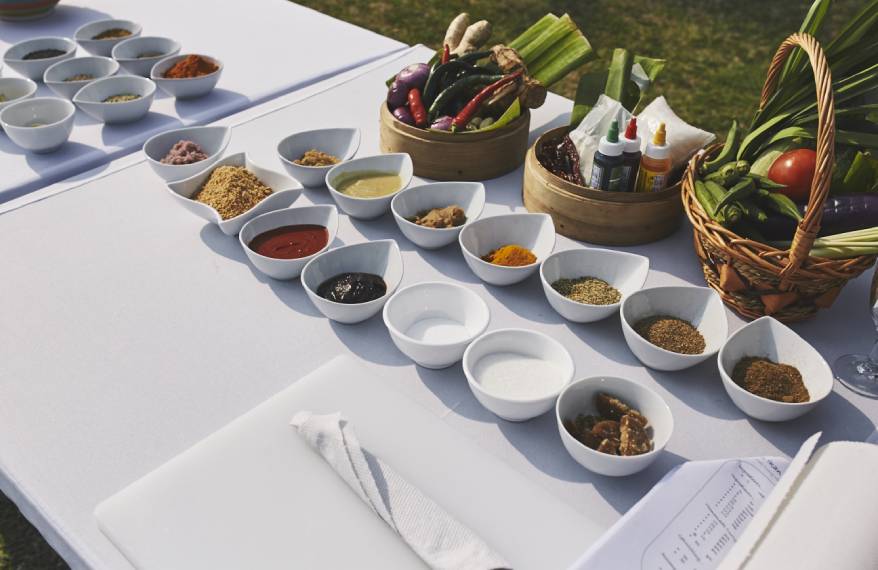
And then the visual feast: fresh fish, tender meats, and a smattering array of fragrant spices such as tamarind juice, fresh galangal (not to be confused with ginger), cumin, coriander, turmeric, fennel seeds…all in preparation for our three-course Malay cooking class.

This is none other than Casa del Mar Langkawi’s popular cooking class, taught by ‘skinny’ Chef Khairul Ghazali himself —but don’t let his lean frame fool you. He’s the man responsible for pulling in packed dining crowds daily at the beach facing La Sal Restaurant; we hear even non-hotel guests can’t resist! For faithful patrons who have repeatedly chosen to holiday with the hotel, cooking up a Malaysian feast aided by Chef Khairul is an oft-picked part of their return trips.

The personable Executive Chef earned his stripes training seven years under local Chef Zabidi Ibrahim, widely considered as the pioneer who elevated the then-raw Malay cuisine into a package suitable for today’s modern diners. Chef Khairul still vividly remembers his “very stern mentor”, and how “while apprenticing as Commis 1 in 1997, I wanted to cook a frozen fish—he threw it back at me!”

Cooking classes at Casa del Mar are available upon request (best booked before arrival).

One of the immediate things you’ll notice about Malay cuisine, is the sheer amount of spices used to bring out a dish’s flavour.

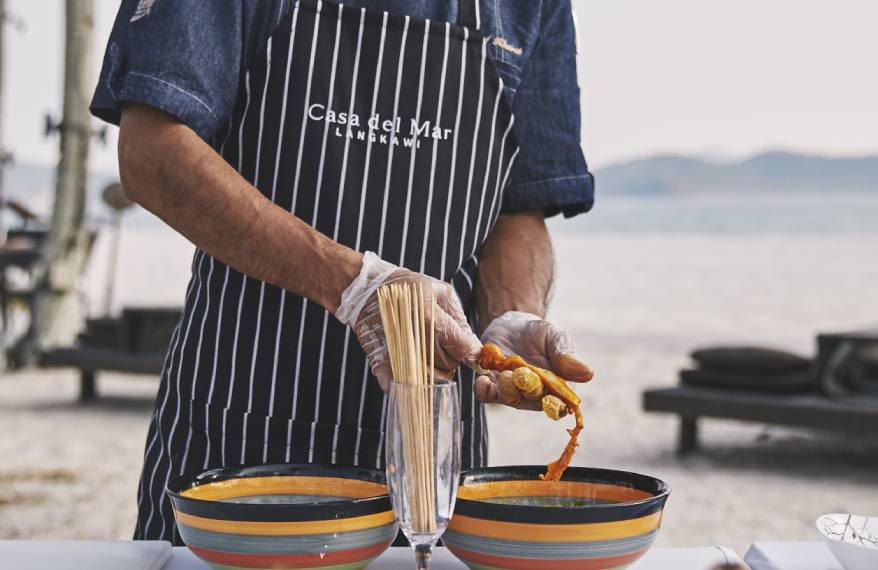
One of the most often heard complaints by his students? How skewering satay ayam looks deceptively simply, but in fact takes much skill.

One of the most often heard complaints by his students? How skewering satay ayam looks deceptively simply, but in fact takes much skill.

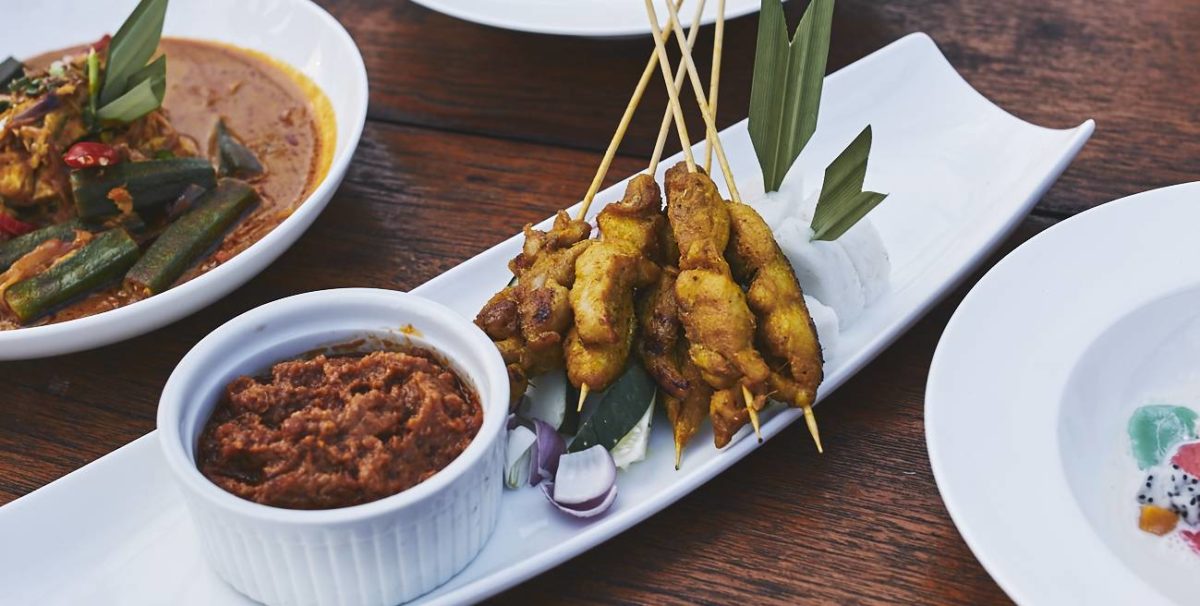
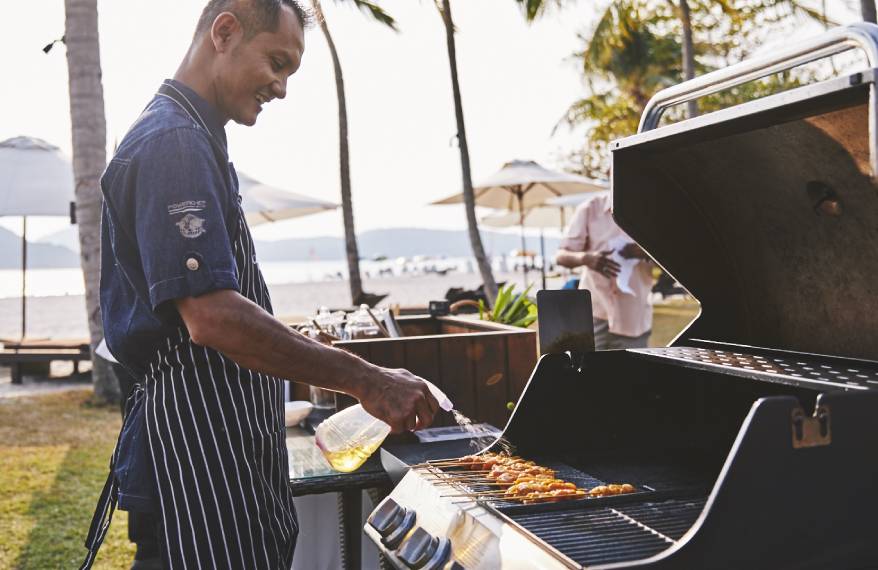
At the tail end of preparing a crowd favourite: satay ayam (chicken on skewers), best paired with fragrant peanut sauce.

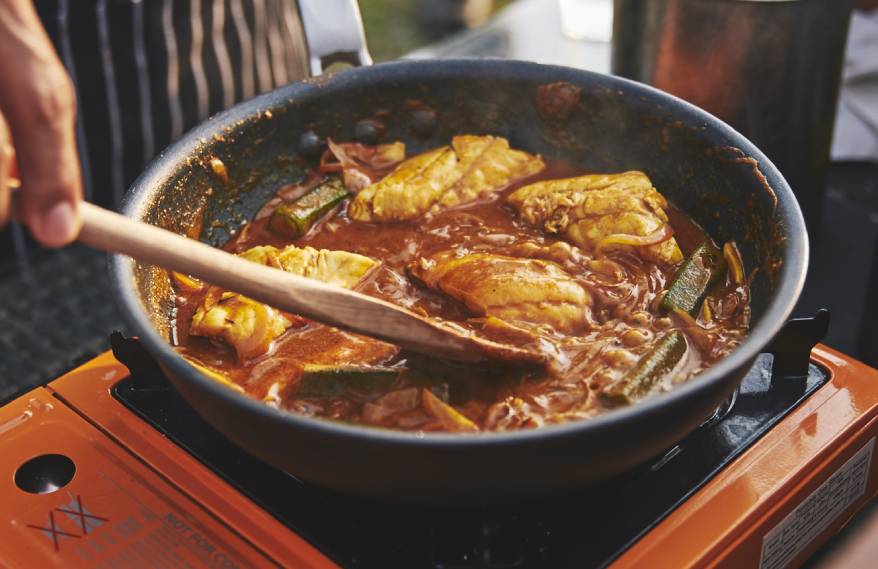
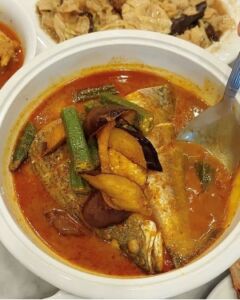
Gulai ikan dengan bendi (Malay fish curry with okra).

Always use fresh ingredients to get good results, Chef Khairul advises.

Menus can be curated to fit culinary preferences and specific needs, with Chef Khairul there every step of the way so even beginners can fit right in.

Back to our menu for the day and feast fit for any foodie: satay ayam (chicken on skewers) with traditional peanut sauce, gulai ikan dengan bendi (Malay fish curry with okra) and butir nangka (jackfruit seeds in coconut milk).

While I consider myself a fair cook, halfway through class, a word of advice chef shared at the beginning suddenly began to make much sense. “Skewering meat for satay looks simple but it’s hard,” was his sagely advice, as I clumsily tried to navigate the uneven chunks of meat. I later learnt the key is to thread through with the meat flat on my fingers, and leaving no parts of the skewer exposed, to prevent the bamboo from catching fire while grilling.

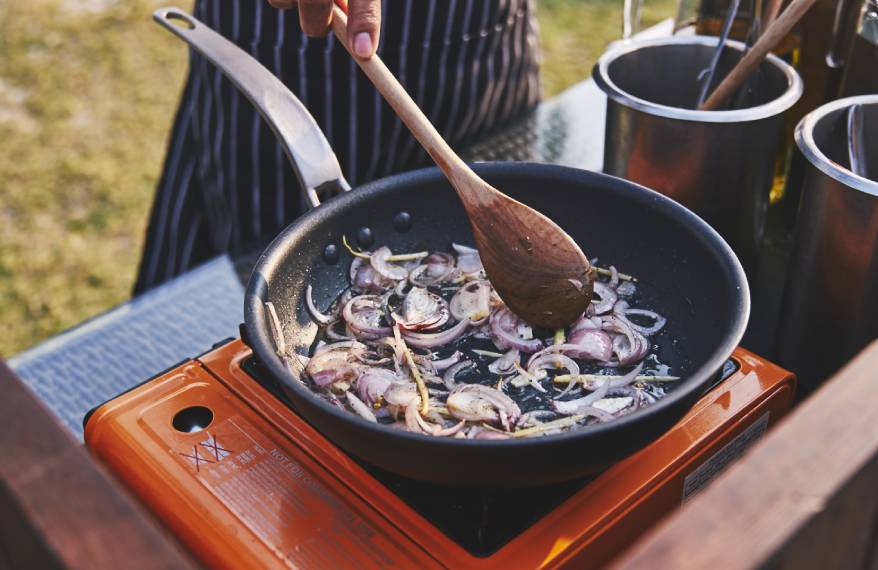
The biggest surprise, however, had to be just how easy Malay fish curry was to whip up. It’s all about having the right spread of ingredients at your fingertips, faithfully adding them in the right sequence, and always, tasting before turning off the gas. Much later, seated before Langkawi’s magical sunset of dancing purples and pinks, even my regular routine of dining became sweeter, as we tucked into this delicious labour of love.

Comfort Food for the Peranakan

This Peranakan dish is a must in traditional Teochew or Hokkien speaking families in South East Asia. A hearty soup of duck, preserved salted vegetable, tomatoes, and preserved sour plum.

Sup Itik Tim

INGREDIENTS:

  • 3 litres water, or enough to cover the meat
  • 1.8-2kg duck, cut into 10-12 pieces
  • 1 small pork trotter, cut into chunks
  • 600g salted mustard leaf (kiam chai), cut into large pieces
  • 80g big onion, peeled and cut into segments
  • 50g dried shitake mushrooms, soaked and halved
  • 4-6 Chinese sour plum
  • 1-2 whole tomatoes, cut in half
  • 50g ginger, smashed
  • 60g (about 6 cloves) garlic, crushed
  • Spice pouch (tie in a muslin cloth)
  • 1-2 nutmeg seeds. (Crack and discard shell to extract the kernel
    and smash it once with the back of a cleaver)
  • 1 tsp white peppercorns, crushed lightly

METHOD:

  1. Taste the salted mustard leaf (kiam chai) first, if it is excessively salty, soak it in water for an hour to draw out the salt before using.
  2. Bring the water to a boil in a stockpot and put in the duck and trotter. Allow to boil for 5 minutes until scum rises to the surface. For a clear stock, pour away the boiling water and rinse meat with cold water.
  3. Add 3 litres of water to the pot and bring it to a boil, add in the meat and the rest of the ingredients, including the spice pouch. Bring soup to a boil again before lowering the heat to simmer until the meat is tender. Top up with more water if necessary. Adjust soup to taste, adding salt and pepper as desired.

Recipe courtesy of Perut Rumah Nyonya Cuisine

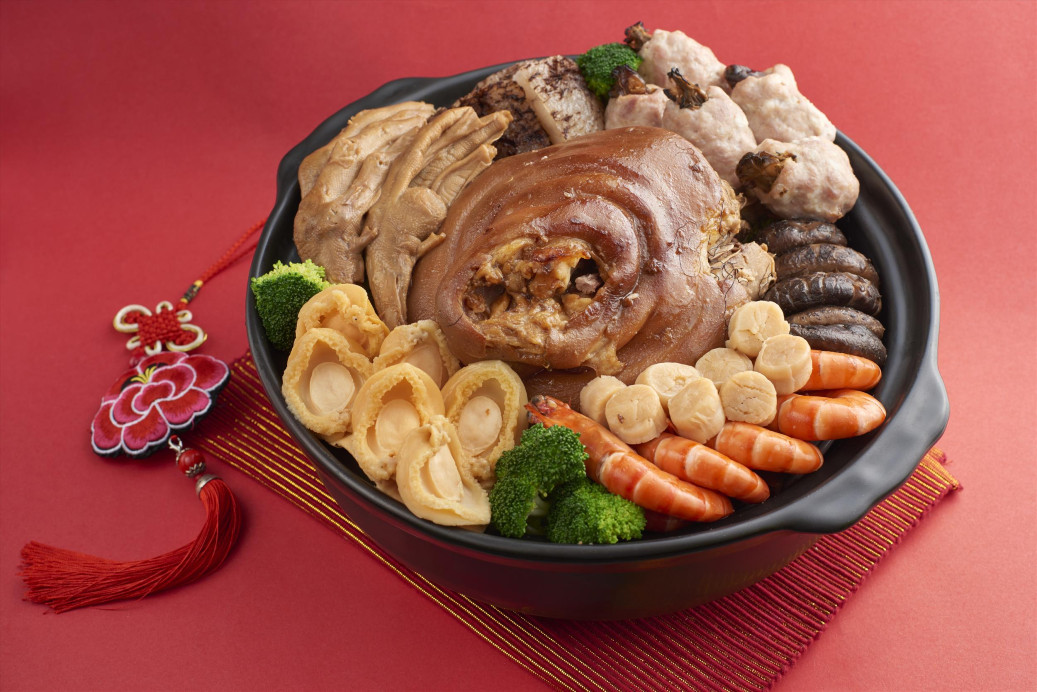
Auspicious Chinese New Year Dish – Poon Choi

Food is an inseparable part of every Chinese New Year. Celebrate Chinese New Year with your love ones with this special treat of abundance.

Poon Choi is one of the must-have dish during Chinese New Year among Cantonese.

This prosperity treasure pot is also known as “Pen Cai” or big bowl feast”.You can savour all the goodness of seafood and meat in a single pot.

Here is a step-by step recipe for an auspicious one-pot dish by Chef Ricky Wong from Concorde Hotel Kuala Lumpur.

Ingredients
  • 8 pieces of canned abalones
  • 8 dried oysters
  • 8 dried scallops
  • 8 pieces of sea cucumber
  • 8 tiger prawns  (deveined, keep the shell intact)
  • 4 large pieces of fish maw (cut half each for 8 pieces)
  • 1 pork knuckle
  • ½ roast chicken
  • ½ roast duck
  • 1 medium radish (cut into the size you preferred)
  • 2 small bundle of black moss (soaked in water for 30 mins)
  • 8 pieces of black mushroom (soaked till soft)
  • 1 small broccoli (cut into florets)
  • 1 lotus root (cut into pieces)
  • 200gm of dried bean curd stick
  • 200gm of dried bean curd gluten
  • 8 pieces of goose web
Superior Broth

Prepare 3 different broths as per below:

  • Chicken soup
  • Pumpkin, carrot and 1 small chicken boil together
  • Soy bean, soy milk, dried oysters boil together and last add some Hoisin sauce to enhance the flavour
Method

For Seafood and Vegetables

1]Rinse the dried oyster and scallop and soak in water separately for about 40 minutes.
2] Rinse the dried shiitake mushrooms and soak in hot water until softened.
3] Clean the prawns and keep aside.
4] Soak the fish maw and rinse. Cut into half.
5] All ingredients cook separately with salt and chicken soup, except dried scallop. Keep aside.

For Pork

1] Prepare soup with soya sauce, black sauce, ginger, rock sugar, pandan leaf, and scallion. Put the pork knuckle into the soup and braised for 1 hours till it soft.

To assemble the Poon Choi

1] Prepare a large claypot. Layer the base with lotus root, radish, beancurd stick. Place the fish maw, sea cucumber, pork knuckle, goose web, black mushroom and dried oyster as the next layer. Steam all the ingredients with the claypot for 25 minutes.

2] Remove the lid, carefully arrange roasted chicken, roasted duck, tiger prawn, broccoli, and the rest of the ingredients around the pot. Add superior broth in the claypot and serve hot.

Superior Broth

In a large pot, combine 3 different broths in the same proportion and bring to boil. Reduce the heat and dissolve 1.5 tbsp. of cornstarch into 1/2 cup of water. Add this mixture to the broth and bring it to a boil for about a minute.

Tips:
Attentive layering of the ingredients contributes to the taste of the whole dish. The ingredients are arranged in layers, allowing you to appreciate the different texture and flavours.

Melaka Makan: Comforts in a Restaurant

Mention a visit to Melaka and these restaurants will spring out. Well known to tourists and locals alike, perhaps raved about and spoken of too many times.

However, every trip to Melaka still renders a visit to these places (and an escape into the cool restaurant environment, away from the Melaka heat). The use of spices, fresh ingredients and the injection of love for their food makes it all the more comforting.

Restoran Aunty Lee

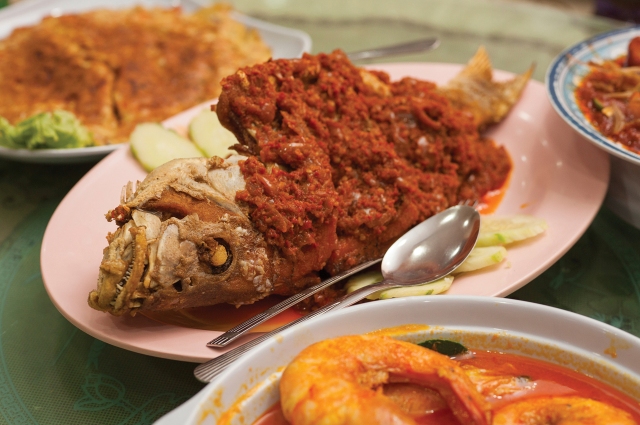
Aunty LeeThe Peranakan fare here is worth the short 10-minute drive from Jonker Walk. When we arrive for lunch, the front tables are filled with customers eagerly waiting for the next dish to be brought out from the kitchen. We too had quite a spread at our table. We especially enjoyed the fresh ikan cili garam (chilli fish), appetising udang lemak nenas (prawns in coconut milk) and tender terong goreng lada (fried brinjal with dark sauce). Even the sambal petai (stinky beans) and bendih ulam (lady’s fingers) got the thumbs up from those who normally shy away from such veggies. Don’t forget to bring back some homemade curry powder, which Aunty Lee uses in much of her cooking.

385, Jalan Ujong Pasir, Taman Sinn, 75050 Melaka, Malaysia.
Tel: +606 283 1009
11.30am to 3pm, 6pm to 10pm
Closed on Tuesdays
www.auntylee.com.my

Beizhan Restaurant

BeizhanBeizhan restaurant was established in year 1995. During establishment, Beizhan Restaurant is managed under a small shop lot. Base on their restaurant Principal Motto “Healthy Home Cook Delicacy”. Beizhan Restaurant theory of bringing healthy food vastly accepted by everyone. Beizhan Restaurant has move to a unique building base on the design to fit all kind of occasion and function. “The Best Chinese Restaurant” from year 2006 to 2009 is awarded to Beizhan Restaurant by Melaka State Government & Tourism Melaka.

No, 43, Jalan Kota Laksamana 2/17, Taman Kota Laksamana, Seksyen 2, 75200 Melaka, Malaysia.
Tel: +606 281 2684
11am to 2.30pm, 5.30pm to 10pm (daily)
www.beizhan.com.my

Nancy’s Kitchen

Nancy Kitchen Melaka
Image credit: Melaka Food Guide | IG

Nancy’s Kitchen is famous for Nyonya food. Chef Nancy was born and raised in a Peranakan household and her recipes have been passed down, now at her 3rd generation.

This home-cooking Nyonya restaurant prides in not having preservatives in their food and it is our favourite place for its friendly service. The server is as chatty as they come, full of suggestions of what to order and will have you making conversation with the other handful of customers in no time. You can also take away homemade chang (rice dumplings), pineapple tarts and nyonya kuehs that make delightful tea time snacks.

Picture credit: Nancy’s Kitchen

13, 13-1, 13-2, Jalan KL 3/8, Taman Kota Laksamana, Seksyen 3, 75200 Melaka, Malaysia.
Tel: +606-2836099 / +6013-6183608
www.eatatnancyskit.com

Hidden Bars in South East Asia: Speakeasy Bars to Check Out

Speakeasy bars have been the buzzword in the cocktail scene. While they’re no longer a hidden secret, we still recommend you check out these five in Southeast Asia.
  1. Magazine 63

The first hidden bar in Penang, Magazine 63 is hidden away with no signage at the entrance and you might think you’ve lost your way. You know you’ve hit the right spot when you locate the Da Ma Cai signage, with the old-school lok lok cart outside the shop. Head to the far left and push the huge wooden door open.


Source: Tafulou.com

Inspired by the olden Chinese era, the interior of this trendy hidden bar is decorated in a vintage oriental style which is usually packed with customers, especially on the weekends. Even the alcohol containers are custom-made according to the theme.

63, Jalan Magazine, George Town,
10300 George Town, Pulau Pinang, Malaysia
Facebook

  1. The BARber

The BARber, located within The Sintesa Jimbaran hotel features a unique concept with two-in-one bar and barbershop experience.


Source: Facebook

Their cleverly hidden entrance facades as a fully functional classic 1930’s themed Men’s Barbershop which reveals a full serviced bar once you push through its hidden doors. Signature craft cocktails, as well as good old Whiskeys, Vodkas, and branded liquors, are available as you chill and relax to the music.

If you’re up to it, get a haircut or a gentleman’s shave while having a tipple. Why not?

Jl. Kencana No.1 Jimbaran
Website

  1. Operation Dagger

[Permanently closed]

The basement bar tucked away on Ann Siang Hill is not an easy spot. “X marks the spot” for Operation Dagger with an overturned crown-shaped logo. That’s your sign to enter.


Source: Citynomads.com

The cool, concrete interior reminds you of an apothecary house, with its unlabelled bottles laid neatly and overhanging lightbulbs. Try some of their original and delicious house inventions, as they offer an Omakase menu of in-house fermented mead and distilled drinks.

You’ll be glad you stumbled upon this speakeasy bar, but be careful you might also stumble your way out from the amazing drinks they make!

  1. The Horse’s Mouth

A rabbit hole located at the edge of Orchard Road, The Horse’s Mouth is a small Japanese inspired izakaya bar. Can’t find it? It’s right behind a curtained door, beside the cashier within Uma Uma Ramen Restaurant.


Source: Facebook

Offering bespoke cocktails made from scratch, its small bites are equally mouth-watering. Try their Wagyu Cubes that melt in your mouth. You can skip dinner and head down here for drinks and food right away.

#B1-39 Forum The Shopping Mall
583 Orchard Road
Singapore 238884
Facebook

  1. Private Room

[Permanently closed. The new establishment is Collins Sake & Wine Bar]


Source: Facebook

#findtheyellowdoor. That’s the first advice you get when you want to find your way to the Private Room. The first speakeasy bar that specialises in wine cocktails, you’ll find more than 200 labels of wine from around the world that will suit your taste.


Source: Timeout

Who’d think that one could make cocktails with wine? Yet, the ones recommended were all refreshing & well-balanced with mellow, pleasing nuances. If you’re not a wine lover, fret not as the bar has whiskies, vodka, gin, brandy, rum, tequila & other liquors available.

 48a-2, First Floor, Persiaran Zaaba,
Taman Tun Dr Ismail, Kuala Lumpur.

12 Unique Eats of Asia

The sauce of life in Asia boils down to its food. The cuisines of Asia are deeply rooted in history and traditions that have evolved over millennia, many of which are passed down through generations.

With a heavy focus on regionally grown and sourced ingredients and spices, Asia’s cuisine reflects the vibrancy, energy and diversity of the region – a mishmash of salty, spicy, sweet and tart flavours that pull in all directions and still linger on after the last bite.

Be in for a treat with this delectable selection of 12 dishes that make up a fair portion of Asian cuisine.

1. Mas Huni, Maldives – Made mainly from grated coconut and tuna, this typical Maldivian breakfast goes best with freshly baked chapatti, a type of flatbread.

2. Bajiyaa, Maldives – This savoury snack is popular among the locals. Made in a similar way as a dumpling, its filling is replaced with tuna, potato or both, where it is then fried until a crispy golden brown.

3. Chicken Rice, Singapore – Authentic Hainanese chicken rice is a must-try when visiting this food haven. The fragrant rice topped with either steamed or roasted chicken is usually accompanied by a minced chilli and garlic sauce.

4. Hawker Food, Penang – There is no better local cuisine than those found along the streets of Penang. Sellers dish out plate after plate of hot and piping char kuay teow, a stir-fried noodle dish with cockles, among other favourites.

5. Fresh Oysters, Pattaya – One of the benefits of being a coastal city is definitely the variety of fresh seafood available. Be sure not to miss out on their succulent oysters, which are an absolute delight to one’s palate.

6. Nasi Lemak, Kuala Lumpur – Head over to Warung Nasi Lemak Pak Hassan, a popular eatery in Kampong Baru. It draws the crowds for its nasi lemak – rice cooked with coconut milk commonly served with sambal and ikan bilis – and roti canai.

7. Chendol, Melaka – This traditional shaved ice dessert is made from coconut milk, green starch jelly and pandan flavouring. The creamy and refreshing texture makes it perfect as a teatime snack to cool down in the hot tropical weather.

8. Bebek Bengil, Bali – Also known as crispy duck, The duck is steamed in Indonesian spices, and then deep-fried to attain its signature crispy golden crust.

9. Peranakan Food, Singapore, Melaka & Penang – Peranakan food boasts a delectable fusion of both Chinese and Malay cuisines, as reflected by its culture. Indulge in the robust ayam buah keluak, a chicken dish with spices and black nuts or nyonya kueh, sweet and sticky desserts typically made with glutinous rice and coconut milk.

10. Durian, Malaysia & Thailand – Known as the ‘king of fruits’, this green, spiky fruit is ubiquitous in Southeast Asian countries. The bittersweet taste of its delicious, creamy flesh is the reward for many who aren’t put off by its pungent smell.

11. Bean Sprouts Chicken, Ipoh – Similar to Singapore’s chicken rice, this Malaysian version comes with a generous helping of crunchy bean sprouts. The tender steamed chicken is dosed with soy sauce and oil, making for a light and tasty meal.

12.   White Coffee, Ipoh – This Malaysian city is famous for their unique twist on this universal drink. Made purely from coffee beans, Ipoh coffee boasts an absence of any kind of additives during the roasting process, resulting in an intensely aromatic, lightly coloured brew usually served with condensed milk.


For the Love of Food: Eating your Way Round Johor (Part 2)

In Part 1, we brought you around the towns in southern Johor. Now, we travel northward to another 3 towns in search of more delicious eats.

YONG PENG

This township may be small but it makes up for its size with many stalls offering delightful traditional dishes, making it a true food paradise.

The day began at Maxim Snack Shoppe for the popular local breakfast of roti bakar (toasted bread), coffee and curry puffs. To step into this shop is to step into another world, as the owner is a collector of vintage items and knick-knacks like enamel cups, old movie posters and vases. The roti bakar definitely lived up to its name, with a slightly smoky taste topped off with a generous layer of butter and homemade kaya (coconut jam). The curry puffs, with its flaky crust and chunky spicy potato fillings, were huge and so tasty you can’t stop at one.

Maxim Snack Shoppe
Maxim Snack Shoppe offers simple yet delicious old-school drinks and pastries like tea with condensed milk, curry puffs, taro cake, toast bread and pies.
Maxim Snack Shoppe
Maxim Snack Shoppe offers simple yet delicious old-school drinks and pastries like tea with condensed milk, curry puffs, taro cake, toast bread and pies.
Maxim Snack Shoppe
The entire shop is filled with vintage paraphernalia that will take you back to the past.
Maxim Snack Shoppe
The entire shop is filled with vintage paraphernalia that will take you back to the past.

With so many things to try in Yong Peng, we had to pack up soon and head to Restaurant Ing Ki for their braised noodles. A Yong Peng delicacy, the braised noodles are covered in a thick gravy, served with fresh cut garlic and chillies. According to the owner, Mr Ho Soon Teik, the noodles are best enjoyed while hot as the texture changes when it’s cold. He also insisted we try the other house special, the Hok Chow (egg drop) soup. This thickened soup is made with tofu, prawns, egg and minced meat, and it’s the perfect accompaniment to the braised noodles. Mr Ho is semi-retired and doesn’t have anyone to pass the family recipe to, so do drop by to enjoy this dish while you still can!

When we told friends we were headed to Yong Peng, everyone insisted we had to try the famous fish balls at Yuan Yean Fishball Eating House. These heavenly fish balls were definitely worth the stop, with a soft and bouncy texture. Thomas, the second generation owner also suggested we try the fried Fuzuk (beancurd sheet), another favourite with customers. This crispy side dish can be eaten on its own or with rice and noodles.

Restaurant Ing Ki braised noodles
The braised noodles at Restaurant Ing Ki are personally cooked by the owner Mr Ho, as regulars known the difference if someone else takes over.
Yuen Yuen fish balls
The fish balls at Yuan Yuen are freshly made daily from Ikan Parang (Wolf Herring fish) with no MSG or preservatives.
Yuen Yuen fish balls
The fish balls at Yuan Yuen are freshly made daily from Ikan Parang (Wolf Herring fish) with no MSG or preservatives.

Yuan Yean Fishball Eating House
123, Main Road, Yong Peng (next to Caltex Petrol Station)
Tel: +6019 752 8927

Maxim Snack Shoppe
230, Jalan Besar, Yong Peng

Restaurant Ing Ki
Taman Sri Rahmat, Yong Peng 83700, Malaysia

BATU PAHAT

Ramly Kopitiam is where locals from all walks of life gather to meet and exchange gossip over some delicious local food. While the shop is Chinese owned, it is run by Mr Ramly and his wife now. What’s even more surprising is that Mr Ramly speaks Mandarin and Hokkien fluently, as he worked alongside the owner for over 30 years.

It’s evident that Mr Ramly knows most of his customers as he greets each of them by name. Seeing the large crowd, we quickly ordered some satay (skewered and grilled meat), mee rebus (boiled noodles) and kaya toast (toast with coconut jam) before they ran out.

The satay was succulent, juicy and mouth-wateringly good, made even better when dipped in the peanut sauce. The bowl of mee rebus looked ordinary but the taste was nothing but that. This wonderful bowl of noodles comes with flavourful broth, sprinkled with sliced potato, prawns and beancurd.

Mr Ramly then brought out the house special, the kaya and butter toast. The kaya is specially made by Mr Ramly himself in the kitchen, every two days.

Next on the list was Nasi Baryani Mohd Shah, which is located along a stretch of other stalls selling the same dish. Upon tasting it, you will understand why it’s the most popular stall there. The fragrant, savoury rice will take your taste buds to heaven, enhanced by soft chunks of soft curried mutton or chicken that falls off the bone easily. But don’t take our word for it, taste it for yourself. Drop by early, as the nasi briyani (spicy rice) sells out very fast.

Ramly Kopitiam
Mr Ramly and his wife have been running the coffee shop for over 30 years.
Ramly Satay
Juicy and succulent saya cooked over a traditional chracoal barbecue.
Nasi Baryani Mohd Shah
The nasi biryani (spicy rice) here is so good, even the Sultan of Johor orders it for delivery.
Nasi Baryani Mohd Shah
The nasi biryani (spicy rice) here is so good, even the Sultan of Johor orders it for delivery.

Nasi Baryani Mohd Shah
Stall 14, Kompleks Niaga Peserai (Benteng Peserai) Jalan Peserai, Batu Pahat

Ramly Kopitiam
3 Jalan Engan, Batu Pahat

MUAR

For the discerning coffee drinker, 434 Coffee is a must-visit when in Muar. While this Malaysian coffee has long been enjoyed by locals as Kopi O (black coffee), it’s the Kopi Elephant that will give your taste buds a jolt. This bold tasting coffee is exclusively homegrown in the area. Also known as Liberica, the Kopi Elephant got its name due to the large size of the beans.

Mr Kiar, the second-generation owner tells us there is only a 1% production of Liberica beans in the world, and he’s proud to have them here in Muar. It has a sweet taste and a delicious aroma that lingers long after you’ve drunk it. Coffee lovers, remember to make a pit stop here when visiting Muar!

434 Coffee
434 Coffee is renowned for their Liberica beans that are proudly homegrown and roasted in their factory.
434 Coffee
434 Coffee is renowned for their Liberica beans that are proudly homegrown and roasted in their factory.
434 Coffee
434 Coffee is renowned for their Liberica beans that are proudly homegrown and roasted in their factory.
434 Coffee
The nasi biryani (spicy rice) here is so good, even the Sultan of Johor orders it for delivery.

434 Coffee
Address: 121, Jalan Maharani Muar, Johor