Top 5 Picks in Tiong Bahru

Tiong Bahru is one of the oldest neighbourhood estates established in Singapore

The once-sleepy housing estate was gentrified since 2010 and it has since become a “hipster” shopping enclave. Trendy boutiques and eateries opened shop and it is now one of the cool places to hang out. Whether for a cup of freshly brewed coffee, a meal or to simply shop for unique trinkets, this is definitely one of the place you should visit when you are in Singapore.

40 Hands Coffee

Forty Hands

A hip coffee joint on the ground floor of a 1930s shop house has become the toast of the town. With its premium brew prepared at a precise 94 degrees, you know it’s not just a regular coffee place. Other gastronomic gems on the menu are Jamaican jerked pork toasted sandwich, weekend-only eggs brunch items plus their crowd favourite – steam buns.

78 Yong Siak Street
Unit 01-12 Singapore 163078

Nana & Bird

Nana & Bird

Nana & Bird is a retail start-up that is a favourite amongst local fashionistas selling women & kids fashion as well as homeware. Started by 2 childhood friends, this store offers a veritable treasure trove of gorgeous and affordable fashion offerings from accessories, clothing to delightful trinkets, all carefully curated from the region.

1M Yong Siak St
Singapore 168641

The Butcher’s Wife

A cosy backstreet bistro serving a gluten-free menu. Their menu offers a range of delectable starters, prime meat dishes, and opulent desserts. For the tippler in you, classic cocktails and wines are available in-house. A treat for diners would be the see-through glass of the open concept kitchen, where you can witness the chef preparing orders while you dine.

19 Yong Siak Street
Singapore 168650

Books Actually

Books ActuallyEstablished in 2005, this independent bookstore specialises in fiction and literature which includes poetry, essays, literary journals etc. You can also find titles of various subjects from history, biography, math/natural sciences to travel, aesthetics and food narrative. They also house the largest collection of local Singapore literary publications, some of which are out-of-print titles.

For the bookworm in you, this is definitely the place to be. Their friendly shop assistants are more than willing to introduce you their favourite titles to ensure you have a good read in your hand.

[They have closed their shop at Yong Siak Street but books can be purchased online.]

Ikyu

Ikyu[Permanently Closed]

A contemporary Japanese-French restaurant born of the passion to share fine food, it is helmed by Executive Chef Takuma Seki (former chef-de Cuisine of Hide Yamamoto at The Shoppes at Marina Bay Sands). Ikyu sells the basics of Japanese cuisine but with a fusion twist.

Their fish is freshly flown in direct from a private supplier from the famed Tsukiji market. If you are looking for a casual but nice place for a Japanese meal, this will be the place to go to for quality Japanese food without burning a hole in your pocket.

Picture credit to respective shops.

Go on an Instagram Tour of Singapore

We bring you on a tour of some of Singapore’s Instagram-worthy places. From iconic landmarks to colourful streets and shophouses that reflect old and new Singapore, let these Instagrammers bring you on a tour to capture that perfect shot for the gram.

Iconic Spots in Singapore

Marina Bay Sands
Without a doubt one of the most Instagrammed landmarks in the world, this boat-shaped hotel is definitely an iconic spot for locals and tourists alike.

📷: @witandfolly / Instagram

Gardens by the Bay

Supertree Grove
These Avatar-esque Supertrees make it one of the more unique photos you can take in Singapore. Pictures taken in the day and in the night gives off different feels. It’s recommended to go around an hour before sundown so you can capture both the trees in daylight and when they light up (and enjoy the light and sound show while at it!)

📷: @umestagram / Instagram


📷: @oneoceanaway_ / Instagram


📷: @adventurefaktory / Instagram

Cloud Forest
Another feature at Gardens by the Bay that’s commonly found on Instagram is the waterfalls in the Cloud Forest. While you have to pay to enter, you can take time to enjoy the themed flora and fauna on display, and also catch a cool respite from Singapore’s humid weather!

📷: @ralcuadrado / Instagram


📷: @iamhp1712 / Instagram

Jewel
The latest addition to the list of Instagrammable spots in Singapore, Jewel Changi Airport’s Rain Vortex is the largest indoor waterfall in the world standing at 40 meters high. Just like the Supergrove Trees, the Rain Vortex lights up, illuminating the waterfall as night falls, giving it a magical feel that is different from the day.

📷: @seven7panda / Instagram


📷: @im____sfz / Instagram

Indoor Spaces

The National Gallery
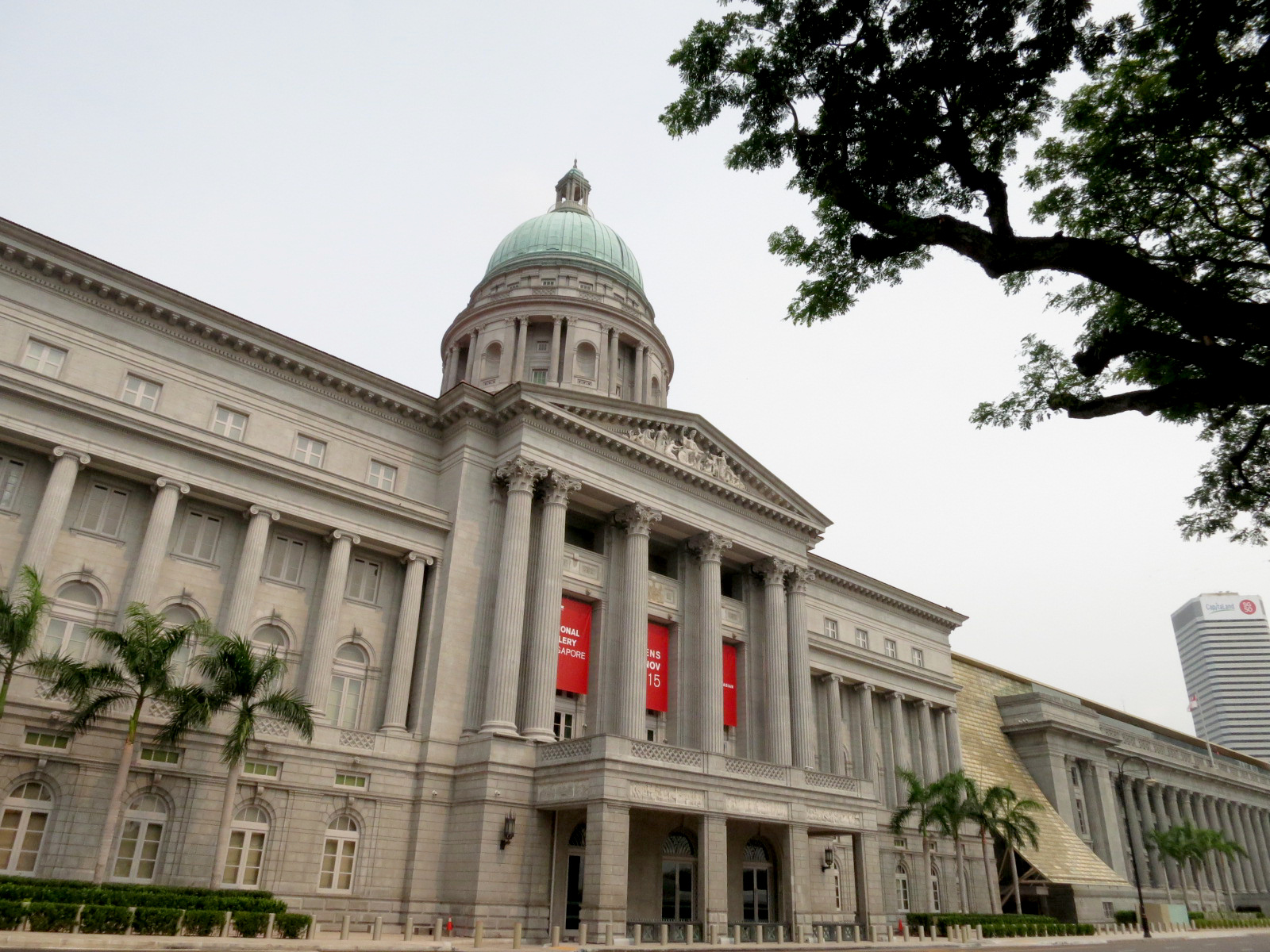
National Gallery is Singapore’s newest art museum opened in 2015, which used to house the former Supreme Court and City Hall. It houses the largest public collection of Singapore and Southeast Asian art. Beyond that, the interior boasts of many spots for that Instagram-worthy picture.

📷: @jm24travelz / Instagram


📷: @singaporetravelvibes / Instagram


📷: @clang823 / Instagram

Library@Orchard
Located at Levels 3 and 4 of Orchard Gateway, Library@Orchard was created as a boutique library targeted at young adults and reopened in 2014 with a new appealing ambiance and a focus on design. With its polished furniture and sleek layout, you can spend the afternoon browsing and reading, and at the same time, take some Instagram-worthy shots.

📷: @shydrophile / Instagram


📷: @thao_jennn / Instagram

Places for a Pop of Colour

Old Hill Street Police Station
This is definitely one of the hot Instagram spots of Singapore with its rainbow-coloured windows. Who would have guessed this used to be a police station in days gone by? Capturing this building is no easy feat if you are looking to have nothing else in the picture, so you’ll have to be patient with the traffic passing, be prepared with your pose, and a quick hand on the shutter!

📷: @verawaty_ / Instagram


📷: @singatour / Instagram

Tan Teng Niah’s House
This lone colourful Chinese villa was built in 1900 and still stands in Singapore’s Little India. It is one of the landmarks not to be missed if you follow the National Heritage Board’s Little India Heritage trail, and its vibrant colours will be sure to make your travel album pop.

📷: @taramilktea / Instagram

Haji Lane’s Street Art
Labelled as one of Singapore’s hipster alleyways, this street is a colourful burst of visual joy with murals and street art that’s filled with bars, hip boutiques and equally Instagram-worthy cafes. Every inch is filled with a pop of colour so it’s not difficult to find a spot to take that shot for the gram.

📷: @thuymi / Instagram

Katong Peranakan Shophouses
Along Koon Seng Street in the neighbourhood of Joo Chiat, you will find a row of pastel-coloured shophouses decorated with Peranakan styled geometric and floral patterns. Spend some time taking a stroll in Katong/Joo Chiat, historically the home of Peranakans (or Straits Chinese) while you’re there.

📷: @kate_newadventure / Instagram

Parks and Nature Spaces

Fort Canning Spiral Staircase
Make a search on Instagram for Fort Canning and this Alice in Wonderland-esque picture fills your entire feed. This spiral staircase is located at the end of the tunnel between Canning Rise and Canning Street, towards Fort Canning Park. Be forewarned that taking a picture requires patience and a fair bit of waiting time.

📷: @mysuitcasejourneys / Instagram

Sang Nila Utama Garden
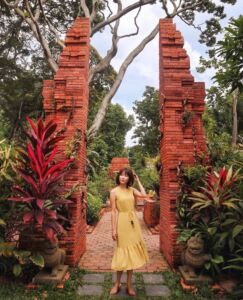
Closer to the Clarke Quay entrance of Fort Canning Park, your will find the Sang Nila Utama Garden – one of the nine gardens that tells of Singapore’s history. Named after the first ancient king of Singapore, you will be welcomed by these Javanese split gates, as part of a re-creation of the South-east Asian gardens in the 14th century when the king lived. These gates are also fast becoming a popular picture spot for Instagram.

📷: @daisybunch / Instagram

Singapore Botanic Gardens
As the only tropical garden on the UNESCO World Heritage list, the Singapore Botanic Gardens spans over 200 acres, so you will definitely find many green spaces for a good photo. 2 of the most commonly Instagrammed spots will definitely have to be Swan Lake and the icon of botanic garden – the Bandstand pavilion, an octagonal structure that used to host military band performances in the early years.

📷: @tammie.siew / Instagram

Japanese Cemetery Park
This spot is located in a less touristy neighbourhood of Singapore, and one that is less convenient to reach. It is a cemetery – the largest one in Southeast Asia – but has been closed to burials in 1973 and named a memorial park in 1987. The archway is decorated with bougainvillea and when these flowers are in bloom, they make a beautiful photo resembling the blooms of spring. If you are visiting, be sure to show respect since it is, after all, a cemetery.

📷: @rameliavitra / Instagram


📷: @me.and.leila / Instagram

Have you visited any of these places? If not, it’s time to plan your little Instagram tour around Singapore.

Museum Hopping in Singapore

Small as Singapore may be, size actually works to its advantage when you’re trying to get from one museum to another.

Look beyond Singapore’s spanking new malls and you’ll be rewarded with something a lot more colourful. Wandering through the museums will give you a peek into the diversity that Singapore has to offer. The fact that the main museums are situated within walking distance of one another is a huge plus, especially when the best way to explore a city is on foot.

The Concorde Hotel Singapore happens to be in close proximity to some of the most popular museums, making it a great base for your art and culture walk.

National Museum of Singapore

This grand dame has a history dating all the way back to 1887, yet the National Museum of Singapore is not quite your conventional museum. Instead, innovative displays bring the past to life in the different galleries.

At the Singapore History Gallery, an experiential storytelling approach brings you back in time. You can choose how you’d like to make your journey through 700 years of eventful history by following either of two separate but interlinked paths. The Events Path will take you through milestones as viewed by movers and shakers, while the Personal Path will draw you in with important events as viewed from the eyes of the man on the street.

Fascinating facts can be gleaned from the exhibits. Archaeological finds such as gold ornaments and exquisite ceramics uncovered on Fort Canning suggest that the elite resided on the hill in the early days. In the section on
World War II, a wall of bicycles, and a wailing siren paint a picture of what it was like when the Japanese employed bicycle infantry as a tactic.

Scattered throughout the Singapore History Gallery and Living Galleries are the 12 National Treasures, which have been appointed based on their unique historical significance. The oldest artefact is the Singapore Stone, dated to be from the 10th to 14th centuries. It is a fragment of a large slab that originally stood at the mouth of the Singapore River, and bears an inscription that has yet to be deciphered.

Another popular treasure is the William Farquhar Collection of Natural History Drawings. These 477 watercolour paintings were commissioned by William Farquhar (Singapore’s first Resident and Commandant) in the 1800s to document the flora and fauna in the region. Their charm hasn’t faded after all these years and the Goh Seng Choo Gallery is dedicated solely to the display of this collection.

Swinging chandeliers make up an installation piece in the Glass Passage at the National Museum.

A sculpture is showcased at the courtyard of SAM.

Salvaged road signs offer a trip down memory lane.

Hand puppets steal the show at the Film and Wayang Gallery.

Ancient artefacts are showcased in the galleries.

Bicycles are used to recreate a scene from the World War II.

The museum still holds traces of its past as a Catholic boys’ school in its architecture.

PANORAMA examines our world and issues with works from the museum’s collection.

Singapore Art Museum

After a morning with the nation’s heritage, pop over to the Singapore Art Museum (SAM) to get up to speed with the contemporary art of Singapore, Southeast Asia, and Asia. With more than 7000 works of art, the museum boasts the world’s largest acquisition of modern and contemporary Southeast Asian art.

Much of the gallery space is used for the special exhibitions, which typically last a few months and are constantly updated, so be sure to check out what’s on when you visit. Past exhibitions include the Singapore Biennale 2011 as well as A Centennial Celebration by Liu Kang, one of Singapore’s most important artists.

People and Places, an on-going exhibition at the Learning Gallery, features a curated selection from the museum’s permanent collection that looks at the people, places and spaces around us.

Asian Civilisations Museum

To get a broader perspective of the region’s culture, head to the Asian Civilisations Museum (ACM). The ACM is dedicated to the heritage of Asia, with the museum’s collection permanently showcased in five of eleven galleries, namely the Singapore River, Southeast Asia, West Asia, China and South Asia Galleries.

In this museum, exhibitions are curated and designed to foster a better appreciation of the rich cultures that make up Singapore’s multi-ethnic society. You’ll learn about ancient kingdoms, discover ethnic tribes and encounter some of the major religions.

In the West Asia Gallery, there’s even a space dedicated to the mosque. It’s constructed in such a way that you’ll be facing Mecca when you enter—this is the direction of prayer for Muslims. Take a moment to imagine what it’s like to be in this place of worship as a series of projections transport you to different mosques around the world.

A bronze sculpture of a coolie by the Singapore River recalls the nation’s past as a busy trading port.

Interactive ExplorAsian zones for children are incorporated in the galleries.

Peranakan Museum

[The Peranakan Museum is currently closed for revamp]

The Peranakan culture is one that is unique to Southeast Asia, and you’ll be glad to know that one of the world’s most comprehensive collection is housed at the Peranakan Museum. In ancient times, from as early as the 14th century, foreign merchants came to Southeast Asia for lucrative trades.

Some of them decided to remain here to marry local women, and the descendants of these interracial marriages are referred to as Peranakans.
The Peranakan culture is a unique hybrid, and the elaborate customs are covered in this museum. In the Wedding Gallery, you’ll find out why the traditional wedding takes place over 12 days, and come to realise the significance of the many rituals practiced. Peranakan women were expected to master textile arts in preparation for marriage, and the Nonya Gallery features much of such intricate beadwork and embroidery.

Yet another visual treat lies in wait at the Food and Feasting Gallery, where you’ll find exquisite porcelain dinnerware that was typically reserved for special occasions and passed down as family heirlooms. These are decorated both on the interior as well as exterior surfaces, and similar vessels are sometimes used to serve mouth-watering cuisine at Peranakan restaurants today.

By now you would probably have worked up an appetite for dinner, and if you’re looking to sample some Peranakan dishes, there’s always the conveniently located True Blue Cuisine just a short distance away. Indulging in the savoury aromas and flavours that still live on today will round up your museum visit with a truly immersive experience.

Traditional dinnerware in a variety of shapes and sizes.

Kebayas on display offer a glimpse into the iconic nonya fashion.

Ornate decorative pieces often feature auspicious motifs and are sometimes encrusted with gems.

Singapore Arts & Culture Trail – Museums and Beyond

Museums are a great place to get acquainted with the local arts and culture, but if time permits, be sure to explore the various galleries and performance venues as well. Many of these are a short distance away from the Concorde Hotel Singapore.

A. ION Art Gallery @ L4, Ion Orchard 
2 Orchard Turn, Singapore 238801

This dedicated art space within a mall gets you inspired while you indulge in some retail therapy. The 5,000 square foot exhibition space showcases international and local art, design and new media.

B. National Museum of Singapore
93 Stamford Road, Singapore 178897

The oldest museum in Singapore covers the nations’s history from its 14th-century beginnings to the present day. It is also custodian of the 12 National Treasures.

C. Singapore Art Museum
71 Bras Basah Road, Singapore 189555

With art of the present moment as its focus, the museum has built up one of the most important collections of contemporary art from the region. Collaborations with leading institutions also result in both local and international exhibitions.

D. The Substation
45 Armenian Street, Singapore 179936

Singapore’s first independent contemporary arts centre houses a black box theatre, gallery, dance studio and two classrooms, providing a space for established as well as emerging artists to showcase their work.

E. Peranakan Museum
39 Armenian Street, Singapore 179941

[The Peranakan Museum is currently closed for revamp]

Discover the Peranakan culture that has been passed down form the descendants of inter-marriages around the 15th century. The museum’s galleries illustrate the traditions and distinctive arts of the Peranakans.

F. Singapore Philatelic Museum
23-B Coleman Street, Singapore 179807

[The Singapore Philatelic Museum is currently closed for revamp]

Browse through the museum‘s collections of stamps and archival philatelic material of Singapore from the 1803s to present day. You’ll also learn how stamps can be a window to the world.

G. Institute of Contemporary Arts Singapore
1 McNally Street, #B1-03, Singapore 187940

The ICAS is the curatorial division of LASALLE College of the Arts, with galleries dedicated to exploring new and experimental art across the Fine Arts, Design, Media and Performing Arts.

H. Singapore Tyler Print Institute
41 Robertson Quay, Singapore 238236

This creative workshop and gallery explores new ideas for contemporary art in print and paper, It collaborates with artists from all around the world to create innovative masterpieces.

I. The Arts House
1 Old Parliament Lane, Singapore 179429

Singapore’s literary arts space offers a multi-disciplinary experience with a broad spectrum of activities, ranging from contemporary arts to entertainment events.

J. Asian Civilisations Museum
1 Empress Place, Singapore 179555

Trace the roots of modern Singaporeans through 5,000 years of Asian cultures. The museum‘s collection covers different groups originating from China, Southeast Asia, South Asia and West Asia.

K. Esplanade
1 Esplanade Drive, Singapore 038981

Its full name says it all. Esplanade – Theatres on the Bay is a performing arts centre with a waterfront location, Venues range from a concert hall to an outdoor theatre, and often showcase musical, dance and theatre productions.

L. ArtScience Museum
Marina Bay Sands, Singapore 018956

This museum celebrates the processes at the heart of art and science, seeks to understand creative minds and examines their role in shaping society. It is predominantly a venue for international touring exhibitions.

M. Red Dot Design Museum
11 Marina Boulevard, Singapore 018940

This contemporary design museum houses winning entries of the international Red Dot Design Award. The museum also hosts MAAD, an event for design, art and craft one Friday night of every month.

N. National Gallery Singapore
1 St Andrew’s Road, Singapore 178957

This latest gallery in Singapore is a visual arts institution that oversees the largest public collection of modern art in Singapore and Southeast Asia. The Gallery also works with international museums to jointly present Southeast Asian art in the global context.

Rock the Wok with Char Kway Teow Recipe

HardRockCafe-0009Ask Singaporeans for their favourite local food, and char kway teow is likely to emerge as one of the top choices. So, what are some of secret tips for making it super yummy?
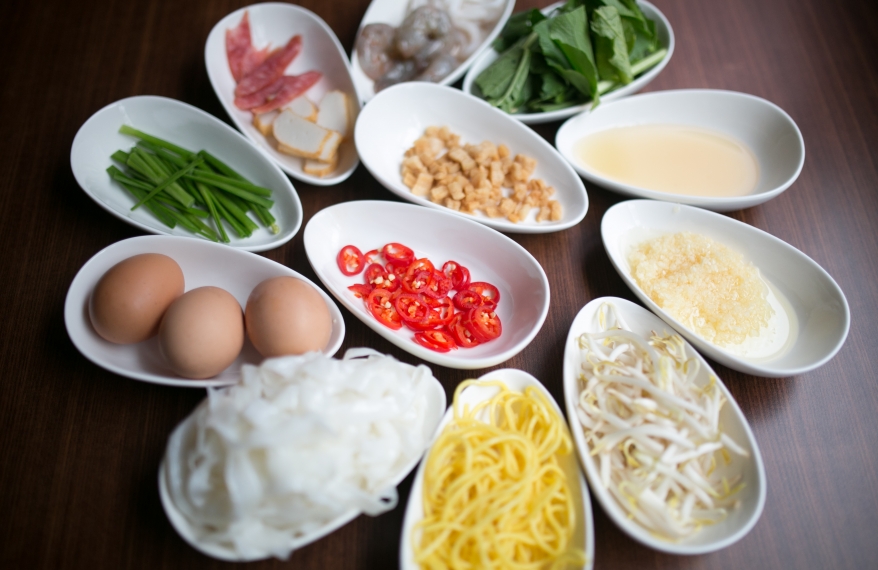
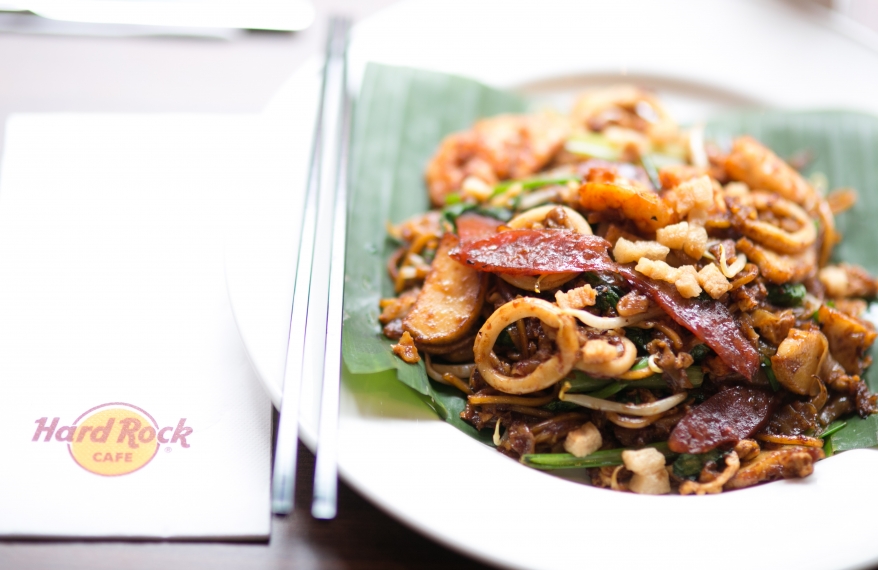
It is recommended to use a cast iron wok for cooking, because the noodles should be fried over a constant medium heat. If you have the time, preparing your own pork lard would also make the world of a difference. The oil will taste fresher and the bits will retain their crispness. Most importantly, don’t rush the stir-frying, otherwise the kway teow and the noodles will break up into small pieces.

Use the spatula to scoop the noodles from beneath and toss, instead of butchering the dish with a chopping action. In other words, some tender loving care will go a long way towards rocking a good plate of char kway teow.

REPARING THE PORK LARD:

  1. Cut pork belly fat into small pieces (easier done when it’s semi-frozen) and pat dry.
  2. Using a wok, simmer over low heat until the oil oozes out and the cubes turn light brown.
  3. Separate the oil from the cubes.
  4. Cool the oil down by immersing the bowl in ice water immediately to prevent it from cooking further and turning dark brown.
  5. Soak the excess oil from the cubes with a paper towel.
 

INGREDIENTS (SERVES 1):

  • 150gm Flat Rice Noodles (Kway Teow)
  • 50gm Yellow Noodles
  • 50gm Beansprout
  • 23-30gm Chinese Pork/Chicken Sausage, sliced
  • 30gm Fish Cake, sliced
  • 15gm Chinese Chives (cut 3″ length)
  • 30gm Chye Sim Vegetables
  • 1 Egg
  • 4 pcs Prawns, shell off, medium-sized
  • 4 pcs Squid Ring
  • 10gm Chopped Garlic
  • 20gm Cooking oil or Lard
  • 1 Tablespoon Light Soy Sauce or Fish Sauce to taste
  • 10ml Sweet Dark Soy Sauce
  • 10gm Chilli Paste (optional)
  • 1 oz Chicken Stock
  • 1 Tablespoon Fried Pork Lard

METHOD:

  1. Over medium heat, heat pork lard oil in wok, then fry minced garlic until fragrant.
  2. Add prawns, squid, fish cake and sausage, followed by yellow noodles and kway teow.
  3. Pour in chicken stock and toss gently.
  4. Add chye sim, Chinese chives and bean sprouts. Sauté until well mixed.
  5. Break the egg in the wok, and stir to scramble.
  6. Season with light soy sauce and fish sauce.
  7. Finish with sweet black soy sauce and turn off flame immediately to stop cooking and prevent the sugar in the sauce from burning.
  8. Top with pork lard cubes and serve.
 

Nyonya Seafood Laksa Recipe

35 min preparation time | serves 1 | 5 min cooking time

This delicious flavour-drenched dish is commonly found in Malaysia and Singapore, originating from the Peranakan community—the descendants of Chinese traders marrying local Malays. Nyonya Seafood Laksa was born from the fusion of traditional Chinese food and Southeast Asian flavours like coconut milk and spices, and is a must try when visiting this part of the world.

The soul of a good bowl of Nyonya Laksa is the gravy, which is spicy and rich with just a hint of sweetness from the infusion of thick coconut milk. Fresh ingredients, especially the spices, are the most important components in making the thick and flavourful gravy, with the addition of seafood giving it an extra kick.

The secret to this dish is patience, as simmering is key to bringing out the delightful flavours of the spices. Chili, garlic, lemongrass and a long list of other ingredients blend flawlessly for a complex taste, while lime adds a touch of zing to the dish.

This dish can be easily prepared at home as a family meal, comfort food for a rainy day, or for simple family celebrations.

Go on, give it a try and we hope you enjoy preparing it as much you eat it.

Heritage Walk
A delicious bowl of Nyonya Seafood Laksa.
Heritage Walk
Ingredients for spice past that makes the gravy.
Heritage Walk
Ingredients for Laksa.
Heritage Walk
 
Heritage Walk
Chef William Teo, Executive Chef of Casa del Rio Melaka explaining to us the tips and tricks to making a good bowl of Nyonya Laksa.

Ingredients for gravy

To make the Laksa Spice paste:

  • 10g of Fresh red chillies
  • 10g of Dried chillies
  • 10g of Lemongrass
  • 10g of Galangal
  • 5g of Turmeric
  • 10g of Shallot
  • 5g of Garlic
  • 5g of Toasted shrimp paste (Belachan)
  • 5g of Curry powder
  • 10g of Polygonum leaves (Daun Kesum)
  • 10g of Ginger flower (Bunga Kantan)
  • 100ml of Coconut milk
  • 50ml of Evaporated milk
  • 100ml of Chicken stock
  • 30ml of Cooking oil
  • Pinch of Salt
  • Pinch of Sugar

Ingredients

  • 150g of Yellow noodles (can be substituted with thin vermicelli)
  • 50g of Bean sprouts
  • 150g of Large prawns
  • 60g of Sliced fish fillet
  • 50g of Squid
  • 20g of Scallops (Optional)
  • 1 Hard-boiled egg
  • 2 pieces of Dried bean curd
  • 20g of Shredded cucumber
  • A handful of Coriander leaves

Method

  1. Blend all the ingredients for Laksa spiced paste.
  2. Heat cooking oil in a pot and sauté the spice paste, add Polygonum leaves and ginger flower, cook till the mixture becomes aromatic.
  3. Add chicken stock and simmer for 20 minutes, followed by adding the coconut milk and evaporated milk slowly while stirring.
  4. Add the seafood and bring the gravy to boil. Season with salt and sugar.
  5. In a separate pot, blanch the yellow noodles and bean sprouts.
  6. Place the noodles and bean sprouts into a bowl, top it off with Laksa gravy and seafood.

Garnish

Garnish with boiled egg slices, shredded cucumber and coriander leaves.

Comfort Food for the Peranakan

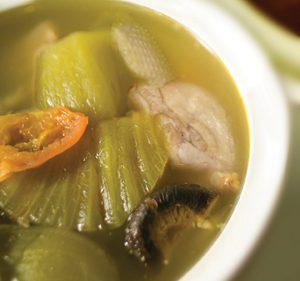
This Peranakan dish is a must in traditional Teochew or Hokkien speaking families in South East Asia. A hearty soup of duck, preserved salted vegetable, tomatoes, and preserved sour plum.

Sup Itik Tim

INGREDIENTS:

  • 3 litres water, or enough to cover the meat
  • 1.8-2kg duck, cut into 10-12 pieces
  • 1 small pork trotter, cut into chunks
  • 600g salted mustard leaf (kiam chai), cut into large pieces
  • 80g big onion, peeled and cut into segments
  • 50g dried shitake mushrooms, soaked and halved
  • 4-6 Chinese sour plum
  • 1-2 whole tomatoes, cut in half
  • 50g ginger, smashed
  • 60g (about 6 cloves) garlic, crushed
  • Spice pouch (tie in a muslin cloth)
  • 1-2 nutmeg seeds. (Crack and discard shell to extract the kernel
    and smash it once with the back of a cleaver)
  • 1 tsp white peppercorns, crushed lightly

METHOD:

  1. Taste the salted mustard leaf (kiam chai) first, if it is excessively salty, soak it in water for an hour to draw out the salt before using.
  2. Bring the water to a boil in a stockpot and put in the duck and trotter. Allow to boil for 5 minutes until scum rises to the surface. For a clear stock, pour away the boiling water and rinse meat with cold water.
  3. Add 3 litres of water to the pot and bring it to a boil, add in the meat and the rest of the ingredients, including the spice pouch. Bring soup to a boil again before lowering the heat to simmer until the meat is tender. Top up with more water if necessary. Adjust soup to taste, adding salt and pepper as desired.

Recipe courtesy of Perut Rumah Nyonya Cuisine

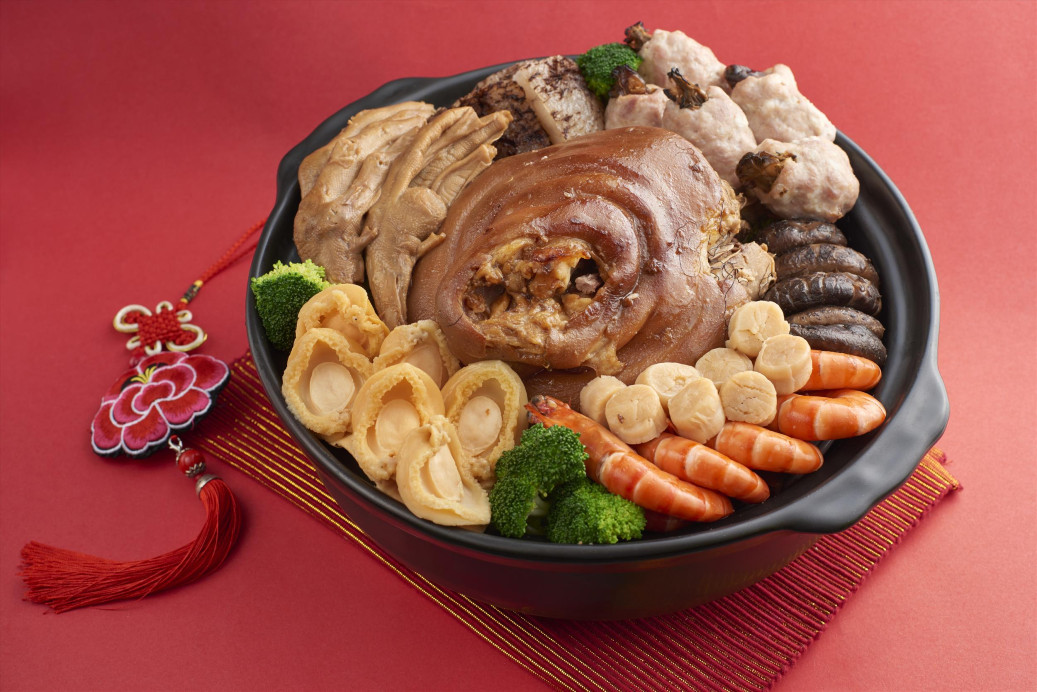
Auspicious Chinese New Year Dish – Poon Choi

Food is an inseparable part of every Chinese New Year. Celebrate Chinese New Year with your love ones with this special treat of abundance.

Poon Choi is one of the must-have dish during Chinese New Year among Cantonese.

This prosperity treasure pot is also known as “Pen Cai” or big bowl feast”.You can savour all the goodness of seafood and meat in a single pot.

Here is a step-by step recipe for an auspicious one-pot dish by Chef Ricky Wong from Concorde Hotel Kuala Lumpur.

Ingredients
  • 8 pieces of canned abalones
  • 8 dried oysters
  • 8 dried scallops
  • 8 pieces of sea cucumber
  • 8 tiger prawns  (deveined, keep the shell intact)
  • 4 large pieces of fish maw (cut half each for 8 pieces)
  • 1 pork knuckle
  • ½ roast chicken
  • ½ roast duck
  • 1 medium radish (cut into the size you preferred)
  • 2 small bundle of black moss (soaked in water for 30 mins)
  • 8 pieces of black mushroom (soaked till soft)
  • 1 small broccoli (cut into florets)
  • 1 lotus root (cut into pieces)
  • 200gm of dried bean curd stick
  • 200gm of dried bean curd gluten
  • 8 pieces of goose web
Superior Broth

Prepare 3 different broths as per below:

  • Chicken soup
  • Pumpkin, carrot and 1 small chicken boil together
  • Soy bean, soy milk, dried oysters boil together and last add some Hoisin sauce to enhance the flavour
Method

For Seafood and Vegetables

1]Rinse the dried oyster and scallop and soak in water separately for about 40 minutes.
2] Rinse the dried shiitake mushrooms and soak in hot water until softened.
3] Clean the prawns and keep aside.
4] Soak the fish maw and rinse. Cut into half.
5] All ingredients cook separately with salt and chicken soup, except dried scallop. Keep aside.

For Pork

1] Prepare soup with soya sauce, black sauce, ginger, rock sugar, pandan leaf, and scallion. Put the pork knuckle into the soup and braised for 1 hours till it soft.

To assemble the Poon Choi

1] Prepare a large claypot. Layer the base with lotus root, radish, beancurd stick. Place the fish maw, sea cucumber, pork knuckle, goose web, black mushroom and dried oyster as the next layer. Steam all the ingredients with the claypot for 25 minutes.

2] Remove the lid, carefully arrange roasted chicken, roasted duck, tiger prawn, broccoli, and the rest of the ingredients around the pot. Add superior broth in the claypot and serve hot.

Superior Broth

In a large pot, combine 3 different broths in the same proportion and bring to boil. Reduce the heat and dissolve 1.5 tbsp. of cornstarch into 1/2 cup of water. Add this mixture to the broth and bring it to a boil for about a minute.

Tips:
Attentive layering of the ingredients contributes to the taste of the whole dish. The ingredients are arranged in layers, allowing you to appreciate the different texture and flavours.

Hidden Bars in South East Asia: Speakeasy Bars to Check Out

Speakeasy bars have been the buzzword in the cocktail scene. While they’re no longer a hidden secret, we still recommend you check out these five in Southeast Asia.
  1. Magazine 63

The first hidden bar in Penang, Magazine 63 is hidden away with no signage at the entrance and you might think you’ve lost your way. You know you’ve hit the right spot when you locate the Da Ma Cai signage, with the old-school lok lok cart outside the shop. Head to the far left and push the huge wooden door open.


Source: Tafulou.com

Inspired by the olden Chinese era, the interior of this trendy hidden bar is decorated in a vintage oriental style which is usually packed with customers, especially on the weekends. Even the alcohol containers are custom-made according to the theme.

63, Jalan Magazine, George Town,
10300 George Town, Pulau Pinang, Malaysia
Facebook

  1. The BARber

The BARber, located within The Sintesa Jimbaran hotel features a unique concept with two-in-one bar and barbershop experience.


Source: Facebook

Their cleverly hidden entrance facades as a fully functional classic 1930’s themed Men’s Barbershop which reveals a full serviced bar once you push through its hidden doors. Signature craft cocktails, as well as good old Whiskeys, Vodkas, and branded liquors, are available as you chill and relax to the music.

If you’re up to it, get a haircut or a gentleman’s shave while having a tipple. Why not?

Jl. Kencana No.1 Jimbaran
Website

  1. Operation Dagger

[Permanently closed]

The basement bar tucked away on Ann Siang Hill is not an easy spot. “X marks the spot” for Operation Dagger with an overturned crown-shaped logo. That’s your sign to enter.


Source: Citynomads.com

The cool, concrete interior reminds you of an apothecary house, with its unlabelled bottles laid neatly and overhanging lightbulbs. Try some of their original and delicious house inventions, as they offer an Omakase menu of in-house fermented mead and distilled drinks.

You’ll be glad you stumbled upon this speakeasy bar, but be careful you might also stumble your way out from the amazing drinks they make!

  1. The Horse’s Mouth

A rabbit hole located at the edge of Orchard Road, The Horse’s Mouth is a small Japanese inspired izakaya bar. Can’t find it? It’s right behind a curtained door, beside the cashier within Uma Uma Ramen Restaurant.


Source: Facebook

Offering bespoke cocktails made from scratch, its small bites are equally mouth-watering. Try their Wagyu Cubes that melt in your mouth. You can skip dinner and head down here for drinks and food right away.

#B1-39 Forum The Shopping Mall
583 Orchard Road
Singapore 238884
Facebook

  1. Private Room

[Permanently closed. The new establishment is Collins Sake & Wine Bar]


Source: Facebook

#findtheyellowdoor. That’s the first advice you get when you want to find your way to the Private Room. The first speakeasy bar that specialises in wine cocktails, you’ll find more than 200 labels of wine from around the world that will suit your taste.


Source: Timeout

Who’d think that one could make cocktails with wine? Yet, the ones recommended were all refreshing & well-balanced with mellow, pleasing nuances. If you’re not a wine lover, fret not as the bar has whiskies, vodka, gin, brandy, rum, tequila & other liquors available.

 48a-2, First Floor, Persiaran Zaaba,
Taman Tun Dr Ismail, Kuala Lumpur.

12 Unique Eats of Asia

The sauce of life in Asia boils down to its food. The cuisines of Asia are deeply rooted in history and traditions that have evolved over millennia, many of which are passed down through generations.

With a heavy focus on regionally grown and sourced ingredients and spices, Asia’s cuisine reflects the vibrancy, energy and diversity of the region – a mishmash of salty, spicy, sweet and tart flavours that pull in all directions and still linger on after the last bite.

Be in for a treat with this delectable selection of 12 dishes that make up a fair portion of Asian cuisine.

1. Mas Huni, Maldives – Made mainly from grated coconut and tuna, this typical Maldivian breakfast goes best with freshly baked chapatti, a type of flatbread.

2. Bajiyaa, Maldives – This savoury snack is popular among the locals. Made in a similar way as a dumpling, its filling is replaced with tuna, potato or both, where it is then fried until a crispy golden brown.

3. Chicken Rice, Singapore – Authentic Hainanese chicken rice is a must-try when visiting this food haven. The fragrant rice topped with either steamed or roasted chicken is usually accompanied by a minced chilli and garlic sauce.

4. Hawker Food, Penang – There is no better local cuisine than those found along the streets of Penang. Sellers dish out plate after plate of hot and piping char kuay teow, a stir-fried noodle dish with cockles, among other favourites.

5. Fresh Oysters, Pattaya – One of the benefits of being a coastal city is definitely the variety of fresh seafood available. Be sure not to miss out on their succulent oysters, which are an absolute delight to one’s palate.

6. Nasi Lemak, Kuala Lumpur – Head over to Warung Nasi Lemak Pak Hassan, a popular eatery in Kampong Baru. It draws the crowds for its nasi lemak – rice cooked with coconut milk commonly served with sambal and ikan bilis – and roti canai.

7. Chendol, Melaka – This traditional shaved ice dessert is made from coconut milk, green starch jelly and pandan flavouring. The creamy and refreshing texture makes it perfect as a teatime snack to cool down in the hot tropical weather.

8. Bebek Bengil, Bali – Also known as crispy duck, The duck is steamed in Indonesian spices, and then deep-fried to attain its signature crispy golden crust.

9. Peranakan Food, Singapore, Melaka & Penang – Peranakan food boasts a delectable fusion of both Chinese and Malay cuisines, as reflected by its culture. Indulge in the robust ayam buah keluak, a chicken dish with spices and black nuts or nyonya kueh, sweet and sticky desserts typically made with glutinous rice and coconut milk.

10. Durian, Malaysia & Thailand – Known as the ‘king of fruits’, this green, spiky fruit is ubiquitous in Southeast Asian countries. The bittersweet taste of its delicious, creamy flesh is the reward for many who aren’t put off by its pungent smell.

11. Bean Sprouts Chicken, Ipoh – Similar to Singapore’s chicken rice, this Malaysian version comes with a generous helping of crunchy bean sprouts. The tender steamed chicken is dosed with soy sauce and oil, making for a light and tasty meal.

12.   White Coffee, Ipoh – This Malaysian city is famous for their unique twist on this universal drink. Made purely from coffee beans, Ipoh coffee boasts an absence of any kind of additives during the roasting process, resulting in an intensely aromatic, lightly coloured brew usually served with condensed milk.