English Afternoon Tea in Cameron Highlands

Midday Indulgence in Cameron Highlands

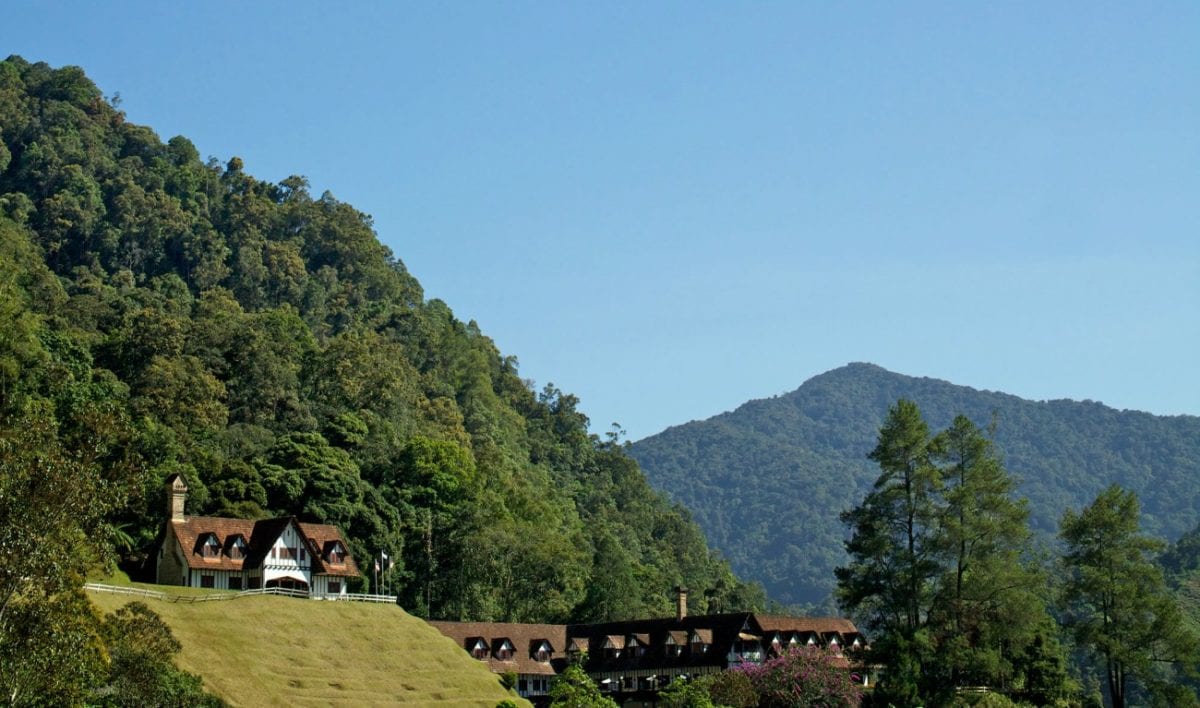
Scones and Tea Lakehouse 200X240There’s nothing like a warm cup of tea, good company, some warm scone with homemade strawberry jam, freshly made finger sandwiches, pretty cakes and pastries at The Lakehouse, an authentic English storybook cottage that overlooks a lake.

Enjoy a leisurely afternoon tea of scones and local strawberry jam. This midday indulgence offered a glimpse into life as it was in colonial times; befittingly so, since Cameron Highlands was first developed by the British in the 1920s.  The Lakehouse was built by the late Colonel Forste,  retired British in 1966, the architecture of this charming country house stays true to medieval English tradition.

The Lakehouse Cameron Highlands
30th Mile, 39200, Jalan Ringlet – Sungai Koyan, Sungai Khazanah, 39000 Ringlet, Pahang, Malaysia
Tel +605-495 6152


Enjoying the Crisp Mountain Air of Cameron Highlands

Amidst the lush hills and crisp mountain air of Cameron Highlands…

The Cameron Highlands is situated in the state of Pahang, West Malaysia. It is approximately 85 km from Ipoh or about 200 km from Kuala Lumpur. One of Malaysia’s most extensive hill stations, Cameron Highlands covers an area of 712.5 sq km, about the size of Singapore; it comprises a series of little townships that include Ringlet, Tanah Rata, Brinchang, Tringkap, Kuala Terla and Kampung Raja. At 5,000 ft (1,500 m) above sea level it is also the highest point in Malaysia accessible by road. Cameron Highlands lies less than an hour off the main North-South Highway, and is a pleasant, easy 3.5-hour drive from Kuala Lumpur.

For a short weekend getaway, relax and soak in the fresh crisp air with plenty to do and see.

Sight-seeing

Strawberry Farm_Cameron Highlands

There are many things to see and do in Cameron Highlands, you can walk through lovely little villages, visits to the butterfly, strawberry, honey bee farms and sprawling tea plantations or dine at the delightful Tudor-styled country inns. Bird-watching and trekking are also popular activities here.

Read more on where you can visit for a nature’s getaway to the various farms and plantations in Cameron Highlands.

Shopping

For shopaholics out there, shopping at this hill resort is all about fresh flowers, vegetables, tea and fruits. The best place to pick up local produce is the Multicrops Central Market, where you can find teas, fruits, strawberry jam, honey and potted plants. First-time visitors can buy unique souvenirs that reflect the natural heritage of Cameron Highlands, such as insect specimens, wooden handicrafts and rattan baskets. The tea plantations also have centers that retail tea products and souvenirs.

Eating

There are numerous places for food in Cameron Highlands. At night, especially during weekends & school holidays, restaurants are packed since there’s very little to do after the sun goes down. Whilst there isn’t a particular dish unique to Cameron Highlands, dining out here can be a great experience especially with the cool weather.

We’ve shared some of our favourites here.

Weather
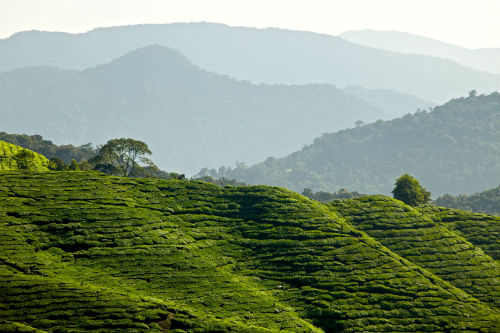
Cameron Highlands Tea Plantation 2

The weather in Cameron Highlands is cool all year round. The temperature here ranges from a minimum of 14ºC to a maximum of 28ºC. Rain is common throughout the year although the monsoon season is from Nov to Feb. The dry season is from late Feb to April. In recent years, the temperature has been rising and it can get really hot in the day. The coldest time of the year is between December—February where the temperature can drop to 10ºC in some areas.

Getting around

It will be easier to get around Cameron Highlands if you have your own transportation. Travelling by Taxi is the next best option if you don’t have a car. You can easily hire a taxi to the other towns and tourist destinations during the day. Alternately you can also get on one of the many tours organized by the local tour companies in Cameron Highlands. Some guesthouses provide motorbike rental; bicycles are not popular here because of the terrain and high traffic on the winding roads.
The Blessings of Fasting

Concorde Hotel Shah Alam it’s my second home…

For Hajah Supiah Sulaiman, Concorde Hotel Shah Alam isn’t just a former office address, it’s her second home. When the hotel’s prayer room opened, she was the first customer to step in. Her four adult sons practically grew up on hotel premises. And staff have become extended family.

Every year, she faithfully breaks fast with her family at Concorde’s Buka Puasa (break fast) buffet. “It’s so convenient”, she says. Instead of the mosque, they join an Imam (Arabic for an Islamic leader) and many others in Concorde’s prayer room for Isyak, the day’s last prayer. Because food at the buffet is available longer than elsewhere, they are able to return to their meal long after sundown.

Ramahan Food600X400Certified Halal, dining here gives Hajah Supiah total peace of mind. A hearty menu of Malay, Chinese and international favourites endow this frequent diner with timeless variety. She particularly loves Concorde’s Sup Gearbox (colloquial for bone marrow soup), available only during Ramadan, the holy Islamic month of fasting.

Ramadhan Chefs600X400Prized for its marrow, each serving of bone and broth weigh up to 2kg. Abundant ingredients in generous portions make Concorde’s Sup Gearbox a cut above, says Executive Chef Alham Daldiri who has worked at 14 hotels over 26 years. Two tonnes of bull’s knee joints are specially flown in from New Zealand every Ramadan, while Alham and his team prepare 150kg daily in a 3-hour braise.
Other Ramadan crowd-pleasers include burbur lambuk (a light porridge) in seafood, meat and vegetarian options, ikan pantin masak tempoyak (a traditional Malay dish of fish in fermented durian condiment), and beef rendang (spicy stewed meat). At the Pavilion Terrace, guests enjoy whole roasts of lamb and satay (various grilled meats on skewers).

Concorde Hotel Shah Alam
3 Jalan Tengku Ampuan Zabedah C9/C
Shah Alam 40100
Tel: +603 5512 2200
Email: [email protected]

Sweet Treats: Yummy Homemade Cookies

Cookies Recipes

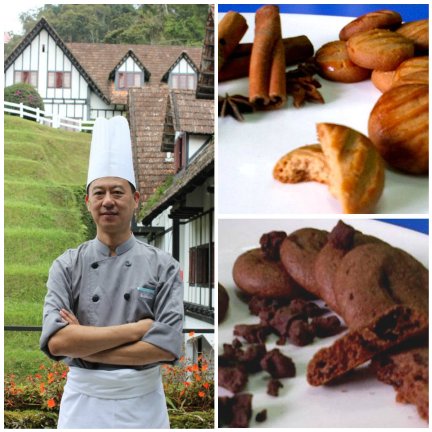
Chef Edmund from The Lakehouse, Cameron Highlands shares his secret recipe for yummy homemade cookies: Irresistible Chocolate Chip Cookies and Breton Biscuit.

Irresistible Chocolate Chip Cookies

Ingredients

  • 200gm brown sugar
  • 200gm unsalted butter
  • 200gm caster sugar
  • 500gm all-purpose flour
  • 3 eggs
  • 2 teaspoon baking powder
  • 1 teaspoon vanilla paste*
  • 350gm of chocolate chips
  • 10gm cocoa powder

*If vanilla paste is not available, replace with 1 tablespoon of vanilla extract

Method

  1. Preheat the oven to 180ºC. Sift together the flour, baking powder and cocoa powder; set aside.
  2. In a mixing bowl, cream together unsalted butter, brown sugar and caster sugar and beat with medium speed until well blended. Beat in the eggs and vanilla until it is light and creamy. Mix in the sifted ingredients until it is well blended.
  3. Stir in the chocolate chips and continue to blend slowly.
  4. Chill dough in refrigerator for about 30 minutes until firm enough to roll or scoop into 5-grams weight.
  5. Lay the cookies in rows on the baking tray, leaving some space in between each cookie and press with the spoon or with your finger.
  6. Put the baking tray in the preheated oven for about 12 to 15 minutes.

Brenton Biscuits

INGREDIENTS

  • 500gm all-purpose flour
  • 300gm salted butter
  • 200gm icing sugar
  • 2 eggs
  • 1 teaspoon baking powder
  • A pinch of salt
  • 1 teaspoon vanilla paste
  • ½ teaspoon of ground cinnamon
  • Egg wash: 1 egg with 1 teaspoon milk

METHOD

  1. Preheat the oven 180ºC. Combine the flour, baking powder, salt and cinnamon in a bowl; set aside.
  2. Beat the butter and sugar together till a creamy and smooth texture is obtained. Add the eggs and vanilla paste and beat for another minute till it becomes smoother.
  3. Then slowly combine ingredients from Step 1 into the mixing bowl and continue to beat until the dough become smooth and well blended. Cover and refrigerate for 20 minutes.
  4. Roll out to approximately 4mm thickness and cut out biscuits.
  5. Lay the cookies in rows on the baking tray, leaving some space in between each cookie and press with the fork.
  6. To prepare egg wash, whisk the egg with milk.
  7. Brush the egg wash on the cookies.
  8. Put the baking tray in the preheated oven for about 12 to 15 minutes.

Heritage Hands

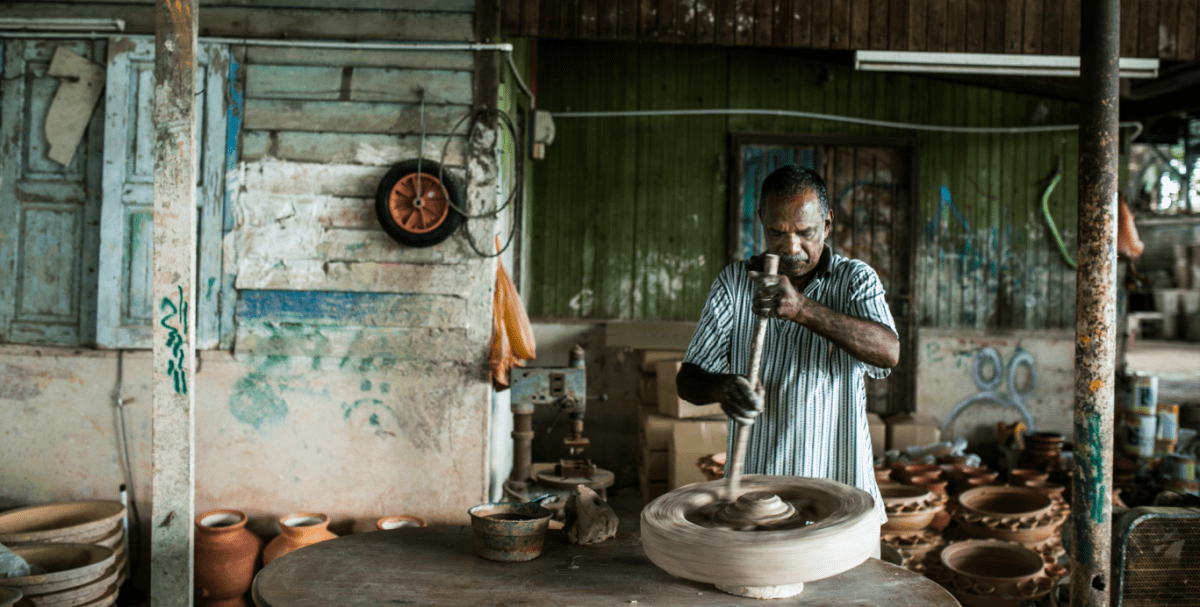
Now 65, V.N Ramadas A/L Vengadasalam, has devoted 45 years to Indian pottery. And it shows. Spinning at the electric wheel he built, he scoops up a mini pot in seconds. Spinning a 30kg wheel manually, he creates the perfect replica while maintaining lively conversation,

“My father was a potter. He made this wheel.”

“Basics are easy,” says Ramadas, “but it takes seven years to master the art.” After acquiring traditional techniques from his father, he went on to learn modern methods from the Malayan Institute of Art. Since then, many have come to study with Ramadas. Personal lessons cost only RM80 an hour, or RM400 for a group of five.

In 2012, Ramadas was officially honoured Kuala Selangor’s Adiguru Kraf Tembikar (Pottery Crafts Master) for cultural excellence, innovation, preservation and education. On his wall hangs a giant cheque of RM10,000 from Hari Kraf Kebangsaan 2011 (National Craft Day), in recognition of his stature.

Third generation master moulder Velavar s/o Ramadas, 35, enjoys the creative freedom pottery affords.
Kuala Selangor is rich in ball clay, prized for its plasticity
A master’s touch imbue a clay lump with beauty and purpose in seconds.

Rustic and welcoming, three main sections complete his workshop. The front for throwing and teaching, an adjacent area for kiln and firewood, the back for casting and drying. Made with ball clay for quality, charming earthenware fill the space; cooking pots, statues, lamps, fountains, ready for delivery to shops, restaurants, weddings and temples. The family business is now run by Ramadas’ son, Velavar, 35. Just as passionate, Velavar says, “This is my first job and will be my last.”

If you wish to visit, please contact

RAMADAS POTTERY FACTORY
Batu 2, Jalan Kelang
45000 Kuala Selangor
Selangor, Malaysia
Tel: +6012 358 6304
Visits by appointment only

Places to Eat in Shah Alam

Indulge yourself in a good meal or simply chill the afternoon away with a good book and coffee. These places in Shah Alam are worth a visit, whether you are a local or visiting.

Lam’s Kitchen

Plaza Jelutong, GL 2, No 1, Persiaran Gerbang Utama, Bukit Jelutong, 40150 Shah Alam, Selangor, Malaysia
Tel +60 12 329 3286
10am to 9.30pm (Daily)

lam's kitchenLam’s Kitchen is a Chinese restaurant at Plaza Jelutong. Started in January 2013, Lam’s Kitchen serves a host of other dishes, including all kinds of Hong Kong-style roast meats, claypot items, double-boiled soups, one-dish meals and even dim sum. A must-try restaurant especially for those who love Chinese cuisine.

Chemistry Café+Lab

[Permanently Closed]

26 Jalan Kristal J7/J Seksyen 7, Shah Alam, Malaysia
Tel +603 5523 9988
12pm to 1am (Daily)
www.facebook.com/chemistrycafe 

Chemistry_Cafe_LabChemistry Café+Lab is the first café that utilizes lab concept in a café. Specialized in coffee and drinks, Chemistry Café also offers a variety of cakes and pastries that are sure to whip out your appetite. Chemistry Café uses a unique lab concept that utilizes lab apparatus instead of normal glasses and cups for customers to experience dining in lab environment. It is just a 10 minutes drive from Concorde Hotel Shah Alam.

Ole-Ole Bali

LG 27, Lower Ground Floor
Empire Shopping Gallery, Subang Jaya, 47500 Selangor
Tel +603 5022 2629
12pm to 10pm, daily

Ole-Ole BaliSavour the essence of Balinese culture with the taste of Balinese cuisine, the lifestyle of Balinese interiors, and the view of Balinese surroundings here. Taste the hot seller Ole Ole Trio, a combination of Ole Ole BBQ Wings, Sate Lilit and Cumi-cumi Goreng served with Sambal Matah, Sambal Terasi and Tartar sauce. Lending an extra “kick” to the meal are the famous Sambal Matah (a mixture of oil with raw shallots, lemongrass, bird’s eye chilli and garlic) and Sambal Terasi (a raw paste consisting of fresh red chilies ground to a paste with salt and dried shrimp paste).


Dancing Fish Malay-Indo Cuisine

[Permanently Closed]
You can still find them at 
Lot T120, 121 & 122 285, 3rd Floor, Bangsar Shopping Centre, Jalan Maarof, Bukit Bandaraya, 59000 Kuala Lumpur, Malaysia
Tel +603 2095 6663
11.30am to 10pm, daily

Dancing Fish was listed in the 2013 Asia’s Top 20 Asia’s Finest Restaurants by The Miele Guide. At Dancing fish, be prepared to be tantalized by their Indonesian cuisine as they are richly flavoured with spices, herbs, and other seasonings, and is guaranteed to awaken your taste buds. It is also a very healthy cuisine, relying on a wide range of
nutrient-rich ingredients including vegetables, grains, fruits, nuts, legumes and fish. The ambiance is laid-back and the combination of modern, sleek elements, coupled with traditional furnishing and artwork, is a stylish and serene dining experience.

Nutmeg Farm in Penang

With the abundance of nutmeg fruit and drinks, balms and oil in Penang, you’d think that nutmeg is a perennial fruit. Naturally, it’s not. Nutmeg trees flower and fruit twice a year but they can be harvested over a couple of months rather than immediately, explains Chang Kun Mim, managing director of Ghee Hup Enterprise.

He is the third generation in his family to own and run a four-acre nutmeg farm in Balik Pulau, but he also processes the nutmegs from the other farms. The whole nutmeg fruit is pickled in salt and sugar (from a month to three), then the fruit is skinned and halved to remove the seed. The seed is then dried to be used in cooking and baking, the red skin around the seed is separated and added to oil and balm. The fruit is cut and then further soaked in sugar (50kg of sugar for 50kg of fruit) for a couple of weeks to be eaten as a snack. The longer the flesh is soaked in sugar, the crunchier it is. Like a coconut, every part of the fruit is used. The nutmeg tree flowers after five years, yielding four to five kilos of nutmeg per season.

 
Nutmeg Farm
 

Ghee Hup Enterprise

202A, Mk 3, Sungai Pinang, 11010 Balik Pulau, Penang. Tel +604 866 8426 / +6016 433 6303

HEAVE! HO! Dragon Boats Go!

With the Penang International Dragon Boat Festival around the corner, we meet up with its vice-chairman to learn how this ancient Chinese tradition is intertwined with the city’s history, and even become a global competitive sport.

We also join the Penang Island Paddlez Club, one of the city’s few dragon boat teams as they practise for the upcoming festival on the 28 and 29 May, at Teluk Bahang Dam. This group of working men and women share what got them into spending up to six hours a week under the blazing Penang sun for their love of this sport.

DRAGON BOATS TO THE RESCUE

Legend has it that the people raced out in their boats to save Qu Yuan, a loyal official of the state of Chu in ancient China, after he drowned himself in the river upon hearing the capture of his country’s capital. That rescue mission over two millennia ago has turned into the Dragon Boat Festival, a commemorative event that is also a state-supported spectacle in Penang today.

The Penang International Dragon Boat Festival is an annual sporting event, now into its 37th year. About 30 teams, half of them foreigners, will compete this May, at the placid Teluk Bahang Dam, surrounded by green hills and rain forests.

Fifty years ago, various fishing settlements in this island boat raced to celebrate the Duanwu Festival, or summer solstice, which coincides with Qu Yuan’s death anniversary. The participants were migrants who had brought along this tradition from China. They competed at the sea off Gurney Drive, in their wooden boats rigged with decorative dragon heads and tails, originally to ward off evil spirits in the water.

Dragon boat racing became less haphazard and even emerged as a professional sport after the International Dragon Boat Federation was instituted in 1991. Lightweight fibreglass boat became the standard racing gear, usually provided by festival organisers. “You don’t bring your badminton court with you, do you?” Mr Dick Lim, vice chairman of the Penang festival, explains in jest.

The races have also become more inclusive, as the sport gains popularity around the world. There are now more organised in Europe than in Asia, according to Dick. “Because the Westerners treat it like a sport,” he adds.

Within Malaysia, regional uniform units also compete in the Penang festival. Some of them are Malays. Out of respect to their religious obligations, the organisers avoid holding the festival during Hari Raya Puasa, when the Muslims abstain from eating between dawn and dusk. This means that the dragon boat race may not fall on Duanwu, the fifth day of the fifth month in the lunar calendar.

What happened to Qu Yuan? He did not survive. But his subjects’ devices to keep his dead body intact gave rise to another, more delicious tradition still practised today—the making and eating of glutinous rice dumplings.

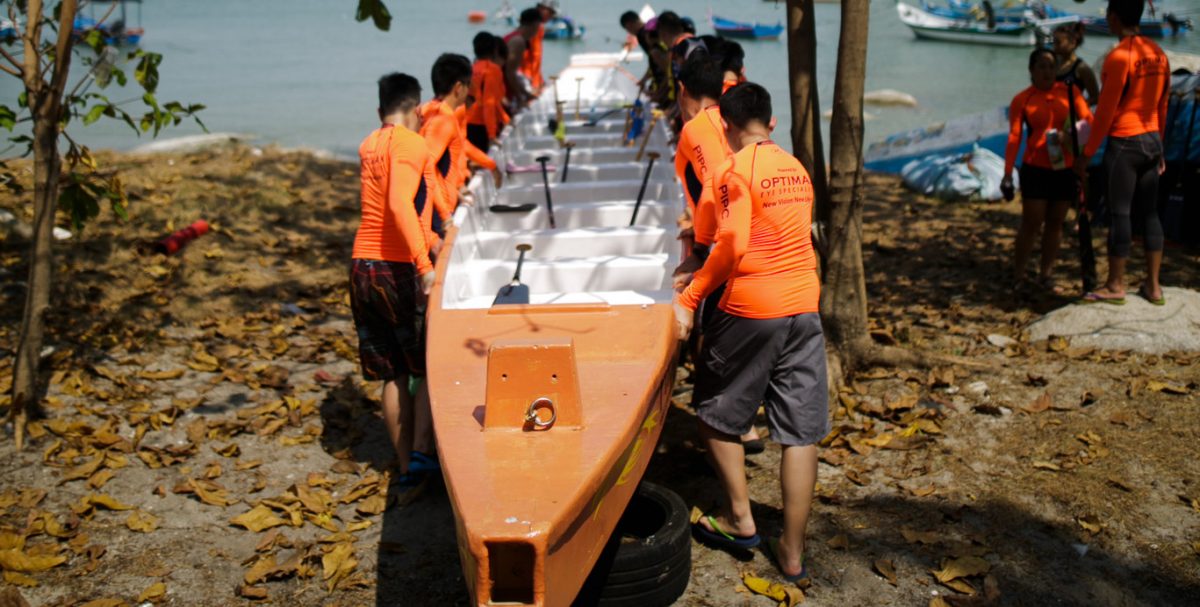
The four-year-old Penang Island Paddlez Club, comprising of some 50 members, including both men and women, meet three times a week to train for the upcoming dragon boat festival. Most of them are working adults who enjoy the teamwork aspect of the sport.
This wooden boat weighs more than 300 kilograms and takes at least 15 people to lift it up.

The Venice of Balik Pulau

At the back of many single-storey houses in Kuala Sungai Pinang runs a river that links to the sea. This is the “Venice of Balik Pulau” for Eddie, a village where fishing has been a way of life for over fifty years.

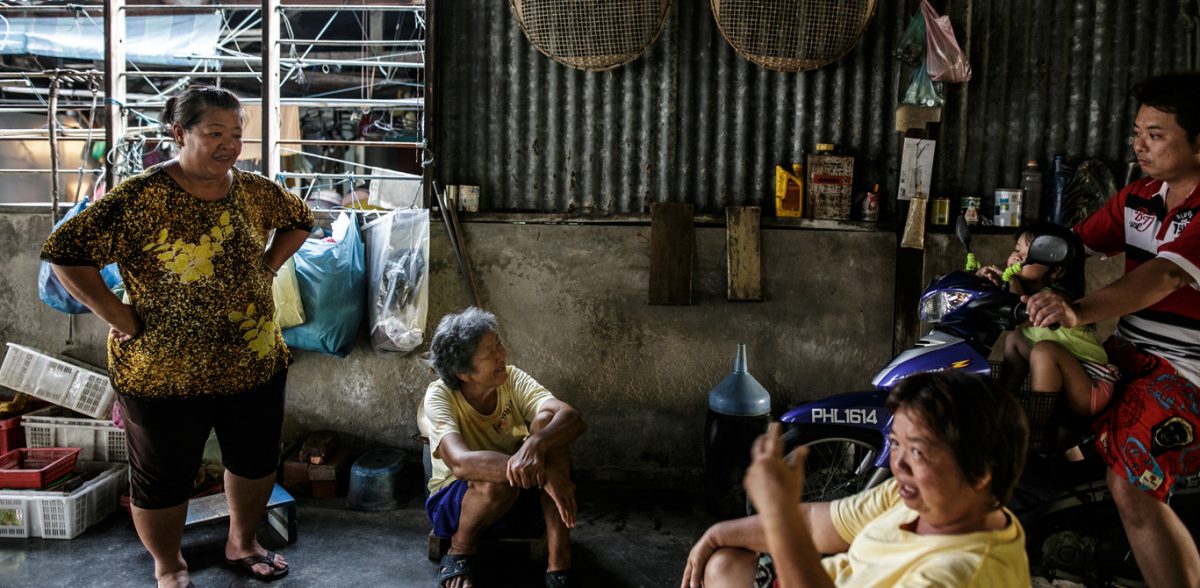
Today, only those in their fifties and above remain in this trade. The younger generation prefers to work in the cities. Mostly men go out to sea, on old wooden boats that puff out diesel soot. Women wait on land to help sort out the yield, including prawns, squids and pomfrets. A 63-year-old fisherman we tagged along, Tong Cheap Haoi, teases his rotund wife: “If she had gone out to sea with me she wouldn’t be such a heavyweight!”

Within 15 minutes, Cheap Haoi’s harvest is sorted out and stored, but really because there isn’t much. He estimates RM200 of revenue, barely enough to cover labour and diesel costs. “A wasted trip,” he says, but still manages a smile. He blames the fishing trawlers for leaving him with only 20 percent of how much he typically harvested in the 1970s. And there used to be crabs all the time. What his wife happily takes home today is their first crab in two months.

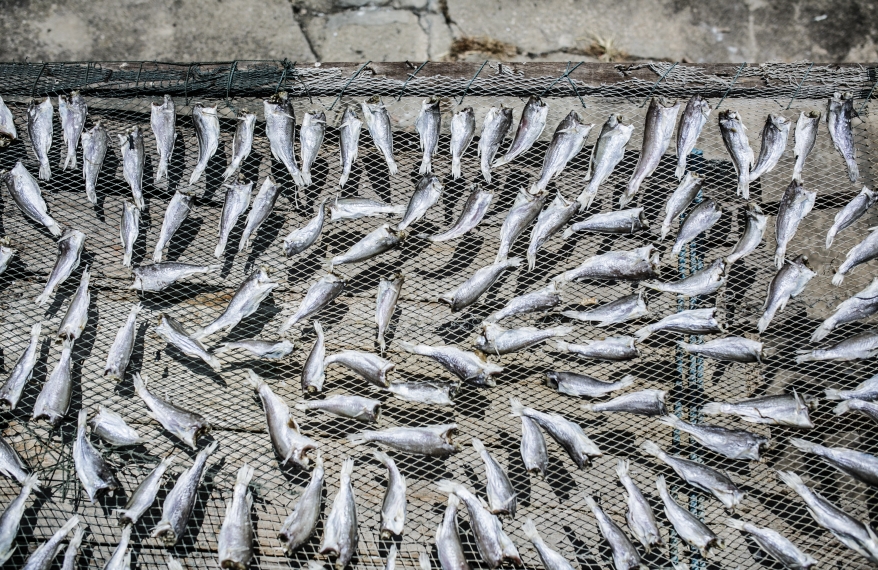
Despite their predicament, the couple makes the best of what they have. Really. They make the best salted fish with the gourami they caught. We wish we could take that away from him, but that would make us no different from the trawlers.

Cheap Haoi wears a long sleeve shirt to protect his arms from jellyfish stings.
Men go out to sea, while women sort out the harvest.
Sun-dried gourami, a typical cooking ingredient in this part of Asia.
Cheap Haoi's wife (left) chit chatting with her neighbours while waiting for her husband to return.

H Directory

Fishing Village

Kuala Sungai Pinang
Balik Pulau