

The journey continues as we delve deeper into Kuala Lumpur’s ever-evolving cityscape. From former cinemas turned cultural hubs to colonial-era shop lots transformed into vibrant social spaces, KL’s architectural treasures continue to shape the city’s narrative.
Part 2 of our 2-part walking tour within 3.5 kilometres of Concorde Hotel Kuala Lumpur, we continue to explore gentrified spaces and well-preserved ones. Read Part 1 to start the tour from the hotel.

08 Fun Wong Biscuits
07 → 08 »» 1 MIN
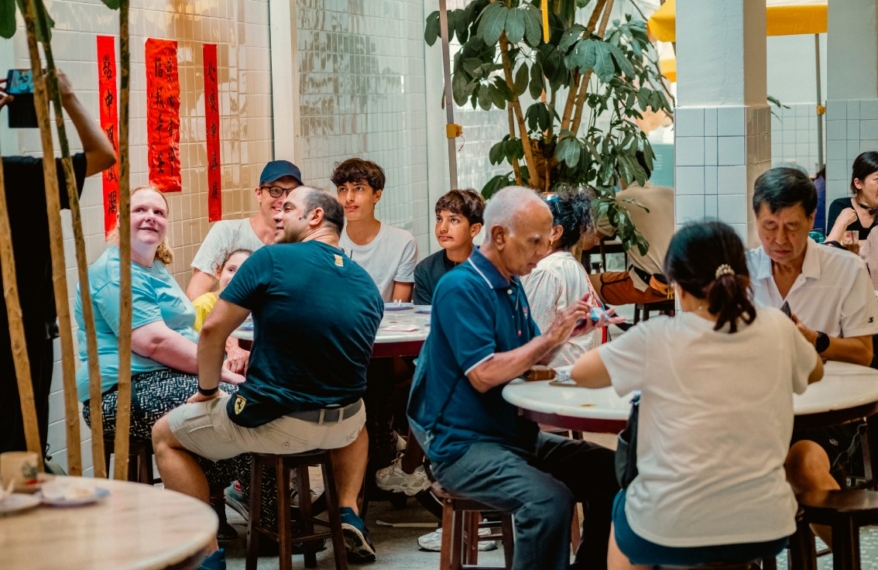
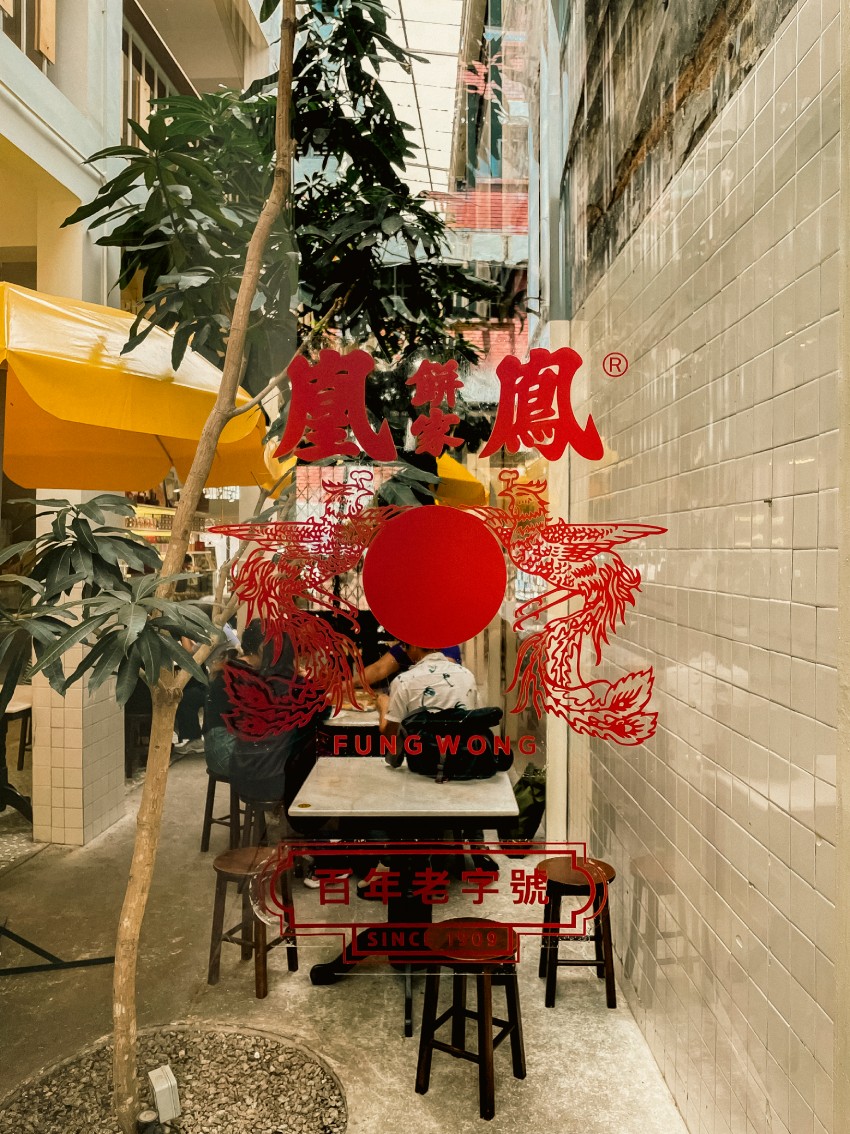
Our next stop, Fung Wong Biscuits, is just a stone’s throw away from REXKL. Walking out the front doors, this stretch of Jalan Sultan brings together a lively blend of cuisines and street food, enticing hungry passersby with whiffs of clam soup and satay. Fung Wong Biscuits stands out as one of the only two shops with leafy trees at their storefront—a rare touch of natural greenery in the concrete jungle.
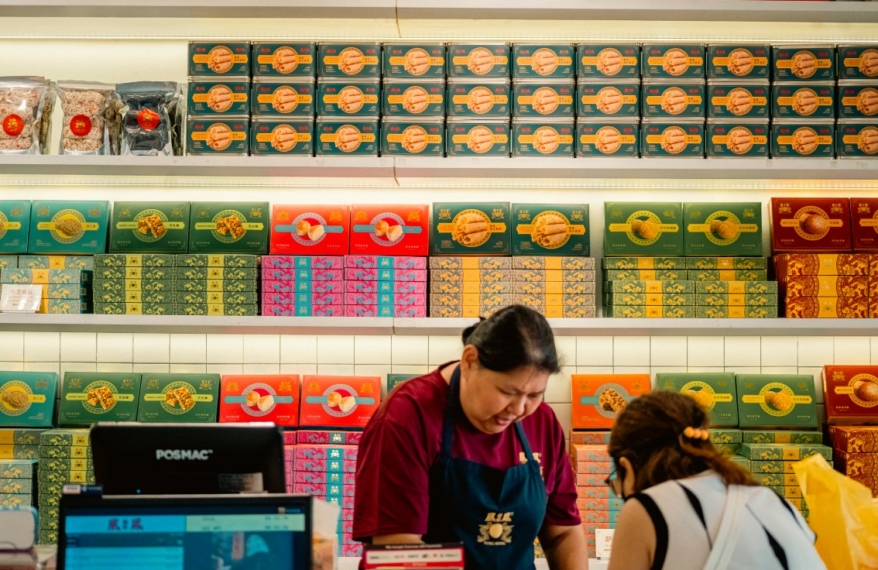
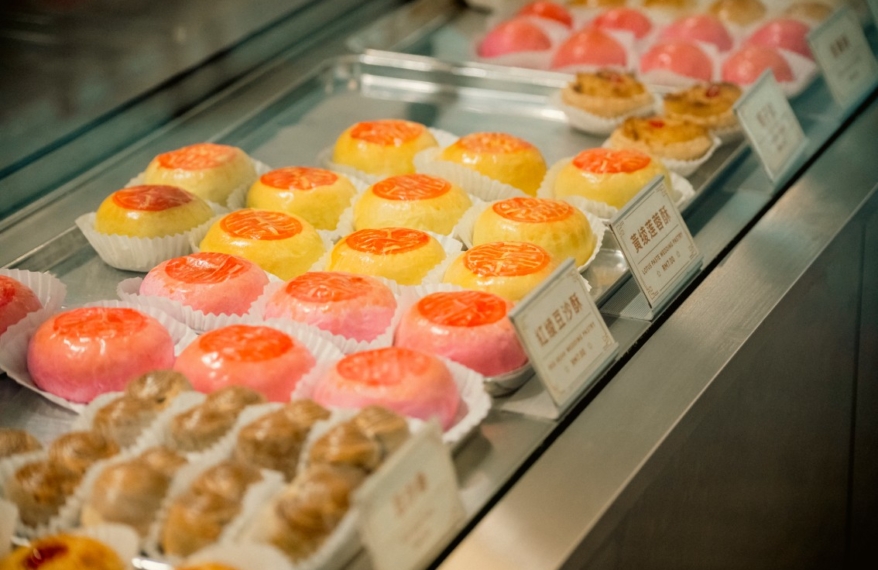
Against sun-worn signages and droopy awnings, Fung Wong Biscuits’ storefront stands out with their refreshingly elegant traditional lettering—befitting a fourth-generation family business still hand making 2,000 pastries daily.
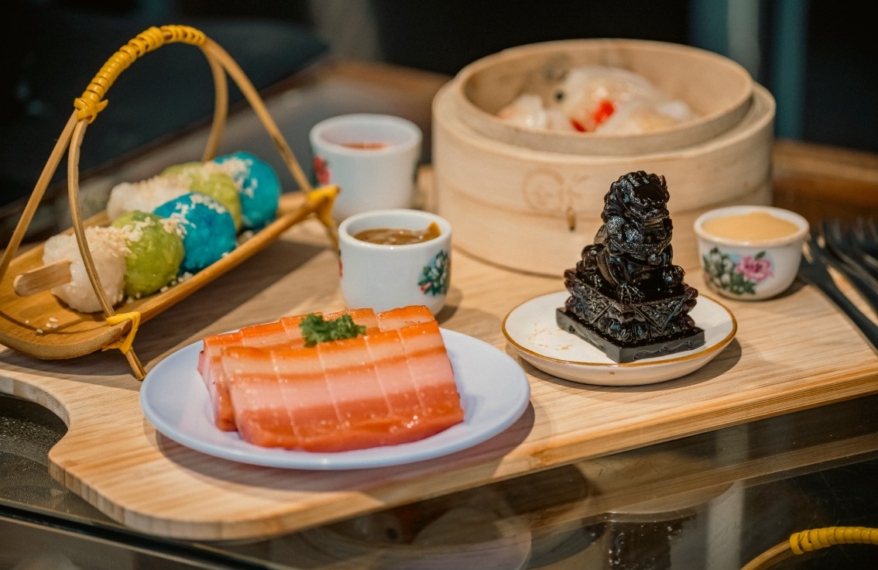
As a generational family business, Fung Wong Biscuits has mastered a natural aptitude for bringing together the best of all eras past and present, be it in their traditional Chinese pastries, or their tasteful interior design.
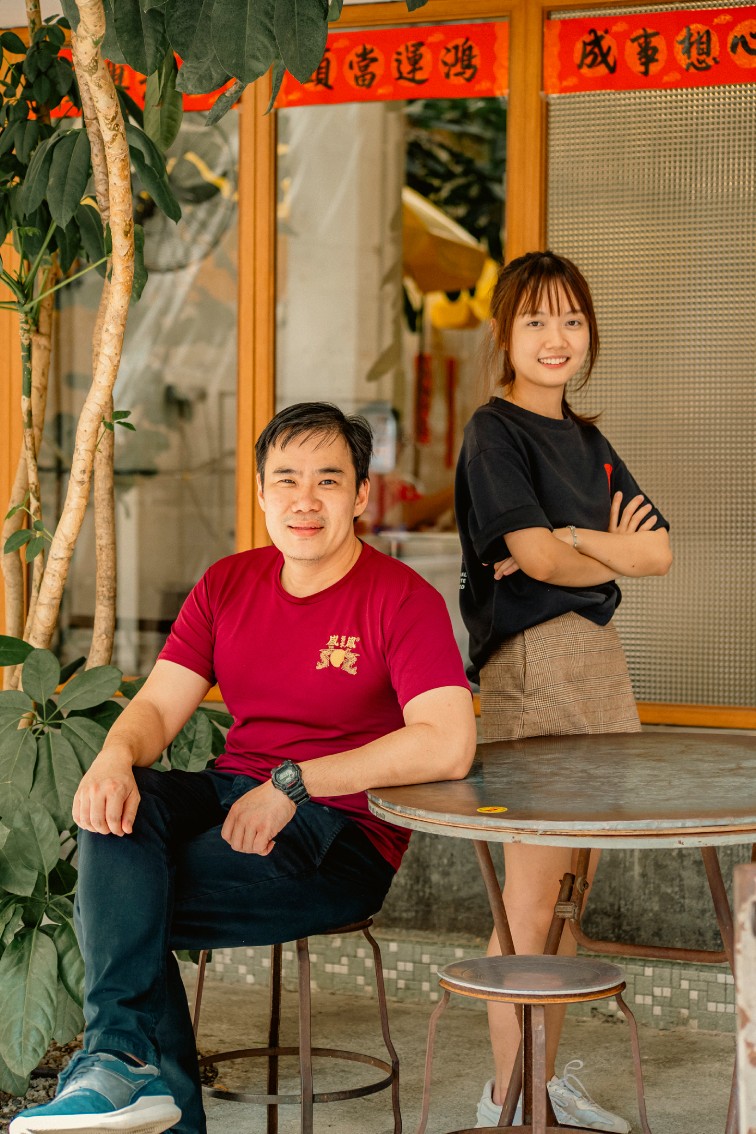
Melvin Chan, the fourth-generation owner of Fung Wong Biscuits, has been working at the shop since he turned 18, taking over after his father’s retirement. In 2021, he made the executive decision to move the business from its founding location to its current lot on Jalan Sultan —a plan that his father heavily disagreed with initially.
But as it turns out, it was the right call. Giving the century-old business a modern make-over has renewed interest in the pastries, and in addition to bringing his old regulars with him, Fung Wong Biscuits is now a hang-out spot for younger fans who pop in for a quick bite.
Melvin’s philosophy is simple: to pass on the torch of Chinese heritage to the next generation. These are more than just fighting words, it’s evident in every deliberate choice—from the seamless blending of old-school and modern interior design, down to the preservation of pastry recipes, albeit with reduced sugar and oil in keeping with the present-day health consciousness.

09 Jao Tim
08 → 09 »» 2 MIN
Leaving Fung Wong Biscuits, Jao Tim is another short walk further down Jalan Sultan. Though lesser in volume here than around Petaling Street, there’s still a decent crowd on the streets, with many stopping to peer at the menus of roadside restaurants. There are also classic Chinese tea shops around, where one can enjoy an aromatic cup of tea while resting their feet. As we near, we keep our eyes peeled for an art-deco style signboard bearing the letters ‘J.T’.
The well-worn stairs leading up to Jao Tim transgress time and space. Cafe by day and jazz lounge by night, the bustle of Chinatown melts away behind Jao Tim’s doors.
At the top of the stairs, we are greeted with an oaken concierge stand, boldly emblazoned with ArtDeco-era patterns.
While a seemingly odd choice for a cafe and event space, it harkens to the history of the 110-year-old building, originally intended to be a hotel. The Art Deco movement was prominent at the time, comforting a post-war society with luxurious flourishes such as golden light switches and green banker’s lamps.
While its name was derived from the Cantonese word for ‘hotel’, Jao Tim is now synonymous with the local jazz scene and a fantastic platform for up-and-coming artists.

By nightfall, Jao Tim morphs from a vintage cafe into a sophisticated jazz lounge where music lovers congregate to marvel at the soulful performances put on by talented local artists.

Born and raised in Miri, Sarawak, Clinton Jerome Chua is a phenomenal singer-songwriter who performed at the Table Lamp Concert we attended, giving a heartfelt performance in tribute to Stevie Wonder. His genre-defying, 10-track debut album, Therapy, can be found on Spotify, and you can catch up on his latest performances and music releases by following him on Instagram @clintonjeromechua.
11 Chocha Foodstore
09 → 11 »» 4 MIN
Outside Jao Tim, the hum of Jalan Sultan greets you—cars passing, eateries bustling, and gift shops displaying postcards and batik clothing. Turning left onto Jalan Petaling, past Pak Tai Foto, its vintage storefront whispers stories of generations captured in faded colour prints. A few steps more and a rather unassuming Chocha storefront welcomes us.
Chocha Foodstore hides in plain sight by retaining the building’s original 1969 signage, salt-and-pepper mosaic walls, and window latticework. Only an LED fixture of its logo hints at its existence.
Chocha Foodstore feels like home. There’s something nostalgic about its chipped pillars, exposed beams and old-school courtyard skylight that makes it the ideal place to sit down for some tea—which is roughly what ‘Chocha’ translates to in Cantonese.
Before he moved on to larger-scale projects like REXKL, Chocha was Shin Chang’s first local urban rejuvenation project. Originally planning to open several stalls, similar to REXKL’s Back Ground Marketplace concept, Chocha eventually carved out a niche for itself in contem-porary local cuisine.
Established as Mah Lian Hotel in 1969, Chocha is the only establishment on the block to have kept all the rustic features of the building, such as the sunken courtyard and even the mosaic tiles. Youn Chang, the co-owner and manager of Chocha, tells me that some of their future plans include moving the Botakliquor Bar downstairs, leaving the upstairs to be developed into something exciting.
The chipped walls bear witness to the many guests welcomed from the past to the present.
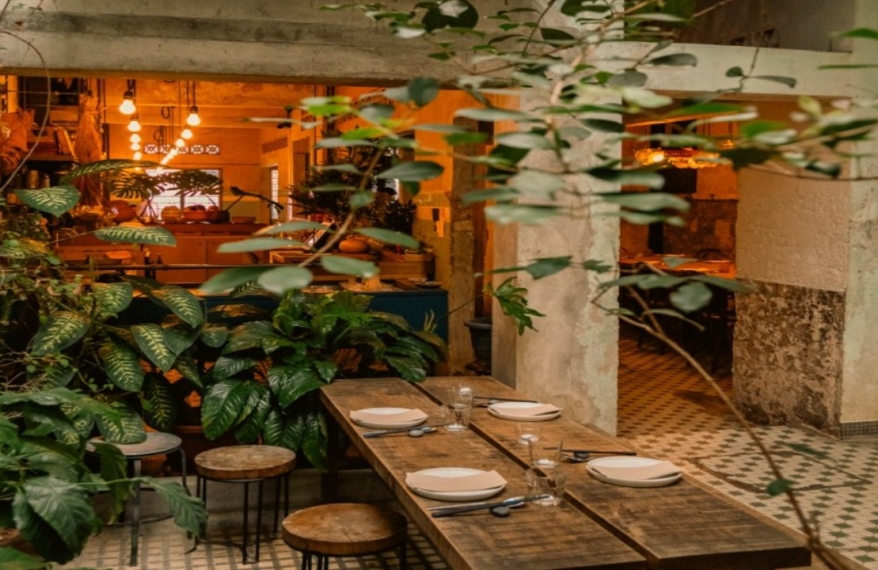
Chocha's rustic courtyard was preserved, and now bathes in natural light, surrounded by greenery.
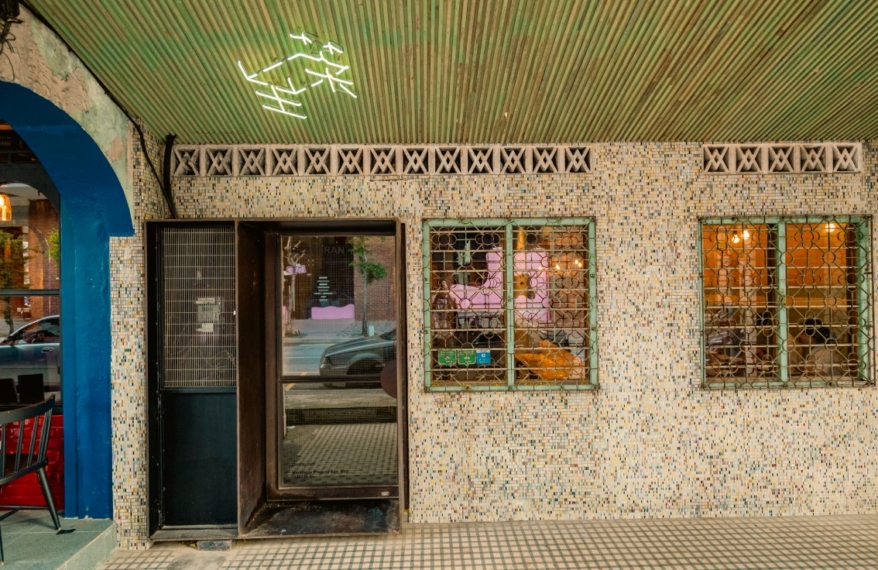
The Chocha storefront has remained unchanged, from the tin rafters to the louvred windows. The LED logo shows the Chinese characters for ‘wood’ and ‘earth’ forming the foundation for Chocha.
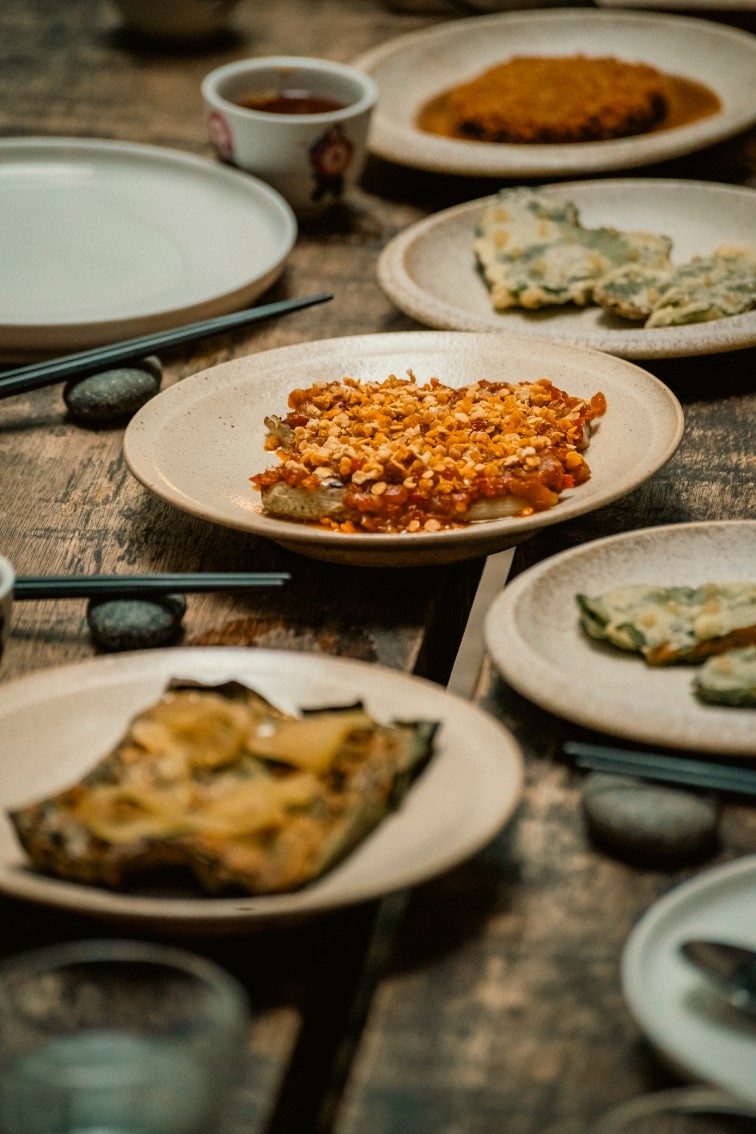
The menu is curated by a Sabahan chef, whose knowledge of local cuisines and experience experimenting with the menu promises patrons a gastronomy adventure every time they visit. Don’t forget to pair your meal with their specialty tea selections!
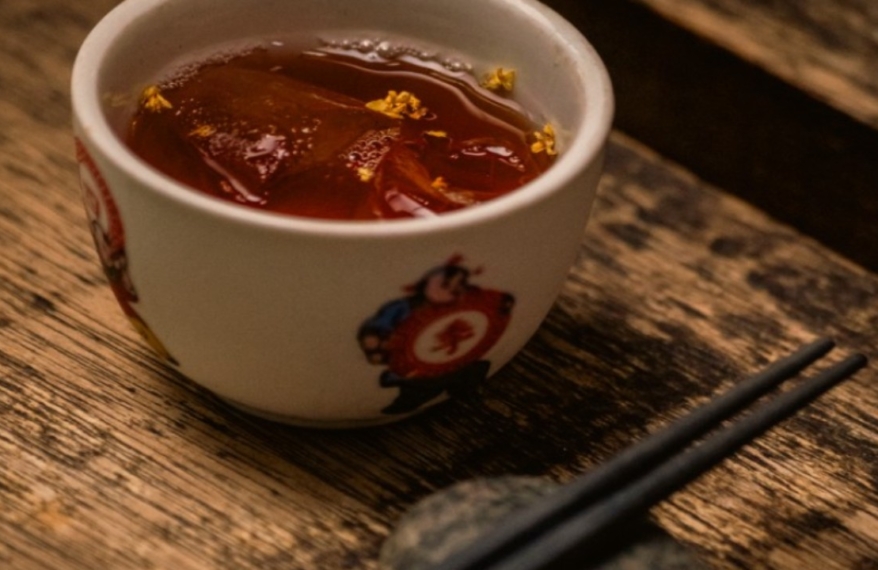
The menu is curated by a Sabahan chef, whose knowledge of local cuisines and experience experimenting with the menu promises patrons a gastronomy adventure every time they visit. Don’t forget to pair your meal with their specialty tea selections!
12 Chan She Shu Yuen
11 → 12 »» 1 MIN
Setting off from Chocha, the CSSY Clan Ancestral Hall is a mere 2-minute walk away. By the end of the block, we could already see the Clan Ancestral Hall’s iconic monochrome rooftops with their sculpted carp fishtail curls peeking over the car park gates. A monorail tram speeds overhead, heading down to the nearby Maharajalela station, as we pass by the meticulously carved perimeter walls and through the imposing double doors.
Established in 1906, the Chan She Shu Yuen Clan Ancestral Hall (CSSY) is one of the world’s best-preserved Cantonese heritage sites outside of China, acclaimed for its legacy and architecture.
For a structure built over one hundred years ago, the CSSY Ancestral Hall cuts an imposing figure, even in the age of monstrous skyscrapers. Built to emulate the Chan Clan Ancestral Hall in Guangzhou, China, no expense was spared in its construction, down to importing building materials such as the tiles and wood pillars.
Consequently, CSSY is now one of the few well-preserved Cantonese structures outside of China, and has been declared as a protected heritage building by the local government.
In particular, the immaculately hand-sculpted pottery and ceramic art adorning the hall’s rooftops have captivated visitors. These masterpieces are the handiwork of Master Wu Qiyu and can be viewed within the Heritage Gallery.
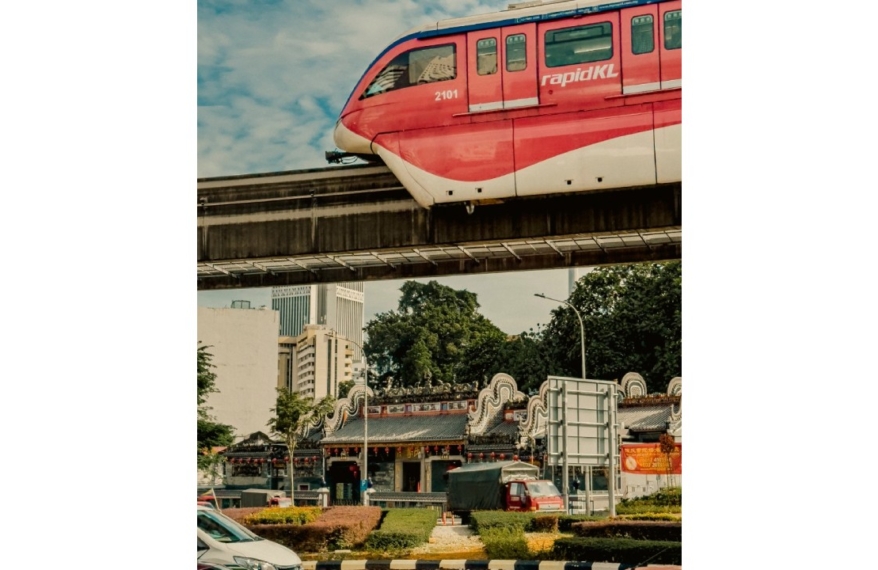
The CSSY Clan Ancestral Hall, framed by the busy Jalan Kinabalu and a RapidKL Monorail that had just left the Maharajalela station
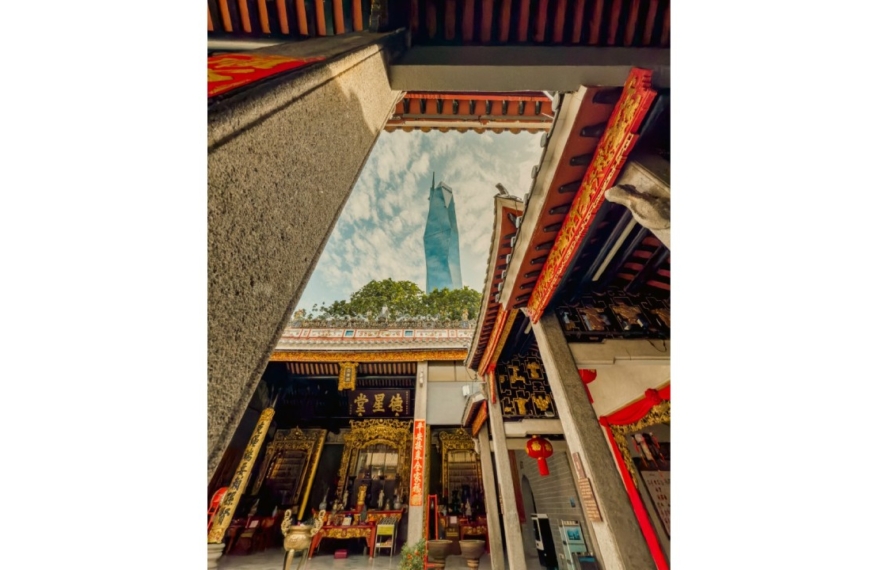
Looking out from within the century-old courtyard walls, we spot the tallest building in Malaysia.
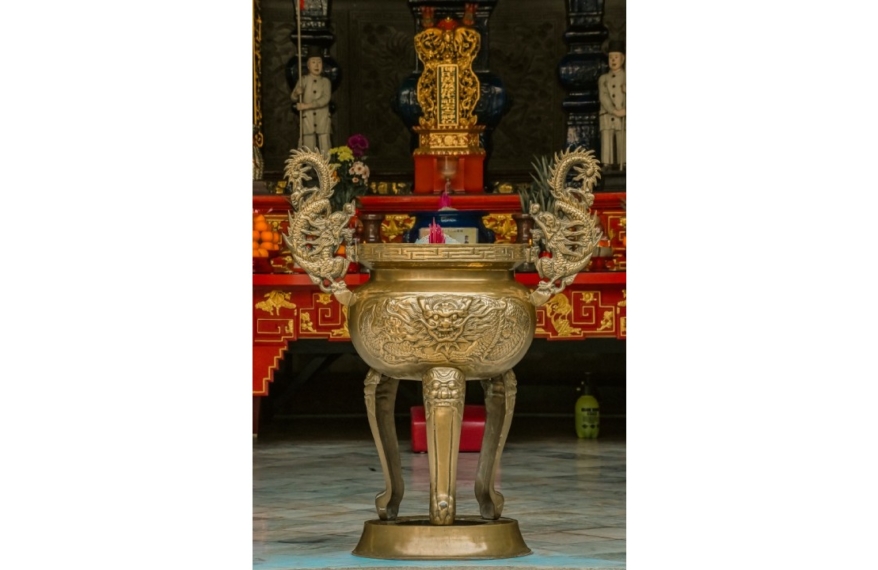
The gilded incense pot's splendidly detailed dragon carvings are auspicious symbols in Chinese mythology.
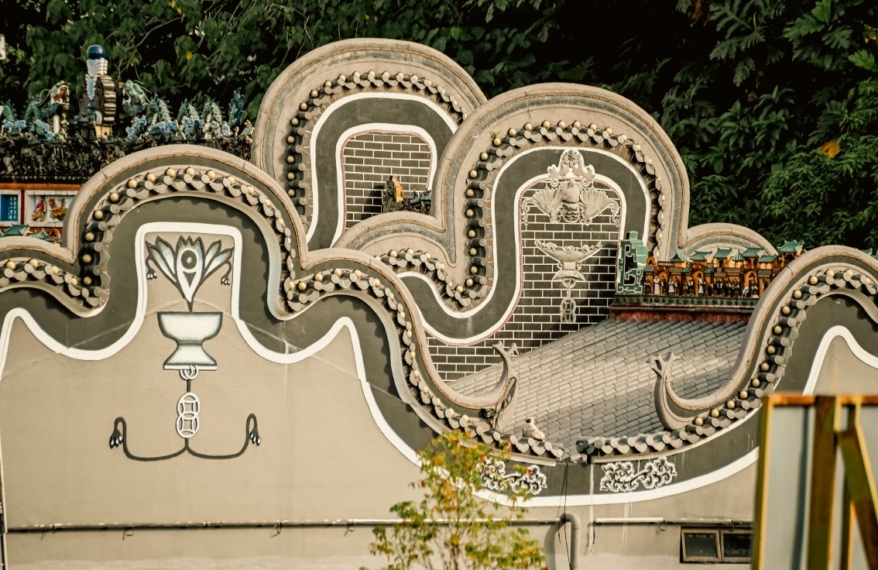
The ‘Wok Ears’, or the curved walls at the ends of roofs, are a distinct Lingnan architectural feature which prevents sunlight from directly hitting the building for cooler indoor temperatures.
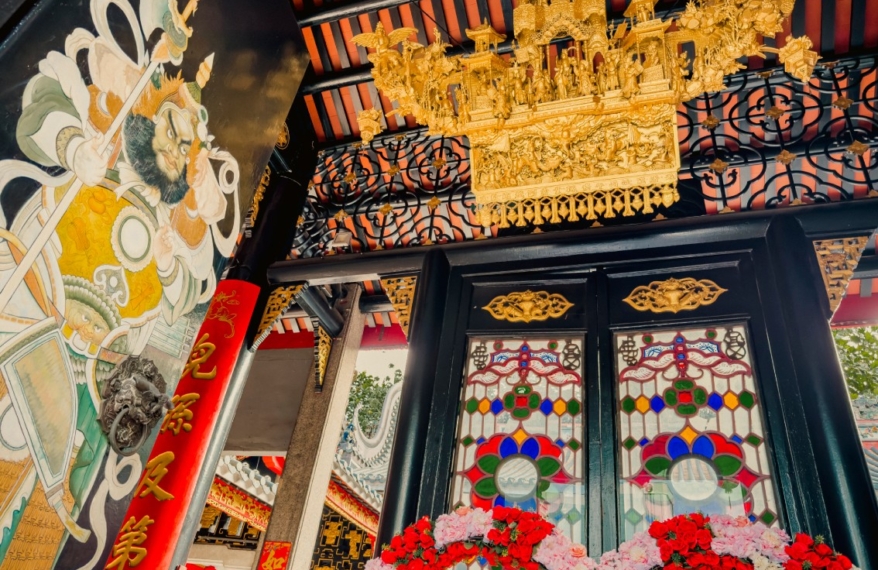
Hanging from the ceiling between the two sets of doors, is a breathtaking golden wood sculpture depicting the battle between Li Yuan Ba and Yu Cheng Weng Du.
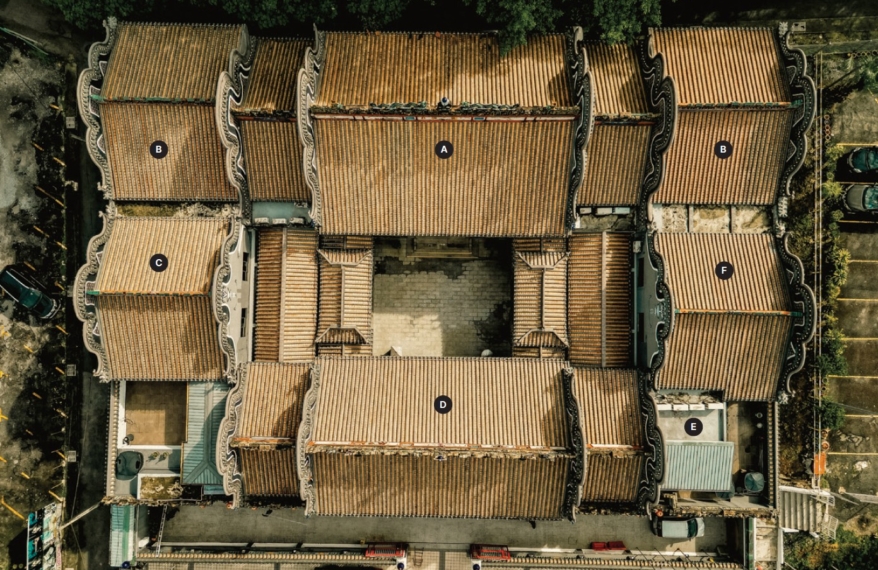
A. The Main Hall, or also known as the De Xing Hall, is where people pay their respects to Chan ̛s Great Ancestors and perform traditional rites; occasionally, marriage ceremonies are also performed here.
B. Known as the ‘Zuo Zhao You Mu’, these rooms enshrine the descendants of Chan on wooden memorial plaques, intricately carved with golden patterns.
C. This part of the Clan Ancestral Hall is inaccessible to the public, as it ̛s the CSSY staff office.
D. Immediately upon stepping through the entrance of CSSY, there is a second set of doors—a popular Lingnan architectural feature. These doors are adorned with sophisticated wooden carvings depicting a classic scene in Chinese mythology, ‘Kirin Delivering Child’.
E. The CSSY Hall of Fame documents the story of the temple ̛s establishment and its founders. Other notable figures throughout history who were named Chan or any of its variations have also been commemorated here.
F. Usually closed off, the Lai Jing Hall is an event space only opened for special occasions.
13 Stadium Merdeka
12 → 13 »» 4 MIN
Starting at Chan She Shu Yuen, step onto Jalan Stadium before turning onto Jalan Maharajalela, where the city’s modern bustle meets traces of history. As we ascend the pedestrian bridge, the iconic Monorail track hums overhead, guiding our path. Soon, Stadium Merdeka emerges— Malaysia’s hallowed ground of independence, where Tunku Abdul Rahman once declared the nation’s freedom in 1957. Standing before its historic façade, we sense the deep echoes of the past amid KL’s ever-evolving skyline—a short yet powerful urban journey through time and transformation.
Recently reopened after having undergone renovations for almost 8 years, Stadium Merdeka has now been faithfully restored to its original looks during the declaration of Malaysia’s independence in 1957.
The sight of Stadium Merdeka, a beloved historical landmark now restored to its former glory, just a few hundred meters away from Merdeka 118, a neo-futuristic skyscraper, might seem odd at first glance, but is ultimately a visual reminder that the past and future can exist concurrently.
When we arrive at the stadium in the morning, the air is still damp with dew when a handful of joggers begin their laps. Nowadays, the stadium’s tracks are open almost daily during fixed hours for recreational activities, with the occasional sporting event or concert taking place. Outside of those hours, the surrounding park and hallways are always open.
As we start our morning exercises, we couldn’t help but notice that even the stadium’s original 1957 scoreboard was replaced, perfectly recapturing Stadium Merdeka in all its vintage glory.
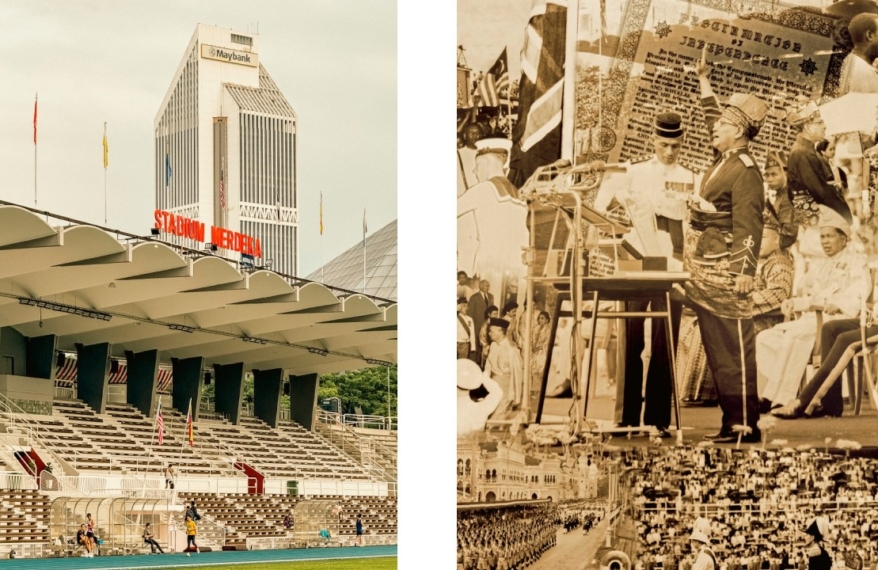
(L): The stadium remains an unchanging fixture in the ever-evolving landscape of KL city.
(R): On 31 August 1957, the declaration of Malaysia’s independence was held at Stadium Merdeka—the biggest
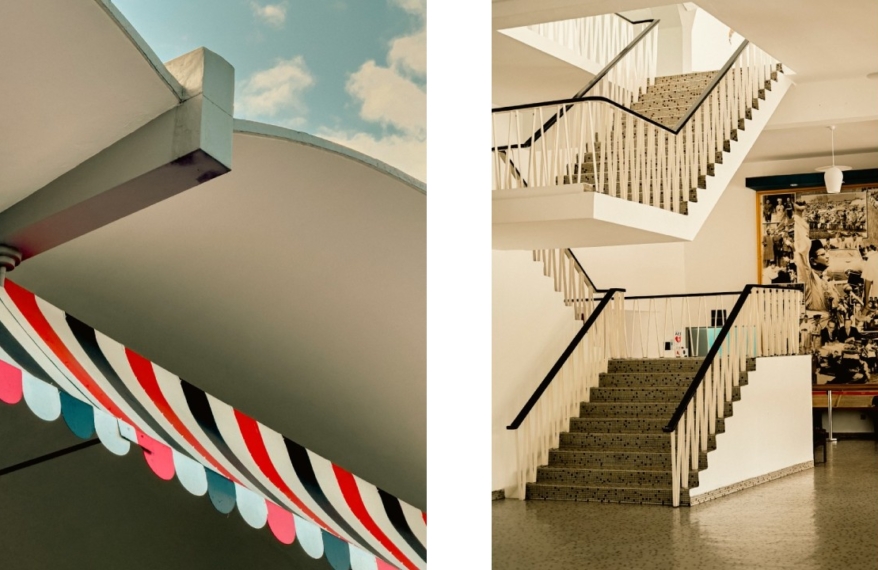
Since its restoration in 2007, the architectural features of Stadium Merdeka have remained consistent with buildings of the era, including the angular U-shaped staircase, cantilever shell roofs and even the original 1957 scoreboard.
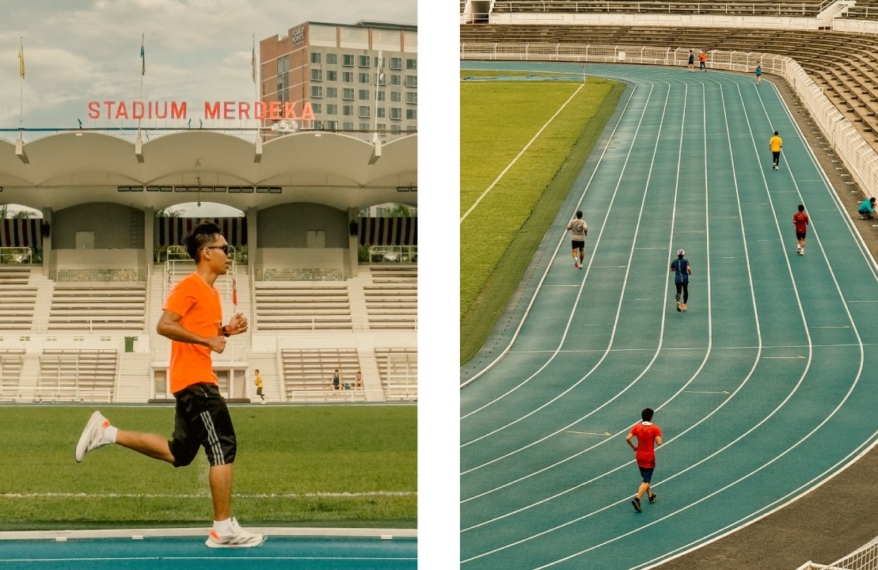
(L): A jogger getting his steps in the morning before kicking off the day.
(R): A small group of joggers working up a sweat the first thing in the morning at Stadium Merdeka, which is only open for two to three-hour sessions a day, throughout the week.
14 The Zhongshan Building
13 → 14 »» 7 MIN
From Stadium Merdeka’s entrance, across the Maharajelela Monorail station, we walk past the KL & Selangor Chinese Assembly Hall, another gazetted heritage building from the 1930s. On the other side, we step onto Jalan Belfield, a quieter street lined with colonial-era structures and modern developments. The path gently leads to a flight of stairs, descending into the creative enclave of the Zhongshan Building, a hidden gem that captures KL’s evolving cultural heartbeat.
Though unassuming on the surface, The Zhongshan Building is a hidden creative hub within the city, simmering with artistic endeavours and perfect for those wanting to venture beyond the conventional.
Standing tall since the 1950s, The Zhongshan Building was once bustling with families running businesses down-stairs and returning home upstairs. Growing up as a child traipsing around these very hallways, Rob Tan, now its current owner, decided to turn it into a centre for cultural revival.
What we thought would be a short trip here turned into an hours-long excursion as we flitted from indie book-stores to old-school vinyl shops.
Amidst KL’s rapid evolution, it’s places like The Zhongshan Building that remind us of the possibility of transforming even the unlikeliest of buildings into a nostalgic yet still refreshing space.
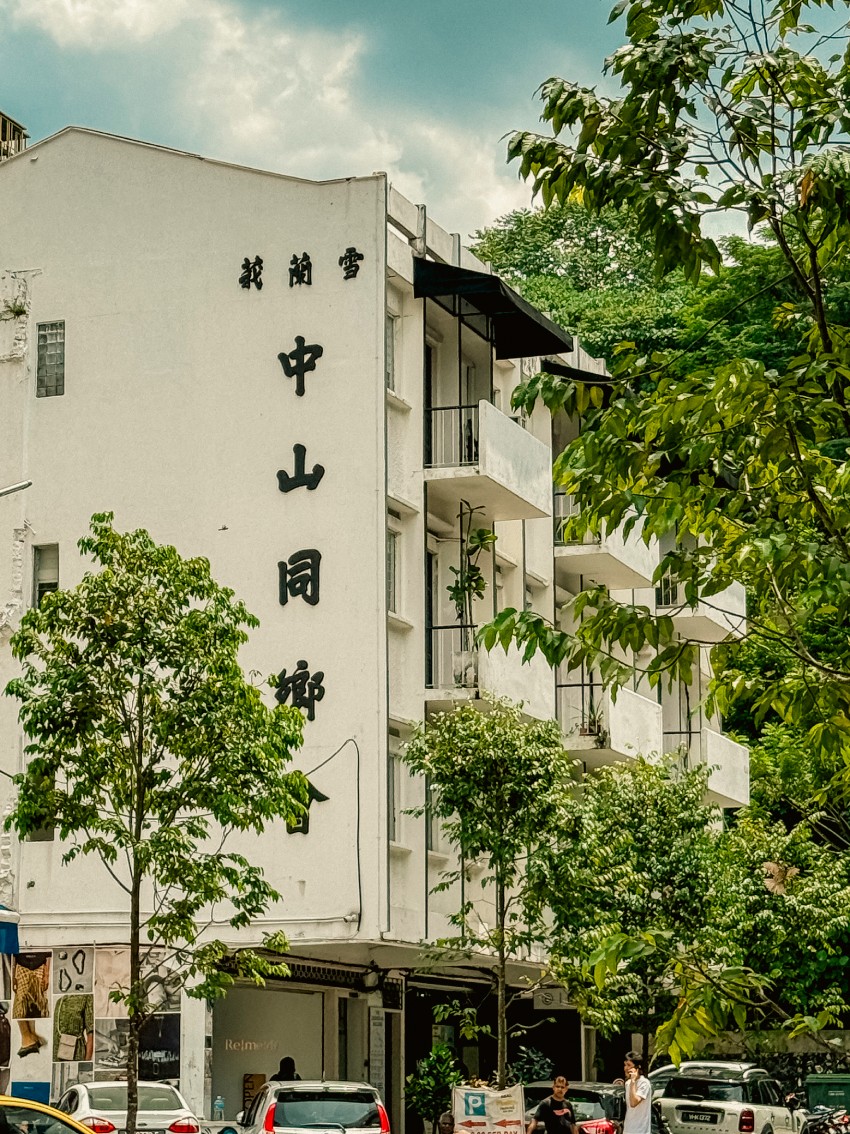
The Zhongshan Building was once a bustling hive of activity in the 1950s, housing residents and family-owned businesses alike. Now, it ̛s been transformed into a safe haven for artistic enterprises.
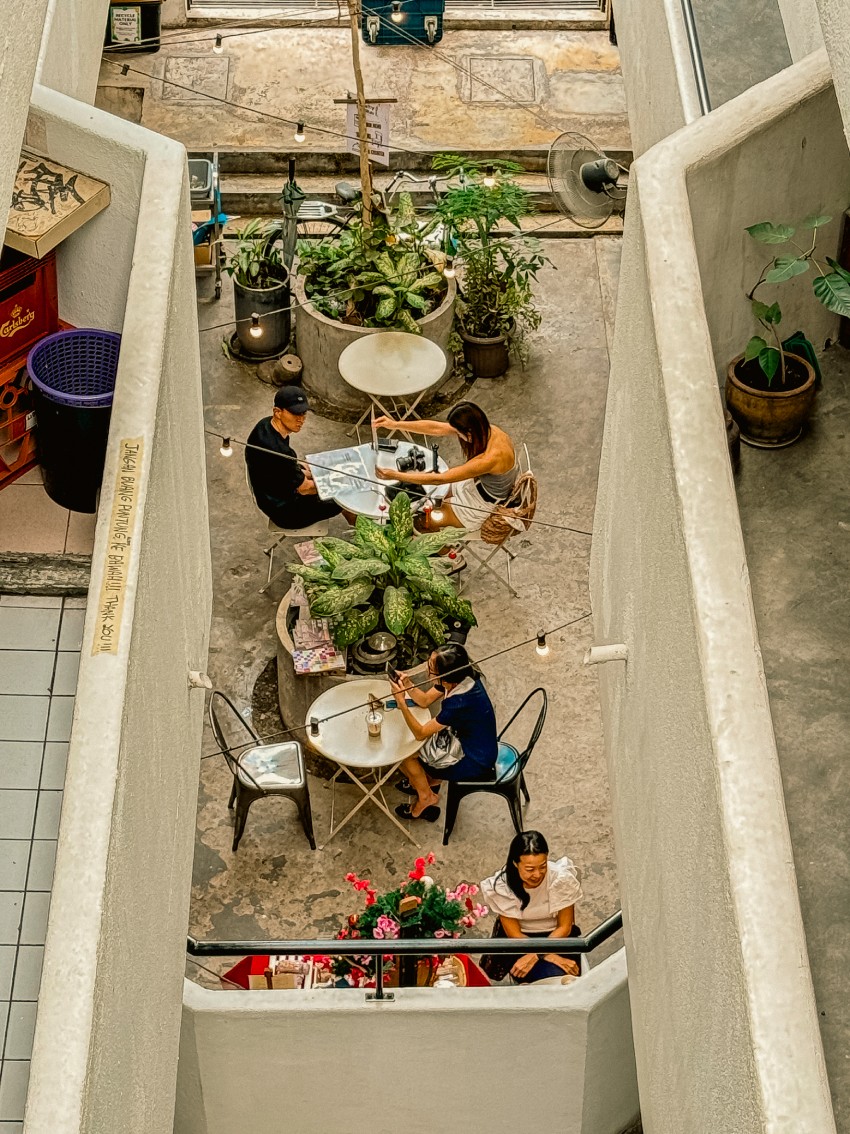
Diners enjoying the sunny day with artisanal pastries from the sourdough experts, Tommy Le Baker.
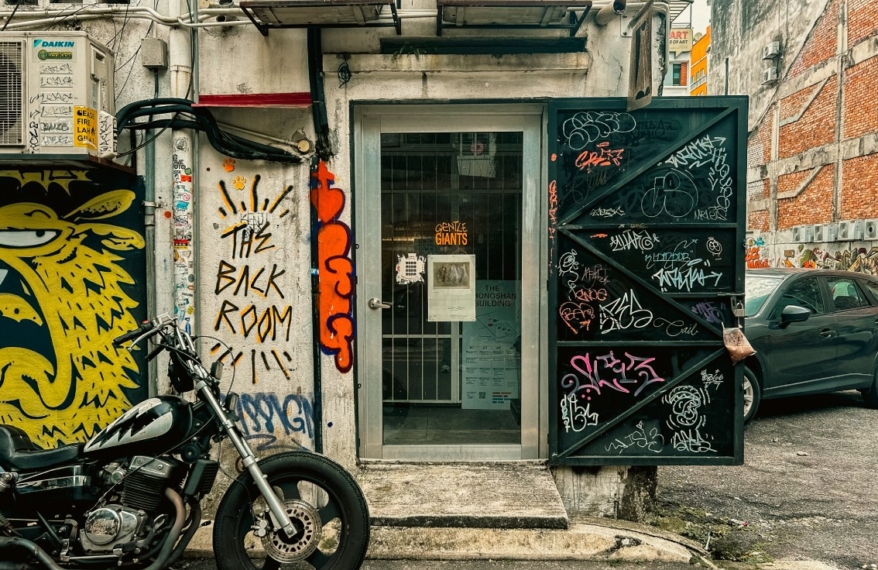
The Back Room is an intimate art gallery exhibiting pieces by emerging and experimental artists. Founded by Liza Ho, it is a space for discovery, transgressiveness and above all, community.
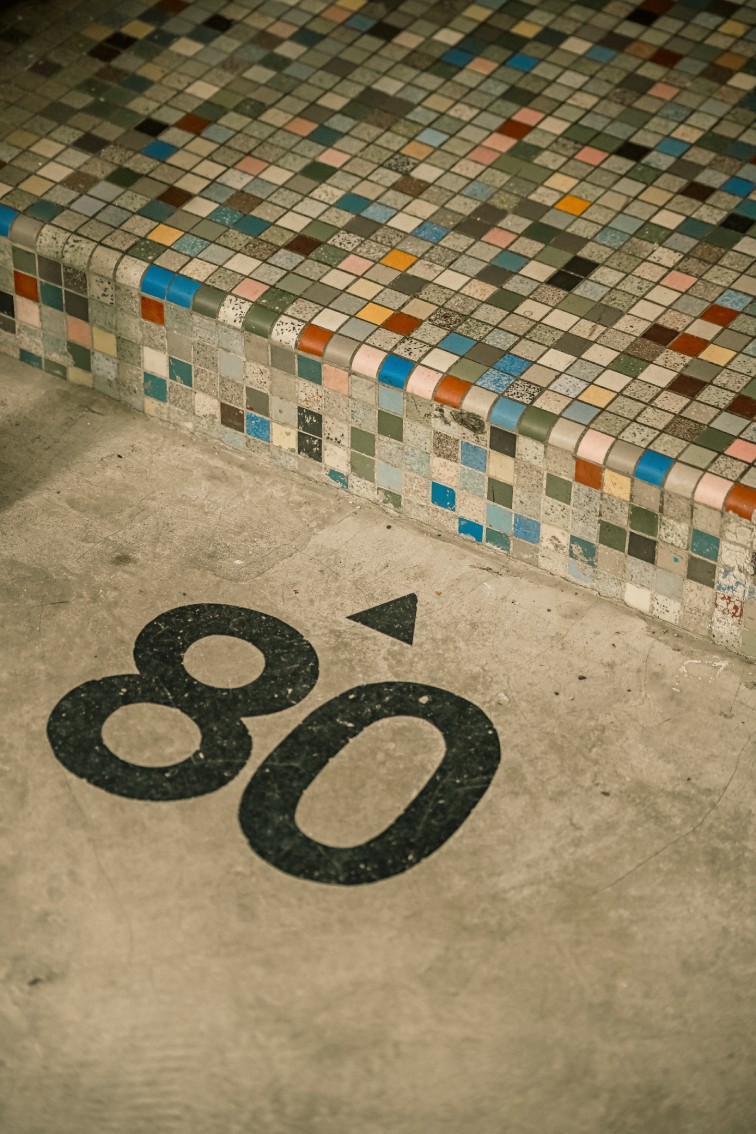
The Zhongshan Building is separated into four blocks, with each stairwell numbered for wayfinding.
Unagi, 40s
Owner, Piu Piu Piu

It’s a surreal experience to walk in from the tired, whitewashed stairwell and into Piu Piu Piu, where the warm lighting illuminates collections of trinkets scattered across shelves and walls plastered with humorous bits of artwork. Unagi, the owner, tells us that he’s collected everything here throughout his travels. Inspired by standing coffee shops in Japan, he carved out his own little corner of the world in this playful yet intimate cafe, inadvertently forming a tight-knit community in the process.
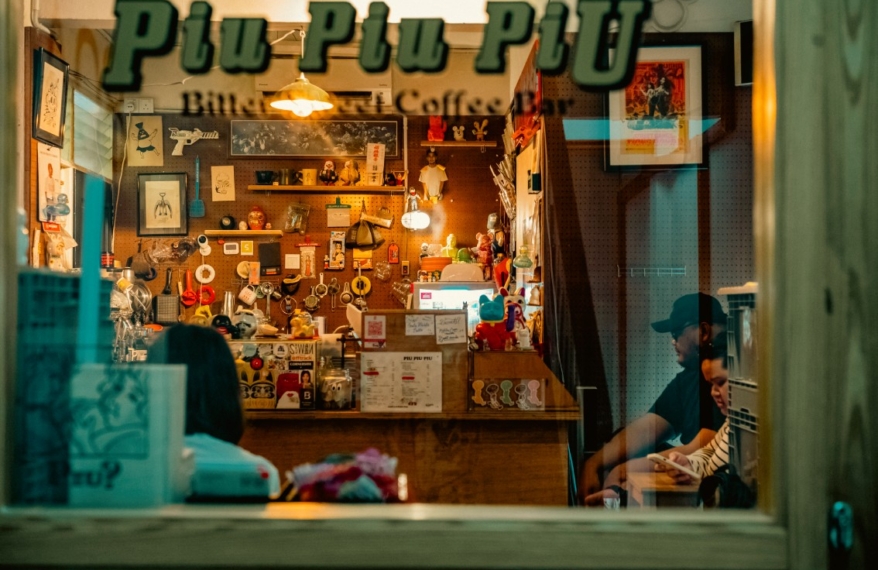
‘Piu Piu Piu’ were the playful sounds of Unagi's childhood, bringing him joy even now.
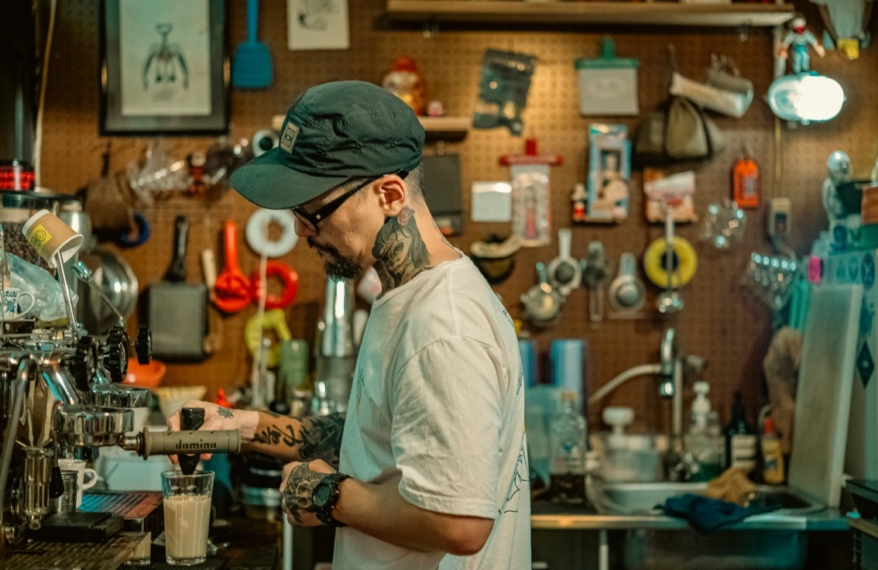
Brewed from Brazilian and occasionally Ethiopian beans, the cafe is well known amongst coffee connoisseurs.